What a weird premise...
Where exactly are these chilling effects? most social networks devolve quite rapidly to a slur party where people say stuff they would never say to actual people IRL.
I've stopped engaging in many places online over the last few years. The reason for me is that engaging with a pseudonym has become the exception rather than the rule.
The evolution of identity on the internet is an interesting one. In the 90s, using your real name was considered absurd. Now it's the standard. Maybe you'll also have a pseudonym in your handle, but the majority of people use their real name on most of their social media.
Certain communities retain pseudonymous, such as a good portion of Hacker News and Reddit. Although, I see many people posting more and more revealing information on Reddit these days, as it leans towards becoming like Twitter and Facebook.
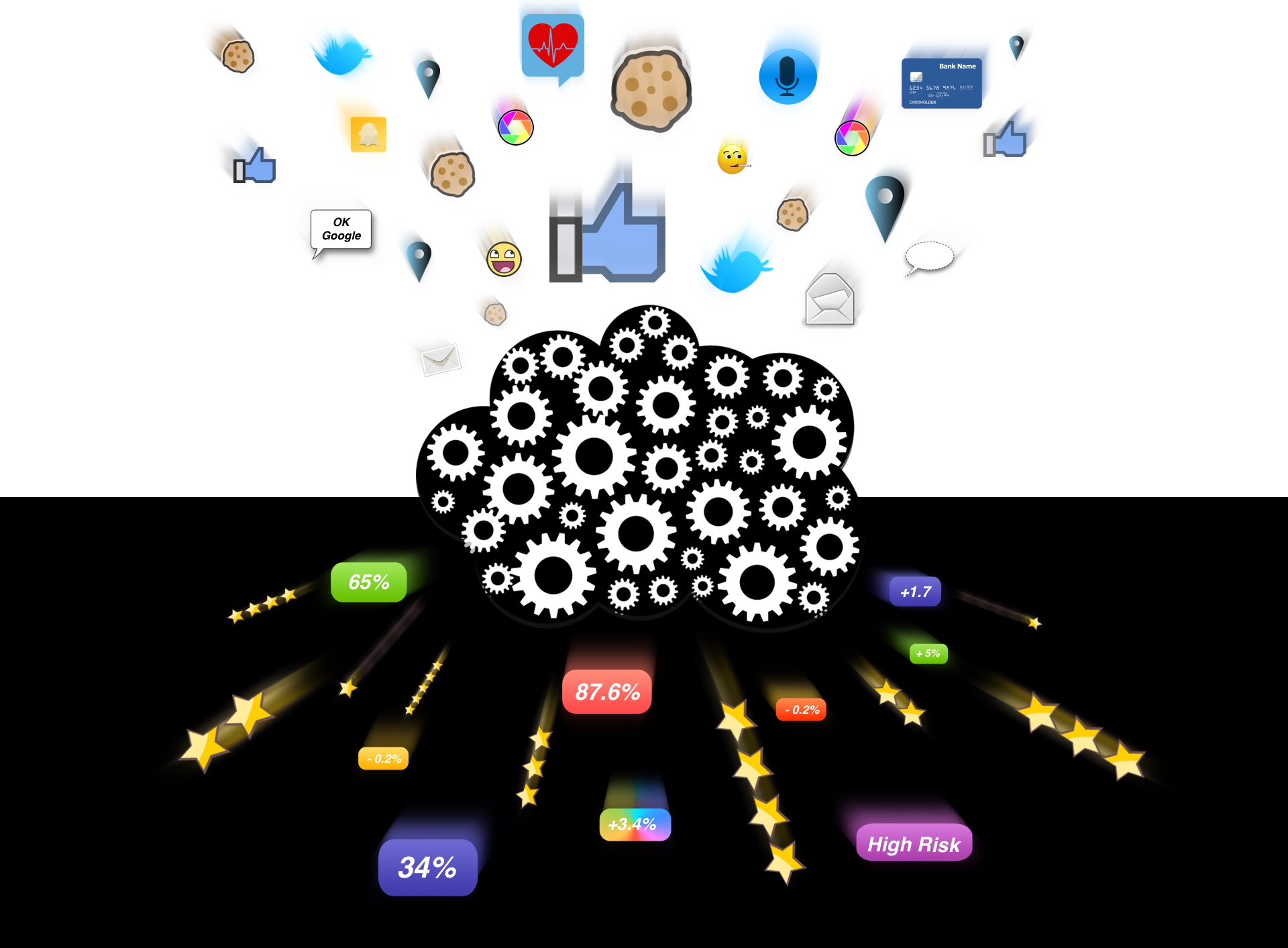
I'm impressed with how well the authors were able to distill a complex concept into a catchy, memorable piece of visual communication. The privacy defenders have always had a messaging problem. It takes real chops to distill it down into something tangible for a layman.
Beyond that, a lot of this reminds me of Jeremy Bentham's philosophical exploration of the panopticon and surveillance and sousveillance architecture. Observability asymmetry is and of itself power.
Agreed, I never read any of Bentham's work, but Michel Foucault's "Panopticon" was the first thing I thought of.
Everything we do online's being processed and potentially stored, and while we may know what's considered wrong right now, we don't know what will be wrong in the future. Without knowing the rules it's very hard to play by them. Unfortunately, not playing the game isn't an option in the modern world, so we really do need strong privacy laws to protect us
> Unfortunately, not playing the game isn't an option in the modern world, so we really do need strong privacy laws to protect us
I agree that we need strong privacy laws to protect us, but the way I see it, not playing the game is quickly becoming the new "game." Generation Z and later have hewn far more sophisticated and ubiquitous barriers to digital intimacy, mostly as a survival mechanism in direct response to this. They eschew the "real-name only" approach to socialization as the farce that it is, and generally have purpose built social identities which are compartmentalized towards a particular pursuit or interest. The "real-name" identity is a sanitized "calling card" which contains the bare minimum -- any truly deep interaction is compartmentalized into an anonymous identity. In a way, it resembles the fora culture of old. To these next generations, I say: good on you for creatively determining your own workarounds, defenses and immunities to this social poison of sousveillance. And this of course is the natural reaction to this kind of hubristic sousveillance -- people will simply figure a way around it. They will evolve new languages, new secret societies, new everything. If you take away their cryptography, they will evolve their skills at steganography. Human brains are remarkably adept at attaining freedom.
Great website, but I think the analogue to Oil and Global Warming is a bit clumsy...
Oil is a finite resource with a hard limit. Social data isn't even quantifiable really, as new dimensions of metrics can be gathered from all users. A better comparison - albeit more complex - is mining & discovering user data vs mining and discovering all resources on earth... The analogue is almost there, but falls apart in some places... like all analogues I suppose...
Comments (1,058) 123 threads
Earlier commentsCertain communities retain pseudonymous, such as a good portion of Hacker News and Reddit. Although, I see many people posting more and more revealing information on Reddit these days, as it leans towards becoming like Twitter and Facebook.
Beyond that, a lot of this reminds me of Jeremy Bentham's philosophical exploration of the panopticon and surveillance and sousveillance architecture. Observability asymmetry is and of itself power.
Everything we do online's being processed and potentially stored, and while we may know what's considered wrong right now, we don't know what will be wrong in the future. Without knowing the rules it's very hard to play by them. Unfortunately, not playing the game isn't an option in the modern world, so we really do need strong privacy laws to protect us
I agree that we need strong privacy laws to protect us, but the way I see it, not playing the game is quickly becoming the new "game." Generation Z and later have hewn far more sophisticated and ubiquitous barriers to digital intimacy, mostly as a survival mechanism in direct response to this. They eschew the "real-name only" approach to socialization as the farce that it is, and generally have purpose built social identities which are compartmentalized towards a particular pursuit or interest. The "real-name" identity is a sanitized "calling card" which contains the bare minimum -- any truly deep interaction is compartmentalized into an anonymous identity. In a way, it resembles the fora culture of old.
To these next generations, I say: good on you for creatively determining your own workarounds, defenses and immunities to this social poison of sousveillance. And this of course is the natural reaction to this kind of hubristic sousveillance -- people will simply figure a way around it. They will evolve new languages, new secret societies, new everything. If you take away their cryptography, they will evolve their skills at steganography. Human brains are remarkably adept at attaining freedom.
Oil is a finite resource with a hard limit. Social data isn't even quantifiable really, as new dimensions of metrics can be gathered from all users. A better comparison - albeit more complex - is mining & discovering user data vs mining and discovering all resources on earth...
The analogue is almost there, but falls apart in some places... like all analogues I suppose...
All comments shown.
Couldn't load more comments. Check your connection and try again.