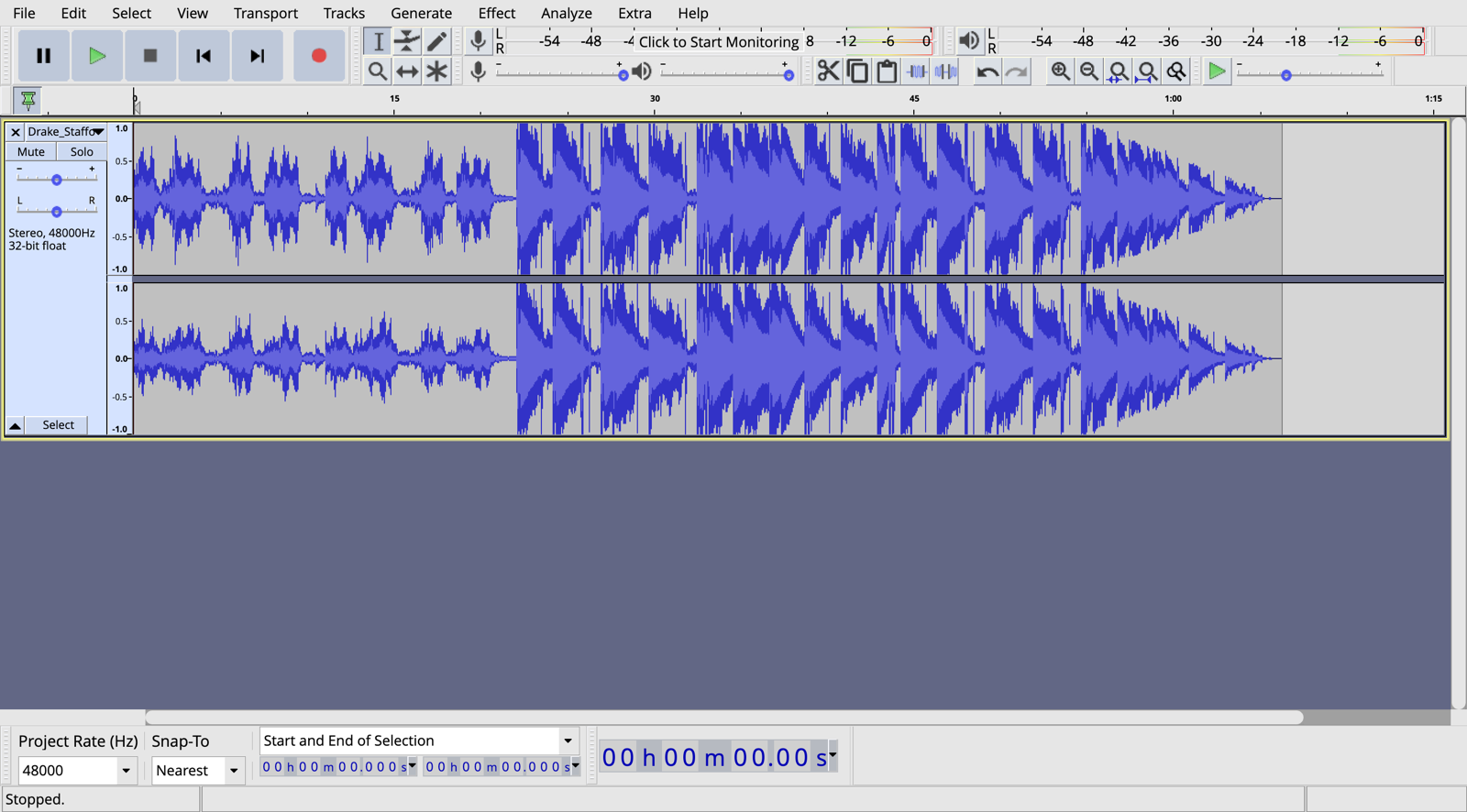
Show HN: Wavvy – web-based audio editor (Audacity port) (opens in a new tab)wavvy.app
530 pointsI originally developed a WASM port of wxWidgets for https://dj.app/. When it came time to open source wxWidgets-wasm, I decided to port another complex app as a test case, and Audacity seemed like the obvious choice. In the process, I also needed to write a new host API for PortAudio for playback and recording in the browser.
https://github.com/ahilss/wxWidgets-wasm
https://github.com/ahilss/portaudio-wasm
https://github.com/ahilss/wavvy
Comments (111) 39 threads
Earlier commentsI really dig your dj.app, it looks a lot like an app I sometime I use called Mixxx[1], which is open source[2]. But I think it's built using QT instead of wxWidgets. Anyways, now that I know there's a similar web-app available I might start trying dj.app out! thanks!
1. https://mixxx.org/ 2. https://github.com/mixxxdj/mixxx
I’m curious what porting wxwidgets involved — are you rendering them with the 2D canvas API, WebGL, or is all the rendering done by WxWidgets and you just have to send a framebuffer into a canvas?
It's an amazing project! If the OP is here, do you have any plans for accessibility to screen readers? I suppose it's a similar problem to that with Flutter.
I also wander if there is a possibility to combine your wxWidget port with the work going into WASM Python...
Edit:
Taking a closer looks at how the wxWidget port works, wxWidgets has multiple backends using native widgets on each platform. They also have wxUniversal which draws each widget itself to a frame buffer, this port uses that as a base to draw the ui to html canvases.
[1] https://github.com/ahilss/wxWidgets-wasm/blob/master/build/w...
All comments shown.
Couldn't load more comments. Check your connection and try again.