Honestly the comments are a good example on how difficult it is to sell to developers and why startup ideas that target developers are dangerous to bootstrap.
Developers have high incomes, but are quite frankly, extremely cheap. And I actually mean cheap and not frugal. They will spend 40 hours/week for months to save $5/mo. There's basically no logic apart from that developers have a poor concept of time and money and are spending averse (again, cheap.) In this case, this tool is $30/mo, or about $360 / year, what is that, 3 dinners for 2 people in a year? The tool may save the developer, let's say 3-4 hours / week and at 52 * 3 or about 156 hours of savings a year. At even 30 an hour, it's saved the developer $4,680, or at 60/hour, close to $10,000, but I can guarantee that 99% of developers will not spend $30/month to make their lives easier. My only recommendation is try to sell this product to businesses and maybe offer them a deal based on the amount of developers they have. So sell it do a dev shop with 10 developers at $20/developer / per month. Businesses understand the time/money tradeoff and are not cheap. Developers, my only word of advice, is seriously.. stop being so cheap and spend some money to make your lives easier.
I don't think developers in general are cheap, it's that they are employed somewhere and therefore it doesn't benefit THEM to save time, it benefits their employer. It may even be detrimental to the developer as it put higher expectations on the developer to produce more if the suddenly perform better at a specific task..
It absolutely does benefit me to save time, because writing css by hand is one of the most soul-crushingly boring tasks imaginable. Sure my employer also benefits, but that's only if I use that saved time to write more code. Maybe I use the extra time to walk my dog.
Yeah, but a lot of employers would still bristle at $180 a year (if you pay in advance) for a souped up version of dev tools. Not to mention that most places that would have a budget for something like this would need to do a security audit of anything like this.
If you’re a consultant or have a lot of client projects, you can absolutely bill the client for this sort of thing. But that’s not the situation for everyone and certainly doesn’t strike me as the audience being targeted by the landing page.
I understand your point but $30 more per month to have a web inspector that is slightly nicer in some way but also much more limited in many other ways is expensive. Monthly subscriptions adds up and not everyone has too much money.
Let's say they sells it at $10 / mo. They would need 1,000 customers to make a reasonable wage at $10,000 / month. If they sells it at $30/month, they would need only 300 customers.
Can you imagine how annoying it would be to deal with 1,000 cheap customers that expect the world? Maybe they should sell it at $100/mo and sell it to only 100 people that really care about the problem. Maybe just sell it to a business for $200/mo for all developers, they would only need 50 businesses to make $10,000/month and they would also remove the annoying, cheap, high expectation developer out of the equation. Developers and engineers are probably the worst customer to have, insane expectations, complain about everything, criticize everything and use a magnifying glass to point out any issues, black/white thinking etc. My theory is writing code has all of these expectations in it. You need to be highly critical, black/white (or you would drift into a world of options.) have insane expectations (or your manager gets mad at you.) etc. All great qualities for writing code, but the worst qualities for a customer. I'm a developer too by the way, so please don't be offended, I've been there and done that, the other side is much nicer. For example, I activated my iCloud to 2TB at $10/mo instead of making a custom backup solution that I can run for $2/mo. Would I have done that years ago? Yes and the result would have been me spending 80 hours building the backup system that can't even get my photos back on my phone properly. What I'm trying to say is, it's sad to watch developers suffer for a small amount of money per month. I honestly believe it's a failure of the people who manage developers. I may be reaching here, but I think a lot of developers have been treated poorly in general from managers, projects and high expectations. They are rarely rewarded properly which is actual recognition for the work they do. It's not free massages, free lunches and cool workspaces. As a result, I believe developers are the givers and the companies and managers are the takers. The takers siphon the life out of developers and to the point where they're so risk averse they won't even spend $100 to go to a spa to relieve some stress. They're so risk averse they won't even spend $30/month to make their lives easier. What am I saying? Developers SPEND some money on yourselves. You DESERVE IT for the hard work you do. Stop being so risk averse just because the work you do is so. Rant over.
I think you make a lot of insulting assumptions about other people. I'm sure there are many who are more frugal than me for their personal reasons, but it's not some personal failure not to be persuaded to rent a particular product.
You're clearly trying really hard to market this mediocre overpriced product, so let me give you a tip: repeatedly insulting your target customer base while trying to sell them something might work for your average modern consumer, but it won't really work here on HN.
>Developers, my only word of advice, is seriously.. stop being so cheap and spend some money to make your lives easier.
>but I can guarantee that 99% of developers will not spend $30/month to make their lives easier. Your post is insulting and it really seems like it is an ad for this product.
It is insulting, but sometimes the shoe fits. Developer tools is notoriously difficult because engineers (and their managers, and the teams) are very cheap.
If a dev thinks they could build it themselves, they won’t pay. You have to cross a line where the dev does not want to even entertain the idea of building it. So backends for front end engineers, for example.
* This tool may increase my time spent rather than save time. I need to spend time to find out. So I don’t buy every one of the million tools because I am too cheap. I don’t have time to evaluate all of them.
* I have no way of cashing in saved time anyway * Developers can affect spending decisions at work worth $1000s to one SaaS at the expense of another or in addition. If we can save a hire through $50k/y in SaaS bills we will.
No. Monthly subscriptions suck. Every company wants to "tax" me monthly for something that's feature complete. The ones I already pay, I do so very begrudgingly. There's simply too many SaaS products out there.
Let's go back to perpetual licenses. And I'll gladly pay for upgraded versions, or not if the upgrade isn't worthwhile. When it's not SaaS, I also get to control what version I'm using. The product doesn't own me, I get to own the product.
It might be a pedantic point but when you buy a perpetual license you don’t “own” the product - you “own” a license to use the product, on the terms in the license.
OP “own” the product in the sense “use it as long as he want in the terms defined in the license at the time it’s bought.” Adobe can’t change the license of the Photoshop CS3 cd-rom I bought a while ago. If I’m using their current subscription version I would only use the license to use the product in the time defined by the subscription.
I understand the feeling of not wanting to pay continuously for something feature complete. But, as long as the monthly cost for those tools is less, than the hourly-rate it would take to do it yourself, does it really matter? You are still saving money/time.
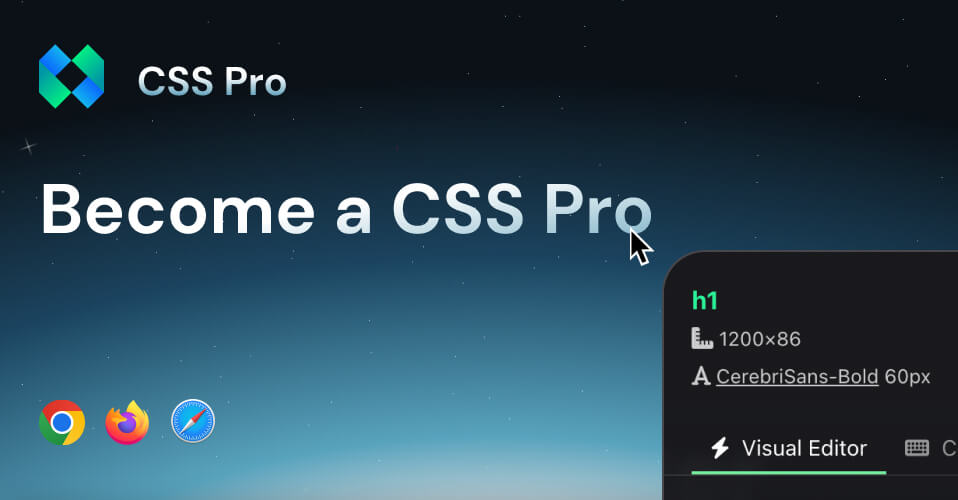
This is one of the more impressive and polished "Show HNs" I've seen recently. The landing page is superb, the tool is impressive and the ease of trying it out with the "Try on this page" is really great.
I think I'm inclined to agree on some of the other comments about pricing. It doesn't sit quite right in comparison to what I pay for other paid tools that I use daily. I can see myself using something like this, and I don't mind paying for great software, but there is something about the $30/month entry price that just stops me considering it further. Maybe I need to actually use it to understand that it's worth this, but it's not clear enough to me coming to it cold. One criticism. I clicked on the "Try on this page" to test it out, and after being initially impressed I clicked on "Try it Free" in the menu, assuming this was a link to see what free/trial options were available, but the link didn't do anything. It took several page refreshes and re-clicking this to realise that this was just doubling up the function of the "Try on this page" option and in fact there is no free trial available. Overall though, seriously impressive work.
I think the comments criticising the pricing are wrong, you can't compare one generalist tool to another highly specialised tool. But on top of that comparing to Figma, Framer or other VC backed products is a mistake, these products are priced to capture market share and grow rabidly. They are clearly underpriced. I may be wrong but CSS Pro looks like a small bootstrapped product, pricing for market growth doesn't need to be the strategy. This is priced for sustainable development and supporting the developer on a small niche product.
If a developer/designer is using this 1 day in 5 then they can justify the subscription. To those suggesting this shouldn't be a subscription, keep in mind that CSS is going through a period of rapid improvements, this enables them to add support for new features without having to either eat the cost on a sold product or charge for upgrades multiple times a year. VC backed business setting low prices for rapid growth has unfortunately damaged the ability for small indie developers to price their products sustainably.
Many investor backed businesses also might increase their pricing over the years. At the moment you reach enough users, especially users which are highly dependent on you, you increase the prices to make shareholders happy.
This is unfortunately a very common strategy, and I rather pay for indie developer bit more than a tech company with a large amount of investors.
On the subscription side, I think it's an issue as it moves the control away from the consumer when doing those upgrades. With the older, one-time purchase upgrade model, which has since fallen out of favour; I could evaluate once a year whether the updated product was worth the additional cost. With a subscription model, there's a chance I could end up funding the development of features that I neither want nor need.
The old model was tightly coupled to the CD as distribution vector—you got what came on the disk, nothing more. It was easy to understand for everyone involved, and the path of least resistance for the developers
The internet changed that, because people began to expect you to fix bugs in a released product indefinitely. Declaring that you are all done fixing bugs is now not just an obvious necessity given the infeasibility of distributing small updates on CDs, it's now a conscious decision that has to be explained to the customer in sufficiently clear terms that they don't come complaining to you later. Failing that, you just have to plan on supporting a purchase indefinitely, and the easiest way to organize that is as a subscription for a single main release channel. JetBrains has what could be a good model for products that lend themselves to a regular release cadence—it's a subscription, but you keep the license for the version that was current on the day of your last payment. But not every product lends itself to that kind of regular, predictable release cadence.
You could also just cancel when you realize it's not worth it instead of sinking a large upfront on it only to find it didn't fit into your workflow. I find that a benefit as even very loved and low priced software often just doesn't fit my personal desired ways of working.
I'll try it because of hype/marketing/good Show HN/etc, and then never really adopt it. So my thought is it's better to just make it easy to cancel the subscription otherwise I'd probably never even try it.
This looks great and I’m not against charging for tools — I’m not even against subscriptions (even tho they often annoy me personally), but the value prop here doesn’t seem to match $30 a month (or $15 if you do annual).
And it isn’t because I’m cheap — I spend lots of money on lots of stuff — or that I don’t value indie development (same), but this pricing puts this utility in the same class as things like Figma, the Adobe Suite, a lot of CMSes (Webflow, Craft, etc.) for a utility that might be useful, but doesn’t strike me as $360 a year (or even $180 a year) useful. The value prop just isn’t here for me, even tho I like what this is trying to do. At $5 a month/$50 a year, I think you’d get more traction and much better volume than what you can get at $30 a month/$180 a year prepaid. And I have to say, when I see prices this high, I’m hesitant to prepay from unknown companies because I don’t have any expectation about how long it will be in business or continue to update the product, because I don’t see how you get sustainable development at this price point. Figma and Adobe can charge what they charge because they’ve earned it and because those are tools where you feel like you get your money’s worth. $30 a month for something that will improve but not fundamentally change the way I do web dev, I’m sorry but no.
Couldn't agree more. I have no problem paying for tools, especially when they will save me time.
That said, don't I need to know how to use devtools (chrome/ff/safari) to do my job in the first place? It feels like this product is trying to inject itself into a process that isn't super refined but works fine. The real problem is the dependency it creates. If I only know how to do frontend work with handheld UI controls, then I have to use them and am locked into this product. It doesn't promote me learning the css rules or understanding how to actually fix things, so then I'm back to the devtools and why am I using this?
Comments (288) 84 threads
Developers have high incomes, but are quite frankly, extremely cheap. And I actually mean cheap and not frugal. They will spend 40 hours/week for months to save $5/mo. There's basically no logic apart from that developers have a poor concept of time and money and are spending averse (again, cheap.)
In this case, this tool is $30/mo, or about $360 / year, what is that, 3 dinners for 2 people in a year? The tool may save the developer, let's say 3-4 hours / week and at 52 * 3 or about 156 hours of savings a year. At even 30 an hour, it's saved the developer $4,680, or at 60/hour, close to $10,000, but I can guarantee that 99% of developers will not spend $30/month to make their lives easier.
My only recommendation is try to sell this product to businesses and maybe offer them a deal based on the amount of developers they have. So sell it do a dev shop with 10 developers at $20/developer / per month. Businesses understand the time/money tradeoff and are not cheap.
Developers, my only word of advice, is seriously.. stop being so cheap and spend some money to make your lives easier.
if I wanted to make my life easier I'd stop using emacs and arch linux
and no I won't
They probably need to add org licenses soon in order to better accommodate that.
If you’re a consultant or have a lot of client projects, you can absolutely bill the client for this sort of thing. But that’s not the situation for everyone and certainly doesn’t strike me as the audience being targeted by the landing page.
Continue this thread — 5 replies
Can you imagine how annoying it would be to deal with 1,000 cheap customers that expect the world? Maybe they should sell it at $100/mo and sell it to only 100 people that really care about the problem.
Maybe just sell it to a business for $200/mo for all developers, they would only need 50 businesses to make $10,000/month and they would also remove the annoying, cheap, high expectation developer out of the equation.
Developers and engineers are probably the worst customer to have, insane expectations, complain about everything, criticize everything and use a magnifying glass to point out any issues, black/white thinking etc.
My theory is writing code has all of these expectations in it. You need to be highly critical, black/white (or you would drift into a world of options.) have insane expectations (or your manager gets mad at you.) etc. All great qualities for writing code, but the worst qualities for a customer.
I'm a developer too by the way, so please don't be offended, I've been there and done that, the other side is much nicer. For example, I activated my iCloud to 2TB at $10/mo instead of making a custom backup solution that I can run for $2/mo. Would I have done that years ago? Yes and the result would have been me spending 80 hours building the backup system that can't even get my photos back on my phone properly.
What I'm trying to say is, it's sad to watch developers suffer for a small amount of money per month. I honestly believe it's a failure of the people who manage developers. I may be reaching here, but I think a lot of developers have been treated poorly in general from managers, projects and high expectations. They are rarely rewarded properly which is actual recognition for the work they do. It's not free massages, free lunches and cool workspaces. As a result, I believe developers are the givers and the companies and managers are the takers. The takers siphon the life out of developers and to the point where they're so risk averse they won't even spend $100 to go to a spa to relieve some stress. They're so risk averse they won't even spend $30/month to make their lives easier.
What am I saying? Developers SPEND some money on yourselves. You DESERVE IT for the hard work you do. Stop being so risk averse just because the work you do is so.
Rant over.
I think you make a lot of insulting assumptions about other people. I'm sure there are many who are more frugal than me for their personal reasons, but it's not some personal failure not to be persuaded to rent a particular product.
Continue this thread — 1 reply
We spend. Intelligently.
If this was a $400/$600 (or even into the thousands of USD) lifetime license, they may see wider adoption.
Continue this thread — 1 reply
>but I can guarantee that 99% of developers will not spend $30/month to make their lives easier.
Your post is insulting and it really seems like it is an ad for this product.
Continue this thread — 1 reply
30 USD here, 30 USD there, soon enough your bills go in the hundreds or thousands of dollars.
* I have no way of cashing in saved time anyway
* Developers can affect spending decisions at work worth $1000s to one SaaS at the expense of another or in addition. If we can save a hire through $50k/y in SaaS bills we will.
Let's go back to perpetual licenses. And I'll gladly pay for upgraded versions, or not if the upgrade isn't worthwhile. When it's not SaaS, I also get to control what version I'm using. The product doesn't own me, I get to own the product.
Continue this thread — 2 replies
Continue this thread — 1 more reply
Continue this thread — 9 more replies
Continue this thread — 46 more replies
I think I'm inclined to agree on some of the other comments about pricing. It doesn't sit quite right in comparison to what I pay for other paid tools that I use daily.
I can see myself using something like this, and I don't mind paying for great software, but there is something about the $30/month entry price that just stops me considering it further. Maybe I need to actually use it to understand that it's worth this, but it's not clear enough to me coming to it cold.
One criticism. I clicked on the "Try on this page" to test it out, and after being initially impressed I clicked on "Try it Free" in the menu, assuming this was a link to see what free/trial options were available, but the link didn't do anything. It took several page refreshes and re-clicking this to realise that this was just doubling up the function of the "Try on this page" option and in fact there is no free trial available.
Overall though, seriously impressive work.
If a developer/designer is using this 1 day in 5 then they can justify the subscription.
To those suggesting this shouldn't be a subscription, keep in mind that CSS is going through a period of rapid improvements, this enables them to add support for new features without having to either eat the cost on a sold product or charge for upgrades multiple times a year.
VC backed business setting low prices for rapid growth has unfortunately damaged the ability for small indie developers to price their products sustainably.
This is unfortunately a very common strategy, and I rather pay for indie developer bit more than a tech company with a large amount of investors.
The internet changed that, because people began to expect you to fix bugs in a released product indefinitely. Declaring that you are all done fixing bugs is now not just an obvious necessity given the infeasibility of distributing small updates on CDs, it's now a conscious decision that has to be explained to the customer in sufficiently clear terms that they don't come complaining to you later. Failing that, you just have to plan on supporting a purchase indefinitely, and the easiest way to organize that is as a subscription for a single main release channel.
JetBrains has what could be a good model for products that lend themselves to a regular release cadence—it's a subscription, but you keep the license for the version that was current on the day of your last payment. But not every product lends itself to that kind of regular, predictable release cadence.
I'll try it because of hype/marketing/good Show HN/etc, and then never really adopt it. So my thought is it's better to just make it easy to cancel the subscription otherwise I'd probably never even try it.
And it isn’t because I’m cheap — I spend lots of money on lots of stuff — or that I don’t value indie development (same), but this pricing puts this utility in the same class as things like Figma, the Adobe Suite, a lot of CMSes (Webflow, Craft, etc.) for a utility that might be useful, but doesn’t strike me as $360 a year (or even $180 a year) useful.
The value prop just isn’t here for me, even tho I like what this is trying to do. At $5 a month/$50 a year, I think you’d get more traction and much better volume than what you can get at $30 a month/$180 a year prepaid.
And I have to say, when I see prices this high, I’m hesitant to prepay from unknown companies because I don’t have any expectation about how long it will be in business or continue to update the product, because I don’t see how you get sustainable development at this price point. Figma and Adobe can charge what they charge because they’ve earned it and because those are tools where you feel like you get your money’s worth.
$30 a month for something that will improve but not fundamentally change the way I do web dev, I’m sorry but no.
That said, don't I need to know how to use devtools (chrome/ff/safari) to do my job in the first place? It feels like this product is trying to inject itself into a process that isn't super refined but works fine.
The real problem is the dependency it creates. If I only know how to do frontend work with handheld UI controls, then I have to use them and am locked into this product. It doesn't promote me learning the css rules or understanding how to actually fix things, so then I'm back to the devtools and why am I using this?
All comments shown.
Couldn't load more comments. Check your connection and try again.