Show HN: iFixit created a new USB-C, repairable soldering system (opens in a new tab)hackaday.com
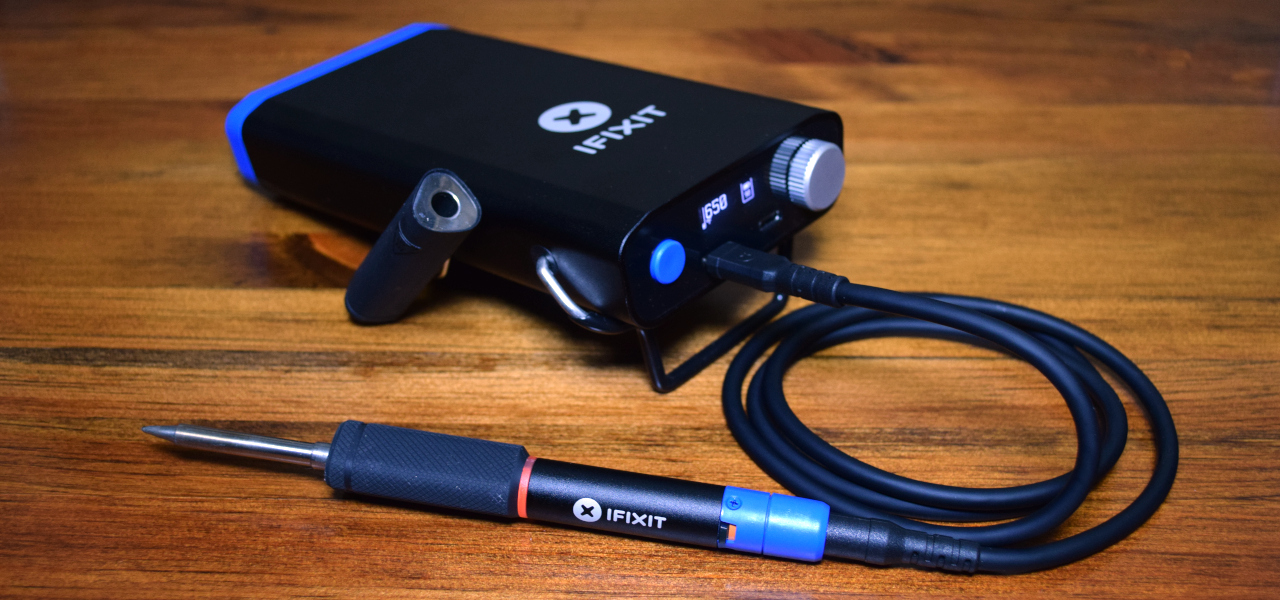
928 pointsIt's a USB-C powered soldering iron and smart battery power hub. Super repairable, of course. Our goal is to make soldering so easy everyone can do it:
https://www.ifixit.com/fixhub
We didn’t want to make just another iron, so we spent years sweating the details and crafting something that met our exacting standards. This is a high-performance iron: it can output 100W of heat, gets to soldering temperature in under 5 seconds, and automatically cools off when you set it down. The accelerometer detects when you pick it up and heats it back up. Keeping the iron at a lower temperature while you’re not soldering shouold prolong the life of the tip.
What’s the difference between this iron and other USB-C irons on the market? Here’s a quick list:
Higher power (our Smart Iron is 100W, competitors max out at 60W over USB-C, 88W over DC Supply)
Heat-resistant storage cap (you just have to try this out, it’s a real game changer in day-to-day use)
Polished user experience
A warranty and a local company to talk to (I can’t find any contact information for Miniware)
Comfier / more natural grip
Shorter soldering tip length
No-tangle, heat-resistant cable
Locking ring on the cable, so it can’t snag and get disconnected (this happens to me all the time on other irons)
More intuitive settings, either on the Power Station or on the computer
We used Web Serial https://caniuse.com/web-serial for the interface, which is only supported in Chromium browsers. The biggest bummer with that is that no mobile browsers support it, yet. Hopefully that changes soon.
Hardware is hard! It's been a journey for us. Happy to answer any questions about how we made it.
Schematics and repair information are online here: https://www.ifixit.com/Device/FixHub_Portable_Soldering_Stat...
Comments (405) 75 threads
Earlier commentsThe station has a hot air gun and a solder vacuum, so it's far more suitable for use on the bench due to those capabilities.
The Pinecil plugs into the Anker power bank that I carry with me everywhere anyhow, and runs basically forever on it. The UI took a day or so to get used to, but it's simple and straightforward enough for field use. I've even used it for bigger jobs on trucks and tractors in the past, and it didn't miss a beat.
It's amazing how versatile a well designed analog connector can be.
So you can plug an unused tip into your Walkman's headphone jack for safekeeping...
https://www.weller-tools.com/us/en/industrial-soldering/prod...
If this was available back when I got a Pinecil and PowerWheels Ryobi adapter [1], I would have been severely tempted to spend 400% more.
0. https://www.ifixit.com/products/fixhub-soldering-toolkit
1. https://wiki.pine64.org/wiki/Pinecil_Power_Supplies#Tool_Bat...
All comments shown.
Couldn't load more comments. Check your connection and try again.