Really excellent. Since I live in a high rise I've marked the cardinal directions on the floor and walls and been trying to develop a spatial intuition for the ecliptic, essentially trying to be able to easily imagine myself tilted in the northern hemisphere subtropics rotating around a sphere rotating around the sun. End goal would be an automatic intuition of where to look for the Sun, Moon, and all the visible planets. This sounds insane typing it out but its very passive and genuinely satisfying. Not being on the equator and the natural tilt of the Earth are the two factors that make this most difficult, of course.
Check out the North Paw Directional Anklet. It’s basically a compass that vibrates whenever you face magnetic north. From what I’ve read people seem to develop a sense of direction pretty quickly.
I built an ecliptic pathfinder in the Black Desert in Egypt a few weeks ago. It's a piece of land art comprising three piles of rocks on the near horizon, each marking the position of sunrise (if you are stood in an approx 200 metre by 5 metre strip) for the summer solstice towards the north east, the spring and autumn equinoxes to the east and the winter solstice towards the south east.
It's not insane in the least. I try to always make a point of observing the ecliptic when I travel, it creates a wonderful interconnectedness to places all over the planet. There are going to be some lovely conjunctions in the next few months that will provide a great opportunity to share this with people. It's actually pretty intuitive when there are 3 or 4 visible planets in a row once someone points it out.
Ciechanowski is likely the best content producer of our time, absolutely fascinating reads. Imagine having such a person as a teacher - he could probably excite students about any scientific topic.
I'd love to spend my time working on such articles when I'm retired :)
Can we give reference of these articles to LLMs and get them to write articles like this for educational contents and produce similar WebGL graphics code to render images. I mean, just use this style and produce educational content using AI. that might make the studies more interesting.
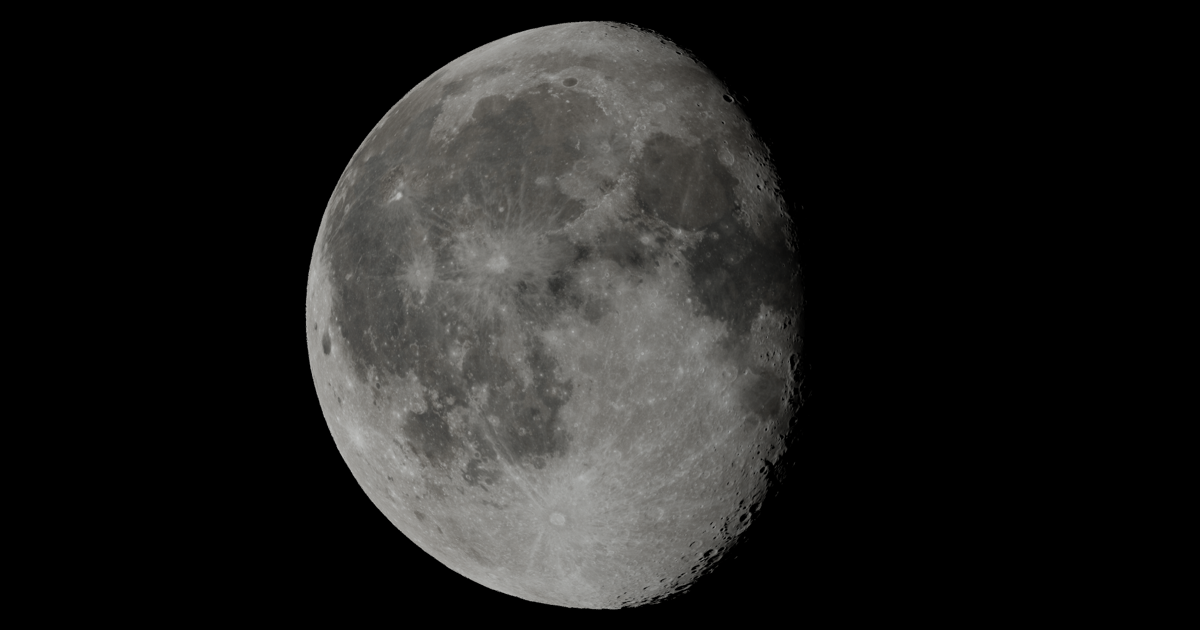
The Moon also plays currently a very special role in my life and my work days are dictated to a large extent by the current Moon phase :)
It's not discussed in the article but we have detailed models (ROLO[0] and LIME[1]) for how much light is reflected from the Moon and can be captured by a telescope. Like this one can radiometrically calibrate a telescope, that is, find a mapping between the digital numbers coming out from the sensor and actual radiance values. [0] https://www.usgs.gov/media/files/rolo-lunar-model-and-databa...
[1] https://acp.copernicus.org/articles/24/3649/2024/
At my current employer, Kuva Space, I'm among other things responsible for the commisioning and in orbit calibration of the payload. The Moon is a major calibration target for us, and between waxing and waining crescents I spent a lot of time analyzing Moon shots to perform radiometric calibration and camera parameter optimizations. The Moon doesn't know about weekends and images are not always downlinked at the most convenient times so that makes my life a bit more hectic.
My wife is a social worker at the county welfare office and swears there is a strong correlation between phase of the moon and the nature of her work with the homeless. To the point where where she checks the calendar to schedule more time for crisis handling around the time of the full moon.
Comments (250) 85 threads
Earlier commentsI'd love to spend my time working on such articles when I'm retired :)
No cookie banner, no pop ups, no sponsored links or ads. Just amazing hand-crafted web content.
It's not discussed in the article but we have detailed models (ROLO[0] and LIME[1]) for how much light is reflected from the Moon and can be captured by a telescope. Like this one can radiometrically calibrate a telescope, that is, find a mapping between the digital numbers coming out from the sensor and actual radiance values.
[0] https://www.usgs.gov/media/files/rolo-lunar-model-and-databa... [1] https://acp.copernicus.org/articles/24/3649/2024/
Could you explain further?
Like with all the other articles, it is straight up readable JS, with WebGL graphics, no dependencies.
Only kidding. Cool stuff, wish it were split up though
All comments shown.
Couldn't load more comments. Check your connection and try again.