What an amazing exploration, from watching the sun set over moon craters in the first graphic to the simulation of how the Moon formed and the lucid explanations of tidal locking and axial precession.
I've already had the pleasure of learning from his previous post on 'Sound', and this one on the Moon is equally informative and beautiful. In the age of slop and pop-ups, it fills me with joy that there still exists on the internet such a brilliantly crafted blog that informs and educates the curious mind.
Something has gone terribly wrong when such beautiful, but essentially simple interactive graphics feel like an expensive and exotic gift, rather than something readily supported by widely used editors. A decade or more ago, I would've turned to Flash to create something like this, but now I wouldn't even know where to start.
There's a collection of little facts I imagine being useful if a human got stranded somewhere in the universe and helpful aliens weren't sure where to take you. Without books and electronics, what could you memorize that would help them search and identify Sol/Earth in their big astral database?
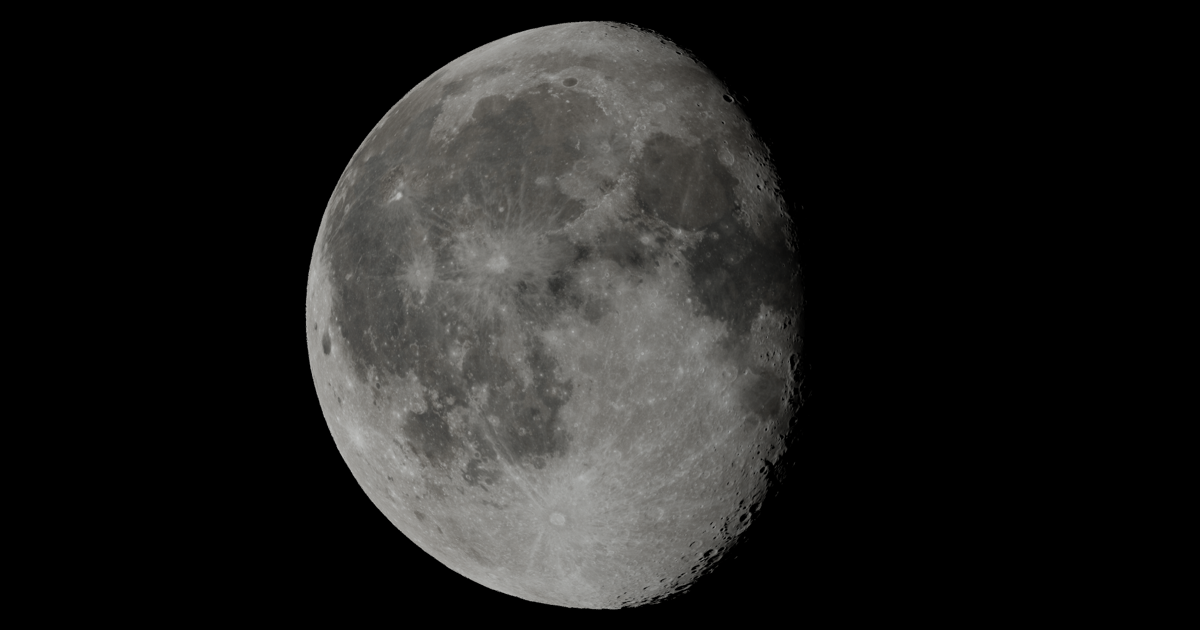
This is one of them, the seemingly-pure-coincidence of solar eclipses where the apparent size of the moon equals the apparent size of the sun. Ratios in general would be handy, since they would not depend on difficult-to-calibrate units: The moon is ~1/6 times the mass of our Earth; the biggest planet Jupiter/#5 is 2.5x the mass of all the rest and 5.2x the distance from the sun compared to Earth/#3, etc.
Once more extrasolar surveys are done it would be cool to see how unique we are. If something (possibly LLM based) could rate your description and see how many systems you'd have to visit to find Earth again.
"Eight major planets, the outer four are gas giants. Planets 2 and 3 are nearly the same size. All of the other planets, edge-to-edge, fit just inside the orbit of my planet and its moon."
Whoah, hold the "AI" hype train there: I didn't design it that way, but an LLM is close to the worst possible thing you could use for this. 1. LLMs are incapable of real math or symbolic logic, so they aren't able to you whether your statement is approximately-true, and they can't tell you if it's useful either. (Lots of planets are spherical.) 2. You're trying to communicate with literal aliens that won't have any of that English training data the LLM draws from. They don't have any preconceptions about a "second" and "year" being related but one is bigger, they won't see the same colors or even have a 1:1 color sense, and they absolutely won't be inferring that Jupiter and Saturn are connected by pantheon-naming. A lifetime exile from your entire species and culture is not something you want to leave to an LLM.
Ah, I think I wasn't clear enough and you misinterpreted me! I'm absolutely not suggesting an LLM for solving the "describe to aliens what our system looks like" problem or doing the assessment of our description.
I was trying to describe how, in the future when we have surveys of thousands of other star systems, it would be fun if there was a website that played the role of the aliens. We would describe to it in plain language what our system looked like and it would tell us if we did a good enough job to get home or not. To me, this means finding how many rows match in a database. I'm not sure how to turn plain language into a database query but, if pressed, today I'd reach for an LLM.
Comments (250) 85 threads
Earlier commentsAs with many of the author’s posts, the underlying code can be an interesting read as well: https://ciechanow.ski/js/moon.js
This is one of them, the seemingly-pure-coincidence of solar eclipses where the apparent size of the moon equals the apparent size of the sun.
Ratios in general would be handy, since they would not depend on difficult-to-calibrate units: The moon is ~1/6 times the mass of our Earth; the biggest planet Jupiter/#5 is 2.5x the mass of all the rest and 5.2x the distance from the sun compared to Earth/#3, etc.
"Eight major planets, the outer four are gas giants. Planets 2 and 3 are nearly the same size. All of the other planets, edge-to-edge, fit just inside the orbit of my planet and its moon."
Whoah, hold the "AI" hype train there: I didn't design it that way, but an LLM is close to the worst possible thing you could use for this.
1. LLMs are incapable of real math or symbolic logic, so they aren't able to you whether your statement is approximately-true, and they can't tell you if it's useful either. (Lots of planets are spherical.)
2. You're trying to communicate with literal aliens that won't have any of that English training data the LLM draws from. They don't have any preconceptions about a "second" and "year" being related but one is bigger, they won't see the same colors or even have a 1:1 color sense, and they absolutely won't be inferring that Jupiter and Saturn are connected by pantheon-naming.
A lifetime exile from your entire species and culture is not something you want to leave to an LLM.
I was trying to describe how, in the future when we have surveys of thousands of other star systems, it would be fun if there was a website that played the role of the aliens. We would describe to it in plain language what our system looked like and it would tell us if we did a good enough job to get home or not. To me, this means finding how many rows match in a database. I'm not sure how to turn plain language into a database query but, if pressed, today I'd reach for an LLM.
All comments shown.
Couldn't load more comments. Check your connection and try again.