Show HN: I built a hardware processor that runs Python (opens in a new tab)runpyxl.com
983 pointsHi everyone,
I built PyXL — a hardware processor that executes a custom assembly generated from Python programs, without using a traditional interpreter or virtual machine. It compiles Python -> CPython Bytecode -> Instruction set designed for direct hardware execution.
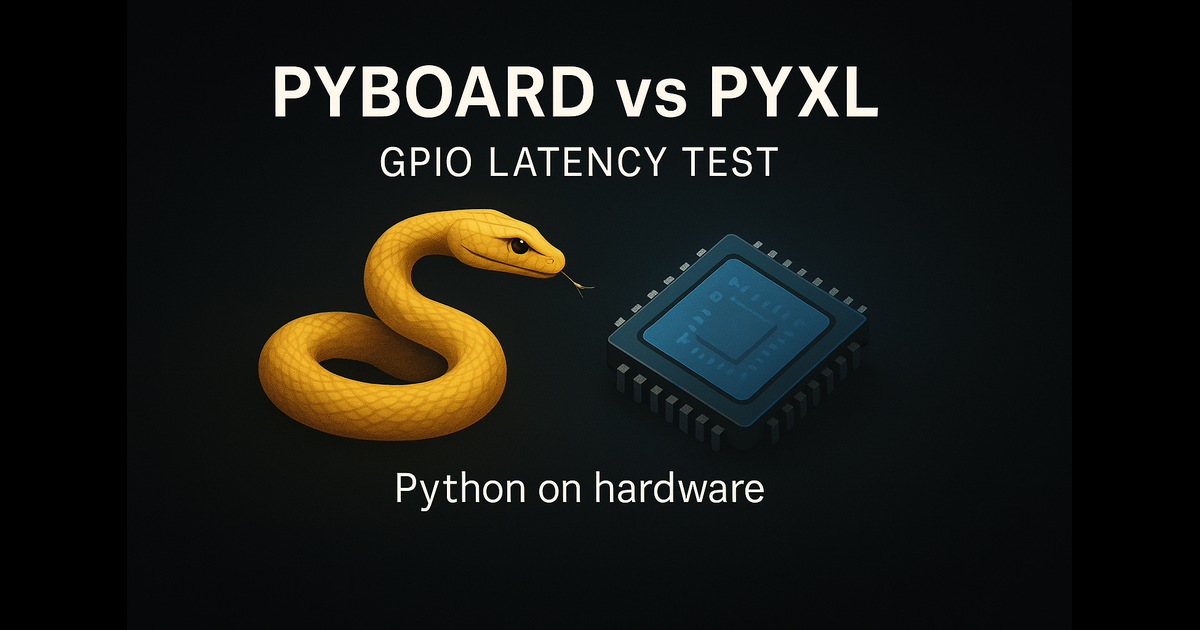
I’m sharing an early benchmark: a GPIO test where PyXL achieves a 480ns round-trip toggle — compared to 14-25 micro seconds on a MicroPython Pyboard - even though PyXL runs at a lower clock (100MHz vs. 168MHz).
The design is stack-based, fully pipelined, and preserves Python's dynamic typing without static type restrictions.
I independently developed the full stack — toolchain (compiler, linker, codegen), and hardware — to validate the core idea. Full technical details will be presented at PyCon 2025.
Demo and explanation here: https://runpyxl.com/gpio
Happy to answer any questions
Comments (265) 74 threads
Earlier commentsI’m guessing due to the lack of JIT, it’s executed on the host?
If you refer to the ARM part as the host (did you?) it's just orchestrating the whole thing, it doesn't run the actual Python program
All comments shown.
Couldn't load more comments. Check your connection and try again.