The one thing you need to focus on above all else is transparency and preventing scams. Video of the actual person who needs the treatment would go a long way, as would video updates along the way. I'm thinking an Android app that the locals could use to document the process.
If you solve that properly, this will really take off and do a lot of good. Also, you're going to eventually need to take a very small cut of the donations to pay living expenses for your volunteers. 100% to the patient sounds great, but for my donation, I'd prefer to know that there is someone dedicated full-time to the cause and overseeing the process, and receiving a reasonable salary for it. Of course, be 100% transparent about those salaries as well.
Great points. Transparency is huge, and we have done everything possible to put as much info on our site as we can. We love the app idea, and building an app for the MP's to document the entire process (patient work up, waiver, profile info, provide updates, track recovery, etc.) as easily as possible is one of our next steps.
We definitely need to make some money to keep this thing going. But right now we are still just looking for proof of concept. If we fund these treatments, then our goal is to go out and raise money to really expand the organization. We have tons of financial sustainability ideas, a few are: 1) a "tip" jar where donors can add to their donation to cover overhead
2) Grants and competitions
3) Co-branded CSR programs for companies Hope that helps to answer your questions!
Your operation could maintain 2 sets of cash flow: one for patient care, and one for administration. Maybe you could qualify for NGO status and get some government to fund some of the administration side.
This would be somewhat similar to Costco's model, where most (all?) of employee wages come from membership card fees, not product revenue. With this model, you could still let people donate 100% of their funds to the patient if they wanted. You could even make a slider with an animation that displays the percent which goes to each part of your business - so 10% or 15% of the donation could goto administration. I love your idea, it's tremendous. Good luck!
Those are awesome suggestions. Thank you! We were actually just approved as a 501(c)(3) non-profit organization in the states, and that will open us up to a lot of funding opportunities. But we love the Costco Model idea!
You could even make a slider with an animation that displays the percent which goes to each part of your business - so 10% or 15% of the donation could goto administration.
This is a great idea. Check the Humble Bundle's (http://www.humblebundle.com/) sliders at the bottom of the page to see how they handle their "Humble Tip", maybe you guys can do something similar.
I have experience running a website that made running costs + more from donations, let me know if you want to have a chat about what worked and what didn't!
> I'm thinking an Android app that the locals could use
I have no data to back me up here but I'm not sure whether people in countries like Ethiopia (just an example 'cause it was on the OPs front page) are rich enough to possess the necessary hardware to run Android apps.
Travelling around India, Indonesia, Laos, and so on, I found that even if someone lived in a shack, there was still a good chance they owned a cell phone. Now, that's just anecdotal obviously, and typically not smart phones, but still, it may the number may be higher than you expect.
This service has a tremendous potential to do good and help people in need.
As the previous poster mentioned, I too recommend you guys continue focusing on transparency and preventing scams. You don't want the service to be ruined because of a few bad apples. IMO, a smartphone/android app would probably not be accessible for many of those living in developing countries. But the general trend I've been hearing about is that a growing number of people living in developing countries are getting access to basic cellular/text service.
Like I said above, transparency and accountability are our two strongest values, and we've spent a very long time making sure our operations are as legit as humanly possible.
Right now we are only working with three partners, all of whom we have a personal relationship with and trust 100%. That said, if/when we expand, we won't have the luxury of only working with people we know and that's going to make the due-diligence process more difficult. But unlike other NGO's (like global giving, kiva, etc.) we don't need a ton of partners to grow. A single partnership with an organization like Doctors Without Borders would ensure we have enough profiles for a lifetime. However, I love the idea of having the community regulate the Medical Partner via SMS or something like that (sort of like an, "am I driving poorly? call 1-800... for healthcare providers). Great idea!
I don't think we need video of the process. If the people want to do it fine, but making them put on a show of themselves I think is a bit much. As a person, not only are you sick and need help from others but you need to be a documentary just to prove to people you aren't a scam, little much -- it's one thing to have a photo and story so it makes it real but as long as there is some trusted third party verification, I think that's enough. There are actually charities that have been doing this sort of thing longer than most of us have been alive that have figured this out, good idea to learn from them.
I really like that you brought up third-party verification. We think that's the most efficient and responsible way to scale our due-diligence process. Currently, in addition to being verified by us, all of our partners have been verified by multiple third parties (Partners in Health, Givewell, CNN, ABC, HBO, etc.) and they are all 501(c)(3) organizations which means that they are also overseen by the US Gov.
I agree that learning from other charities is the best way to evolve. Kiva has a pretty awesome due diligence process that we would like to pick and choose elements from as we grow: http://www.kiva.org/about/risk/kiva-role
Like Kiva, it would be good to also list the "sponsor" (read: 501(c)(3) name) on the patient's profile/donation page. If that sponsor name also included a link to a basic sponsor profile page showing further sponsor information, that would be a step in the transparency direction for me. I'm hesitant to donate until I see which charity is sponsoring the person who needs treatment.
EDIT: I dug through the pages and found a link to a Google Spreadsheet doc with basic information regarding the sponsor for each patient. This is one area I would definitely improve into a sponsor link on each patient's donations page. But all-in-all, great stuff!!
The advantage of sharing the individuals' stories is not only for preventing scammers. Connecting with recipients would be hugely motivating for your donor base. DonorsChoose.org is an excellent example of an online charity that built a scalable feedback loop into its donation process (I ran marketing there for a few years). At DonorsChoose.org, donors fund teachers' projects, and then teachers submit pictures online of the project taking place in the classroom. It brings donors back over and over again.
That's exactly what I wanted to say. Please don't blow this. Your "service" could really make a difference for a lot of these people, and hopefully thousands more when you grow. But only if you keep it transparent and scam-free so people feel safe donating money (or "funding their treatment", as you put it).
We won't blow it. Our entire team has worked abroad (5 former Peace Corps Volunteers, international doctor, etc.) and we put transparency and accountability first. We're extremely anal about reducing risk, and we plan to grow slow to ensure we don't over-extend ourselves.
If there is any information with regard to transparency that you don't see on the site, please let us know and we will add it. Thanks for the support!
We have a pretty awesome team. Everyone is part-time, and we are all 100% volunteer. We know that's not sustainable, and we will need to raise money to scale, but it's pretty rad nonetheless! (And we all make way more at our day jobs than we would ever make working full-time for Watsi).
I'm typically against organizations that need to live off donations. I think it's an impractical and unsustainable model. Your cause is very close to my heart and I would love to support it, but I'm a creature of convenience. I could make one donation now, but would fail to continue making donations. The two solutions I have seen that are successful at solving this problem are:
1) Automation. E.g. in the movie Office Space they take shavings off transactions (amounting to a few cents or less at a time) and pool them together. Another example: Auto-rounding up my grocery receipt, etc. 2) Recycling funds. I don't see how this would work in a donation based system where cash-flow is one directional, but it works really well for something like Kiva where funds are returned and the option to recycle is extremely easy. If any non-profit is to be sustainable, they must put in a HUGE amount of effort to obtain large enough recurring funds or make it really easy to provide funds. Since you are targeting individuals, it's going to be difficult to do the former. The latter will take a little more thought. All this said, I wish you the best of luck.
They could offer a subscription model, and then make it a monthly "game" of deciding where your money's going to go. Lots of people are willing to become sustaining members of charities.
Or, I'm a member of a meta-charity called Foundation Beyond Belief, in which my contribution is distributed to various nonreligious charities based on priorities I set (e.g. 25% of funds to environmental causes, 50% human rights, 25% poverty, or whatever). So for Watsi, maybe I could predefine, say, types of medical treatment, country/region, etc. and then the system heuristically determines where to disburse. And now that I think about it, Kiva optionally does something similar, so that loan repayments don't just sit stagnant in people's accounts because they haven't gotten around to manually distributing them.
These are great points. We would love to enable recurring donations. For example, you could allocate X% of your income every month to "Watsi Credit." We also think that a program like this would be great for Corporate Social Responsibility Programs.
Members of our team work for Kiva and Vittana (and I worked in microfinance for 4 years) and we would love to eventually try and offer a healthcare loan product (or at least encourage patients to open savings accounts). That said, there are lots of things that make this a tough market (e.g. people don't plan to get sick like they plan to start a business, cost of treatment can be more than they could ever repay, etc.). In all honesty, we can't even figure out healthcare in the US, and it's twice as hard in countries like Ethiopia. Thanks for the feedback. We love it!
Devil's advocate to myself: I heard Jessica Jackley speak once and one of the stories she told that stuck was about the that company offered to automate thousands of dollars to Kiva to go towards microloans. She refused because she wanted people to have a personal connection with borrowers.
I would love to say that if you took X% off my paycheck, I would sign up instantly. But I would just be escaping my responsibility as a citizen then. It's a tricky situation because I want automation for cash flow, but at the same time I want intimacy with the program and the people it involves.
Exactly. I think that's where the "Watsi Credit" idea comes in. You could allocate $X per month, then head over to Watsi and spend your credit whenever you like. The donation is automated, but you still get to choose who you support.
Does that sound like something you would be interested in?
This is "Death panels" in a fancy suit. Bid on life saving medical treatment from a thumbnail? By someones looks? and a possibly fabricated story?
So now we the internet get to decide who lives and dies? Who has a healthy fulfilling life and who lives with disease and disability? Idk about this idea. Its well intentioned, but oh so wrong all at the same time. This type of charity should be first come first serve to be fair. Not some bidding war over who's the most sickly (but still cute) looking child, or who has the most compelling story. A human is a human. The good intentions are there, but something about the way this website presents itself is twisted. Why should any of these people receive preferential funding over any other of them? Why should I get to choose? I'm not an expert on their medical conditions, or who needs more help than others. If this gets people to give money to a good cause, thats fine. But Idk. Still seems odd. Sorry if this is the kind of "negativity" hacker news is trying to avoid these days, but this is genuinely what I feel.
I also found it genuinely disturbing for the same reason. The 'you decide' aspect of the site seems very sick to me.
I think the moral dilemma could be solved easily by just having a single fund that you pay into. The money is then distributed among the people who need treatment. No input from the giver.
How is this a "death panel"? These people are currently not receiving treatment they need, and this site helps give it to them. Nothing is being denied to anyone here.
We are bummed out that the site makes you feel this way, but we genuinely appreciate you voicing your opinion. We're here to listen to the public, and if people disagree with what we are doing, we will shut down immediately. That said, I'd like to point out a few things.
1) This is not a bidding war. We won't remove a profile until it is fully funded. This is why we only post a few profiles at a time (and not hundreds) - to ensure they are all funded in a reasonable amount of time. If the patient needs treatment before the profile is funded, we will front the cost of care. 2) Humanity has always decided who lives and who dies, and it sucks. It makes me angry, but it's a reality. The only difference is now, because of how connected the world is becoming, this reality is a little harder for those of us that are the most fortunate, to ignore. 3) We aren't first come first serve. That wouldn't make sense, because our Doctors identify patients, they don't identify us (that would lead to fraud). Instead, we are lowest-cost, highest-impact first. Every profile is reviewed by at least two independent doctors (usually more) to determine which cases are the best ones to fund (and I assure you that "cuteness" is not a criteria these Doctors use to make a decision). See our FAQ for more info on treatment guidelines. We feel terrible that our site presents itself in a way that you think is twisted, and we would love to make whatever changes we can to improve it. Feel free to reach out to me directly at chase (at) watsi (dot) org with any other thoughts. We've spent a lot of time thinking about this (and even consulted with a medical ethicist), but we always have a lot more to learn. But perhaps the most important thing - the internet funded 11 medical treatments today for people that wouldn't have had access to them otherwise. You guys literally changed (and saved) 11 lives. I don't know how that can be a bad thing.
Alexanderh's main concern is he doesn't want to choose who gets treatment:
>This type of charity should be first come first serve to be fair. Not some bidding war over who's the most sickly (but still cute) looking child, or who has the most compelling story. A human is a human.
The good intentions are there, but something about the way this website presents itself is twisted. Why should any of these people receive preferential funding over any other of them? Why should I get to choose? I'm not an expert on their medical conditions, or who needs more help than others. If this gets people to give money to a good cause, thats fine. But Idk. Still seems odd. Can't you also provide a way to pay to a common pool? People who are uncomfortable with choosing can contribute to this pool. You can take money from that pool and forward that to patients who urgently want money for treatment? And people who contributed can see where their money got used (if they want).
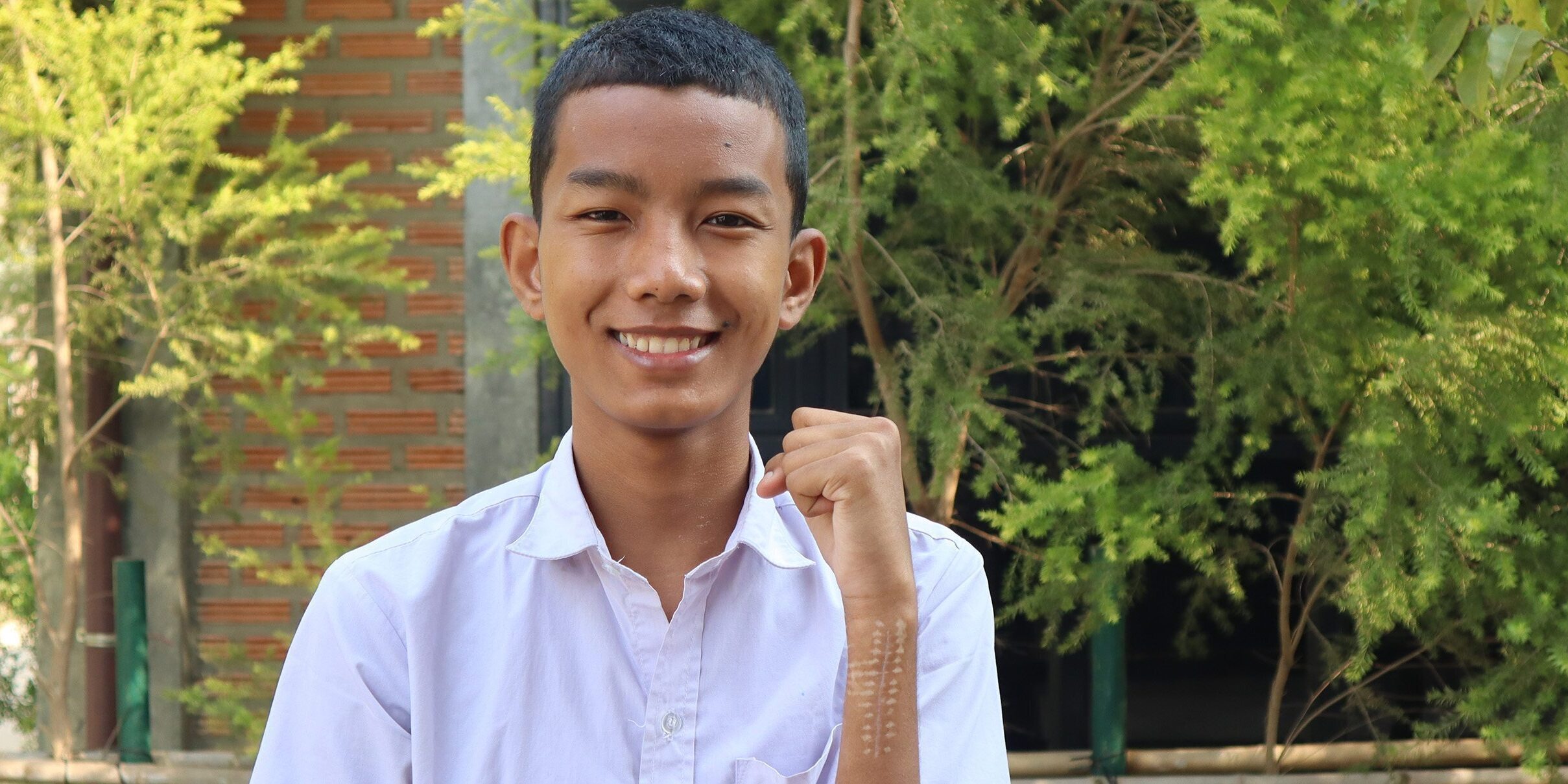
Just got an email - "Thanks to you, Sushil's medical treatment has been funded!"
Now that's CRM! I can't think of a single possible better way of making a customer happy. I'm telling everybody I know about this. The payment process was seamless, the design is lovely and the cause, well, of course. You guys are amazing.
Comments (183) 58 threads
If you solve that properly, this will really take off and do a lot of good.
Also, you're going to eventually need to take a very small cut of the donations to pay living expenses for your volunteers. 100% to the patient sounds great, but for my donation, I'd prefer to know that there is someone dedicated full-time to the cause and overseeing the process, and receiving a reasonable salary for it. Of course, be 100% transparent about those salaries as well.
We definitely need to make some money to keep this thing going. But right now we are still just looking for proof of concept. If we fund these treatments, then our goal is to go out and raise money to really expand the organization. We have tons of financial sustainability ideas, a few are:
1) a "tip" jar where donors can add to their donation to cover overhead 2) Grants and competitions 3) Co-branded CSR programs for companies
Hope that helps to answer your questions!
This would be somewhat similar to Costco's model, where most (all?) of employee wages come from membership card fees, not product revenue. With this model, you could still let people donate 100% of their funds to the patient if they wanted.
You could even make a slider with an animation that displays the percent which goes to each part of your business - so 10% or 15% of the donation could goto administration.
I love your idea, it's tremendous. Good luck!
Continue this thread — 1 reply
This is a great idea. Check the Humble Bundle's (http://www.humblebundle.com/) sliders at the bottom of the page to see how they handle their "Humble Tip", maybe you guys can do something similar.
Continue this thread — 5 replies
You never know!
I have no data to back me up here but I'm not sure whether people in countries like Ethiopia (just an example 'cause it was on the OPs front page) are rich enough to possess the necessary hardware to run Android apps.
As the previous poster mentioned, I too recommend you guys continue focusing on transparency and preventing scams. You don't want the service to be ruined because of a few bad apples.
IMO, a smartphone/android app would probably not be accessible for many of those living in developing countries. But the general trend I've been hearing about is that a growing number of people living in developing countries are getting access to basic cellular/text service.
Right now we are only working with three partners, all of whom we have a personal relationship with and trust 100%. That said, if/when we expand, we won't have the luxury of only working with people we know and that's going to make the due-diligence process more difficult. But unlike other NGO's (like global giving, kiva, etc.) we don't need a ton of partners to grow. A single partnership with an organization like Doctors Without Borders would ensure we have enough profiles for a lifetime.
However, I love the idea of having the community regulate the Medical Partner via SMS or something like that (sort of like an, "am I driving poorly? call 1-800... for healthcare providers). Great idea!
I agree that learning from other charities is the best way to evolve. Kiva has a pretty awesome due diligence process that we would like to pick and choose elements from as we grow: http://www.kiva.org/about/risk/kiva-role
EDIT: I dug through the pages and found a link to a Google Spreadsheet doc with basic information regarding the sponsor for each patient. This is one area I would definitely improve into a sponsor link on each patient's donations page. But all-in-all, great stuff!!
Continue this thread — 1 reply
Continue this thread — 1 reply
The US govt does not do significant oversight of 501(c)(3) organizations. They don't care at all about effectiveness.
If there is any information with regard to transparency that you don't see on the site, please let us know and we will add it. Thanks for the support!
Not to mention the 11 staff members they have, who probably are not in this just for the joy of saving adorable little African babies.
Continue this thread — 1 reply
Continue this thread — 4 more replies
1) Automation. E.g. in the movie Office Space they take shavings off transactions (amounting to a few cents or less at a time) and pool them together. Another example: Auto-rounding up my grocery receipt, etc.
2) Recycling funds. I don't see how this would work in a donation based system where cash-flow is one directional, but it works really well for something like Kiva where funds are returned and the option to recycle is extremely easy.
If any non-profit is to be sustainable, they must put in a HUGE amount of effort to obtain large enough recurring funds or make it really easy to provide funds. Since you are targeting individuals, it's going to be difficult to do the former. The latter will take a little more thought.
All this said, I wish you the best of luck.
Or, I'm a member of a meta-charity called Foundation Beyond Belief, in which my contribution is distributed to various nonreligious charities based on priorities I set (e.g. 25% of funds to environmental causes, 50% human rights, 25% poverty, or whatever). So for Watsi, maybe I could predefine, say, types of medical treatment, country/region, etc. and then the system heuristically determines where to disburse.
And now that I think about it, Kiva optionally does something similar, so that loan repayments don't just sit stagnant in people's accounts because they haven't gotten around to manually distributing them.
Continue this thread — 2 replies
Members of our team work for Kiva and Vittana (and I worked in microfinance for 4 years) and we would love to eventually try and offer a healthcare loan product (or at least encourage patients to open savings accounts). That said, there are lots of things that make this a tough market (e.g. people don't plan to get sick like they plan to start a business, cost of treatment can be more than they could ever repay, etc.). In all honesty, we can't even figure out healthcare in the US, and it's twice as hard in countries like Ethiopia.
Thanks for the feedback. We love it!
I would love to say that if you took X% off my paycheck, I would sign up instantly. But I would just be escaping my responsibility as a citizen then.
It's a tricky situation because I want automation for cash flow, but at the same time I want intimacy with the program and the people it involves.
Does that sound like something you would be interested in?
Continue this thread — 5 replies
So now we the internet get to decide who lives and dies? Who has a healthy fulfilling life and who lives with disease and disability? Idk about this idea. Its well intentioned, but oh so wrong all at the same time.
This type of charity should be first come first serve to be fair. Not some bidding war over who's the most sickly (but still cute) looking child, or who has the most compelling story. A human is a human.
The good intentions are there, but something about the way this website presents itself is twisted. Why should any of these people receive preferential funding over any other of them? Why should I get to choose? I'm not an expert on their medical conditions, or who needs more help than others. If this gets people to give money to a good cause, thats fine. But Idk. Still seems odd.
Sorry if this is the kind of "negativity" hacker news is trying to avoid these days, but this is genuinely what I feel.
I think the moral dilemma could be solved easily by just having a single fund that you pay into. The money is then distributed among the people who need treatment. No input from the giver.
1) This is not a bidding war. We won't remove a profile until it is fully funded. This is why we only post a few profiles at a time (and not hundreds) - to ensure they are all funded in a reasonable amount of time. If the patient needs treatment before the profile is funded, we will front the cost of care.
2) Humanity has always decided who lives and who dies, and it sucks. It makes me angry, but it's a reality. The only difference is now, because of how connected the world is becoming, this reality is a little harder for those of us that are the most fortunate, to ignore.
3) We aren't first come first serve. That wouldn't make sense, because our Doctors identify patients, they don't identify us (that would lead to fraud). Instead, we are lowest-cost, highest-impact first. Every profile is reviewed by at least two independent doctors (usually more) to determine which cases are the best ones to fund (and I assure you that "cuteness" is not a criteria these Doctors use to make a decision). See our FAQ for more info on treatment guidelines.
We feel terrible that our site presents itself in a way that you think is twisted, and we would love to make whatever changes we can to improve it. Feel free to reach out to me directly at chase (at) watsi (dot) org with any other thoughts. We've spent a lot of time thinking about this (and even consulted with a medical ethicist), but we always have a lot more to learn.
But perhaps the most important thing - the internet funded 11 medical treatments today for people that wouldn't have had access to them otherwise. You guys literally changed (and saved) 11 lives. I don't know how that can be a bad thing.
>This type of charity should be first come first serve to be fair. Not some bidding war over who's the most sickly (but still cute) looking child, or who has the most compelling story. A human is a human. The good intentions are there, but something about the way this website presents itself is twisted. Why should any of these people receive preferential funding over any other of them? Why should I get to choose? I'm not an expert on their medical conditions, or who needs more help than others. If this gets people to give money to a good cause, thats fine. But Idk. Still seems odd.
Can't you also provide a way to pay to a common pool? People who are uncomfortable with choosing can contribute to this pool. You can take money from that pool and forward that to patients who urgently want money for treatment? And people who contributed can see where their money got used (if they want).
Continue this thread — 2 replies
Continue this thread — 2 more replies
Now that's CRM! I can't think of a single possible better way of making a customer happy. I'm telling everybody I know about this.
The payment process was seamless, the design is lovely and the cause, well, of course.
You guys are amazing.
Continue this thread — 1 reply
All comments shown.
Couldn't load more comments. Check your connection and try again.