Do you have $800? I'm trying to get my daughter a full set of acoustic drums (though odds are her brother will use them more even though he plays clarinet and she does percussion). I've seen full sets for as little as $30 - but it doesn't take much checking to realize they are not worth it even at that price. Good sets quickly cost more, but $800 is a good starting point for a set that isn't unusable.
We've been following this. Every nibling or even the offspring of friends received xylophones, tin whistles, hand drums etc.
As long as it's not battery powered, it was on our "approved" list. They love us (the kids. The parents... not so much I guess). We have our first one due in a couple of weeks, and I guess we'll prepare ourselves for retribution!
This is absolutely FANTASTIC, and I am humbled by your mad skillz!
My son and I are also fascinated by the sweet, sweet synth sound, but as I have no discernible talent, we went this route: https://www.sweetwater.com/store/detail/Nts1Mk2--korg-nutekt... Which, unfortunately, has a HUGE learning curve in terms of operation.
I was looking for some synths for my less-than-two-years kid, after seeing their face light up when I fiddle with my Lofi 12 XT in front of them. I had all these criterias :
-Something without any screens
-Something simple enough
-Something that could withstand some rough play I looked and looked, was considering proper Aira Compact synths, but ended up with the antiquity of the Bliptronic 5000 from Thinkgeek.
https://youtu.be/6rCfhF-fNb4
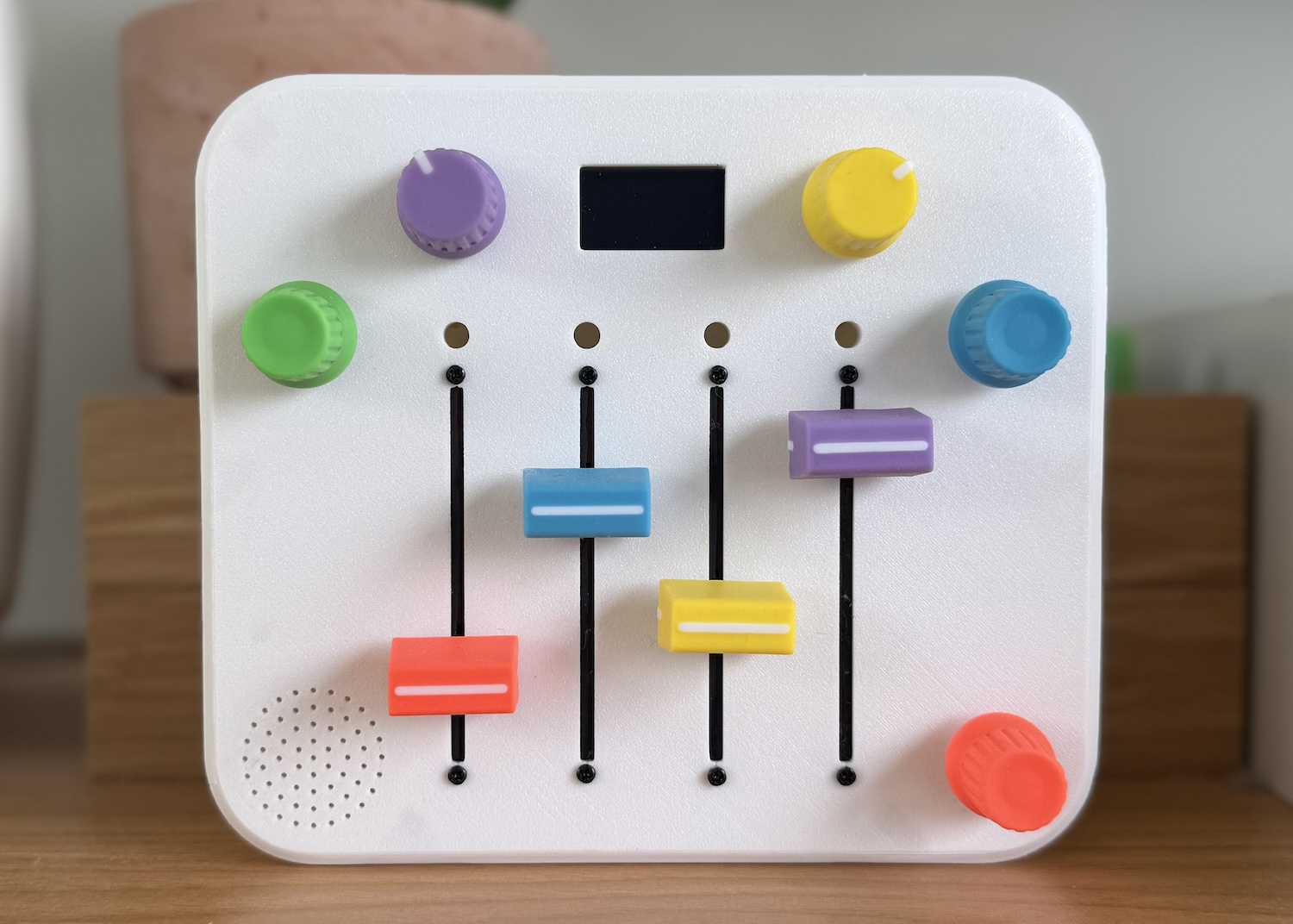
They love it, the buttons are beyond fun to them, but the knobs are quite hard to turn for a little kid (1st world problem, I know) I felt they were too young for a Blipbox, and I also bought an Orba 2, we'll see how that one goes. But I dreamed of such a device, with easy to turn knobs, and colorful display, something simple to modulate sounds and just hear melodies. Seeing how you created it is both inspiring and discouraging, as someone with limited free time and electrical knowledge, but, you never know !
Putting aside the beauty of both the synth and its purpose, what I'm curious about is the learning process in making this. The running theme is that you picked up several new skills 'from cold'. That in itself is impressive enough. How did you approach learning:
- the necessary basic electronics; - PCB design; - 3D CAD; - your particular iterative process, among other things? I get the impression you built things incrementally, observed what happens and learnt via that feedback loop? Maybe others could share their own feedback loops, too.
I've been reflecting on this a bit. I found it very useful to have a well-defined project and focus the learning time on things that are necessary for completing it. Having a background in coding was useful because I find you end up developing a knack for isolating parts of systems and figuring out how to work on small parts that end up fitting together.
I therefore focused initially on simply getting readings from a single potentiometer; if I could do that then I felt pretty confident I could read from four of them. If I could generate a midi message I was pretty confident I could send it to something that could read it etc. When I started on the PCB design I had a simple circuit already so it was a case of translating that onto a board. I didn't get too deep into any of the various parts but I found that it gave me a birds-eye view of the whole process and I now feel confident in isolating parts of them and 'zooming in' to them and refining them, building on the foundation I've developed.
Comments (209) 82 threads
Earlier commentsSo why not go all in with a full set of acoustic drums?
Continue this thread — 1 reply
As long as it's not battery powered, it was on our "approved" list.
They love us (the kids. The parents... not so much I guess).
We have our first one due in a couple of weeks, and I guess we'll prepare ourselves for retribution!
My son and I are also fascinated by the sweet, sweet synth sound, but as I have no discernible talent, we went this route:
https://www.sweetwater.com/store/detail/Nts1Mk2--korg-nutekt...
Which, unfortunately, has a HUGE learning curve in terms of operation.
I was looking for some synths for my less-than-two-years kid, after seeing their face light up when I fiddle with my Lofi 12 XT in front of them.
I had all these criterias : -Something without any screens -Something simple enough -Something that could withstand some rough play
I looked and looked, was considering proper Aira Compact synths, but ended up with the antiquity of the Bliptronic 5000 from Thinkgeek. https://youtu.be/6rCfhF-fNb4 They love it, the buttons are beyond fun to them, but the knobs are quite hard to turn for a little kid (1st world problem, I know)
I felt they were too young for a Blipbox, and I also bought an Orba 2, we'll see how that one goes.
But I dreamed of such a device, with easy to turn knobs, and colorful display, something simple to modulate sounds and just hear melodies. Seeing how you created it is both inspiring and discouraging, as someone with limited free time and electrical knowledge, but, you never know !
- the necessary basic electronics;
- PCB design;
- 3D CAD;
- your particular iterative process,
among other things? I get the impression you built things incrementally, observed what happens and learnt via that feedback loop? Maybe others could share their own feedback loops, too.
I therefore focused initially on simply getting readings from a single potentiometer; if I could do that then I felt pretty confident I could read from four of them. If I could generate a midi message I was pretty confident I could send it to something that could read it etc.
When I started on the PCB design I had a simple circuit already so it was a case of translating that onto a board.
I didn't get too deep into any of the various parts but I found that it gave me a birds-eye view of the whole process and I now feel confident in isolating parts of them and 'zooming in' to them and refining them, building on the foundation I've developed.
All comments shown.
Couldn't load more comments. Check your connection and try again.