Ask generative AI to create an embedded web page of a voxel Mona Lisa head. It will generate an image. Ask it to sample that image and extract out of it as binary that is well formed in the PNG data format... EDIT: https://claude.ai/artifact/HUUtPMp7aF8iyjimViBSor - generates the Mona Lisa as a PNG via Claude sonnet 5.5 medium level. It's not a very good Mona in my opinion. Fire it up, rotate the 3d voxel presentation, scroll down, click the button, scroll further down to see the PNG. Here is the chat with prompts: https://claude.ai/share/2fb3126e-e97a-4a1a-9571-51d16f054330
Half of the industry is, going by the amount of "AI doesn't amount to anything and is just regurgitating text".
Two things: - For the past year or more, many models can emit images directly, and all models that matter can see images directly - that's what "multimodal" means. Tokens don't have much to do with textual language anymore, they're more like units of sensory experience. - Even restricted to text, a language model can operate anything that can be expressed as text, as long as you have a translation layer between textual representation and the final form. That includes giving commands as text. The total addressable space of what models can be used for is, thus, approximately anything humans do.
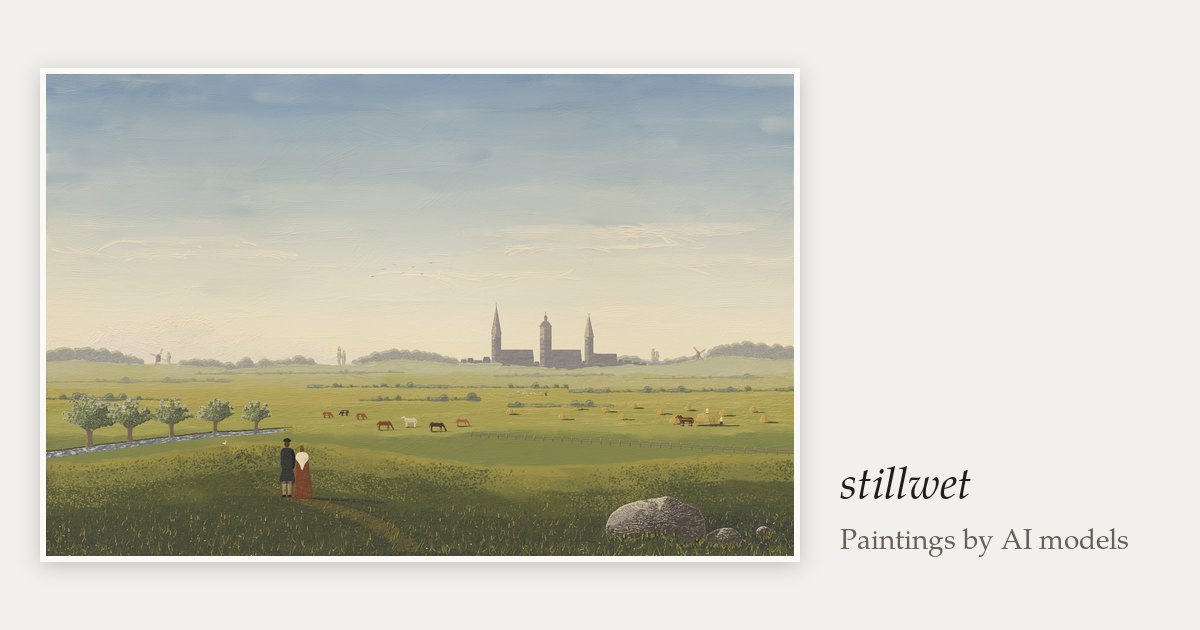
  > No image model, and no Friedrich images given to the painters. Every picture here is a program written by an AI model; all but one (a comparison, marked) run through a simulation of oil paint.

  ...

  > A physical oil-paint simulator in Rust, and an easel to paint with it.

  > Every mark is made the way a painter makes it: simulated bristles carry wet paint over a primed linen canvas, the paint levels and dries on a clock, and layers combine by Kubelka–Munk optics. Paint comes only from piles knifed together from named tubes.
Opus can see images, it just can't generate images.
So it can "draw" an image programmatically (e.g., "place a black pixel at (0,0), place a blue pixel at (0,1)," etc.), then look at the image it is drawing as it is drawing it. Of course, you should be aware of the "pelican riding a bicycle" SVG benchmark test, which is effectively this process but in one shot.
I love this! It's heading in a very similar direction I am passionate about!
If we are generating artifacts with AI, they should be made out of source code or other form of project file that humans can actually inspect and learn from. I'm doing the same with music: https://johnoestmannmusic.com/0009-when-we-become-discoverer...
I don’t like how it’s a human aiming to portray the ai generation with their taste and judgements about it but then becoming lazy and quitting on that and leaving in the ai generated portrayal about its own judgment in the site.
Just share your opinions, dude, we get its ai generated but share your own taste. We want to know what YOU think. Stop being shy and lazy.
Comments (114) 30 threads
Earlier commentsHow does Opus actually paint? Thought it only generated text…
You give an LLM a virtual canvas and a set of “instructions” to control the pen.
https://en.wikipedia.org/wiki/Turtle_graphics
Ask generative AI to create an embedded web page of a voxel Mona Lisa head. It will generate an image.
Ask it to sample that image and extract out of it as binary that is well formed in the PNG data format...
EDIT: https://claude.ai/artifact/HUUtPMp7aF8iyjimViBSor - generates the Mona Lisa as a PNG via Claude sonnet 5.5 medium level. It's not a very good Mona in my opinion. Fire it up, rotate the 3d voxel presentation, scroll down, click the button, scroll further down to see the PNG. Here is the chat with prompts: https://claude.ai/share/2fb3126e-e97a-4a1a-9571-51d16f054330
Two things:
- For the past year or more, many models can emit images directly, and all models that matter can see images directly - that's what "multimodal" means. Tokens don't have much to do with textual language anymore, they're more like units of sensory experience.
- Even restricted to text, a language model can operate anything that can be expressed as text, as long as you have a translation layer between textual representation and the final form. That includes giving commands as text. The total addressable space of what models can be used for is, thus, approximately anything humans do.
So it can "draw" an image programmatically (e.g., "place a black pixel at (0,0), place a blue pixel at (0,1)," etc.), then look at the image it is drawing as it is drawing it.
Of course, you should be aware of the "pelican riding a bicycle" SVG benchmark test, which is effectively this process but in one shot.
If we are generating artifacts with AI, they should be made out of source code or other form of project file that humans can actually inspect and learn from. I'm doing the same with music: https://johnoestmannmusic.com/0009-when-we-become-discoverer...
Just share your opinions, dude, we get its ai generated but share your own taste. We want to know what YOU think. Stop being shy and lazy.
All comments shown.
Couldn't load more comments. Check your connection and try again.