For those of you wondering when it is going to land in your next smartphone: “At the moment, this structure only gives us a limited range of colours. The next step is to understand what changes to the device’s structure will make more colours accessible and expand the colour gamut.”
okay, now try transform the content & color displayed on your paper with electricity or mechanically and make it fast.
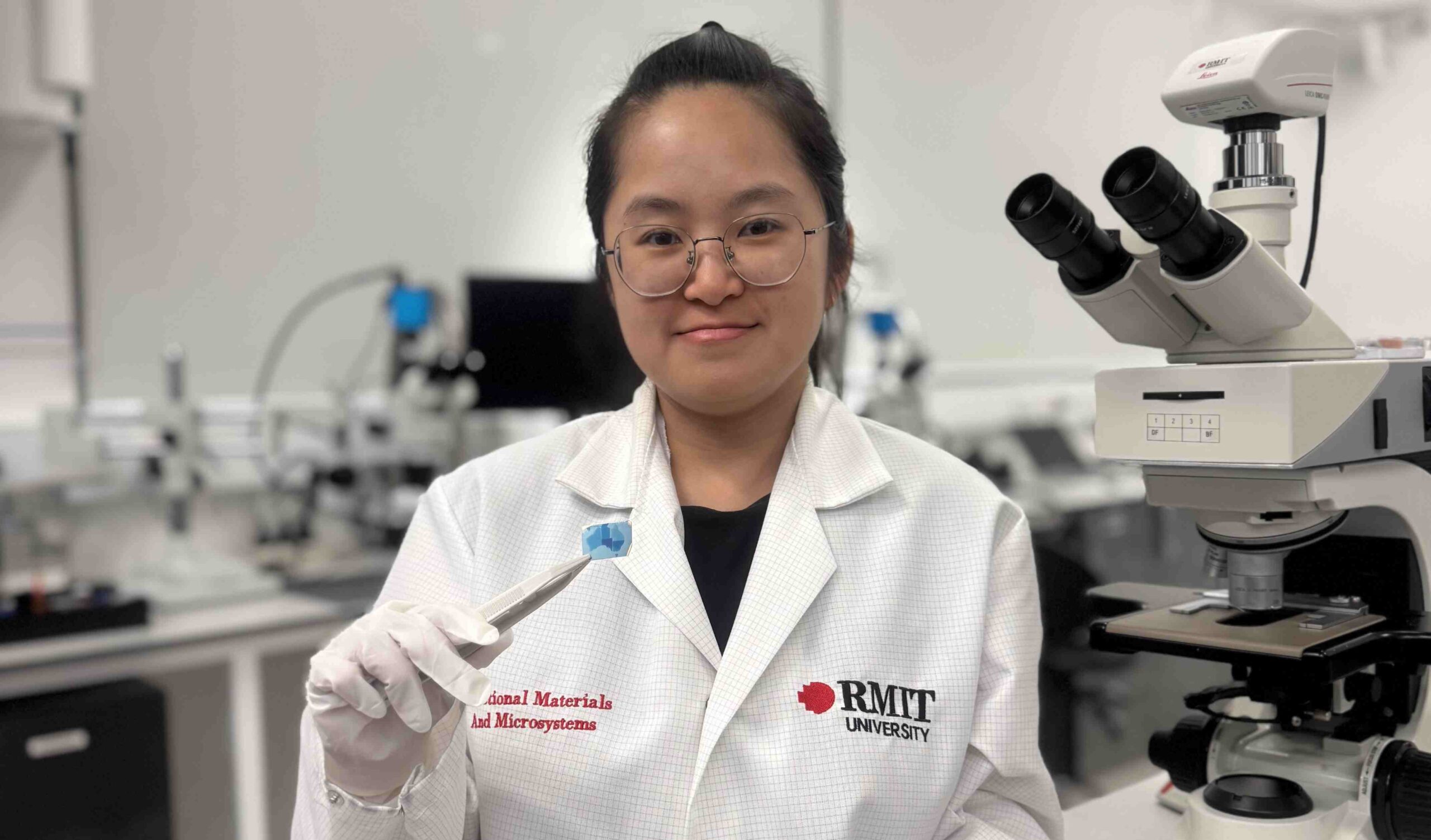
Per article: > One of the reasons for choosing Antimony Selenide how significantly its interaction with light changed between the crystalline and amorphous forms. Light travelling through the different phases moves at different speeds and is absorbed to different degrees. It was these effects that could be leveraged to produce different colours.
It sounds like they are very far from anything you could call a display. At this point the material can be erased and rewritten but that has to be done externally and the process sounds lengthy. Of course this is early phase research, so that doesn’t mean it couldn’t turn into something, but as is, paper is much more practical, but less erasable.
> Erasing the display was done by heating the material to ~200°C uniformly; at this temperature, the atoms have enough energy to move around and find new positions and orientations. > At these high temperatures, atoms can migrate into the most stable positions, which tend to be crystals due to the dense packing of their regular structure. > This process is known as annealing, and it resets the display with a uniform blank image. > Then, to draw images on the blank screen, co-author Dr Shvedov used short laser pulses, like drawing with a laser instead of a pencil. > The laser pulses add just enough energy to get the atoms moving again and into irregular arrangements, but crucially, this is done quickly. > As the regions hit with the laser cool down quickly, the atoms freeze in their new irregular arrangement before without a chance to settle back into their crystalline configuration.
Comments (20) 6 threads
Interesting nonetheless
This works exactly like the rewritable CDs and DVDs, except that the difference in reflectivity is high enough to be seen with your eyes.
https://twitter.com/chiu_hans/status/2123033905007825334
https://twitter.com/chiu_hans/status/2123745710797684920
https://twitter.com/chiu_hans/status/2124557612998107633
https://twitter.com/jav6868/status/2125505025946583271
(Sorry to those without a twitter account, if anyone lets me know a reputable mirror I can replace the links)
On a serious note, I could see this being useful for signage that can be remotely updated.
Per article:
> One of the reasons for choosing Antimony Selenide how significantly its interaction with light changed between the crystalline and amorphous forms. Light travelling through the different phases moves at different speeds and is absorbed to different degrees. It was these effects that could be leveraged to produce different colours.
Edit: with stacked semi transparent shutters you could get finer control.
> Erasing the display was done by heating the material to ~200°C uniformly; at this temperature, the atoms have enough energy to move around and find new positions and orientations.
> At these high temperatures, atoms can migrate into the most stable positions, which tend to be crystals due to the dense packing of their regular structure.
> This process is known as annealing, and it resets the display with a uniform blank image.
> Then, to draw images on the blank screen, co-author Dr Shvedov used short laser pulses, like drawing with a laser instead of a pencil.
> The laser pulses add just enough energy to get the atoms moving again and into irregular arrangements, but crucially, this is done quickly.
> As the regions hit with the laser cool down quickly, the atoms freeze in their new irregular arrangement before without a chance to settle back into their crystalline configuration.
All comments shown.
Couldn't load more comments. Check your connection and try again.