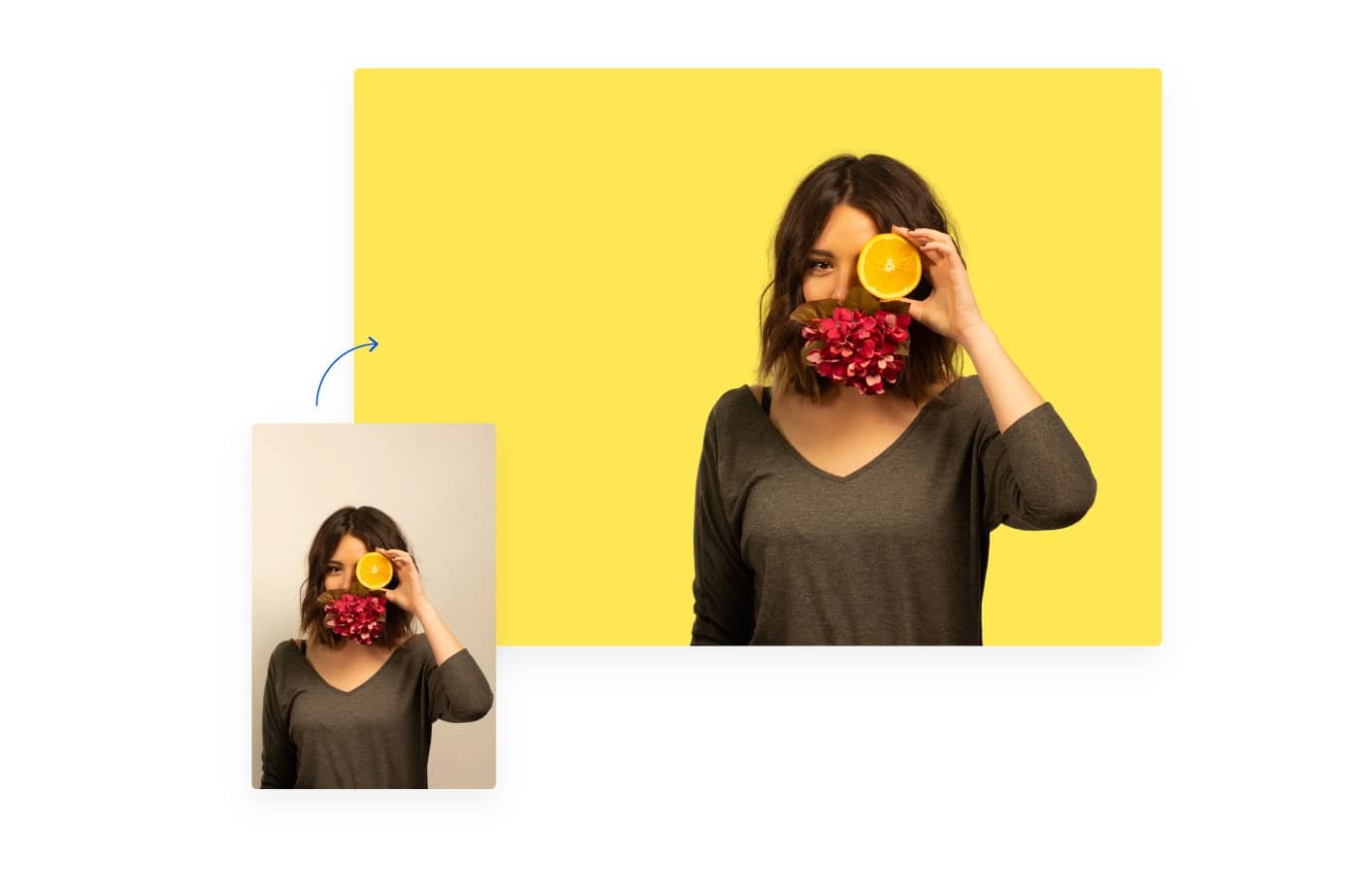
I actually wrote my honours thesis on this topic. In academia it's called Alpha Matting/Image Matting.
There's a great website http://alphamatting.com/ that provides a benchmark dataset and a comparison of a lot of influential methods. I applaud your work in making a real time and interactive matting algorithm! One day it might be also as accurate as state of the art methods. You guys should write a paper about your method.
Thanks for the link! Real time is a pretty big constraint, and the input for those results is a much more complete labeling than we expect (only 22 to 44 pixels around the ground truth boundary are left uncertain). But I'll definitely read the paper and hopefully we can gain some insights from it!
Have a look at KNN Matting http://ihome.ust.hk/~dli/projects/knn/. Their MATLAB implementation uses a similar style to yours but is not as real time. They take single mouse clicks and spread them over a much larger window/bounding box. Only takes a few clicks on foreground/background to get excellent results.
Actually Shared Matting is far more applicable than KNN Matting. It's designed for real time use and has a post processing step which will help you deal with fine detail like hair.
You should read Jue Wang's 2007 survey paper which groups and puts all the techniques in context, then a handful of the top performing papers from recent years on alphamatting.com
A bit off topic, but I'm working on a video interviewing startup and one of the things we'd looove to offer is (semi-)automatic Chrome Keying / green screening to show just a person's torso and face.
Might (one of) you know what's the state of the art in research on this topic as well?
This is really slick. I work at a newspaper where we do a lot of cutouts and I've looked at several automatic tools to save people time, and I think this is the best I have seen in terms of balancing ease of use with accuracy.
The only thing I might suggest is that for photos with softer edges, you might offer some degree of "feathering" on the edges of the cut out. I don't know how hard this is with your algorithm, but it seems like it might be an easy fix.
Congrats! I had a similar idea a while ago so I really appreciate that somebody accomplished it in so high level! I already signed up and already waiting for the post alpha version :)
Did you guys consider in the future to add multiple object segmentation? That looks like a natural next step. Keep it up the good work! :)
This is beautifully done -- great UX, truly impressive tech. My wife loves it and is using it to repurpose some shots from our wedding for e.g. Christmas cards.
Completely agree! I actually tried it out with one of our pictures [1] from my proposal in Rome. I'm just having a bit of trouble with the small tuft of her hair that's forcing the algorithm to keep some of the background. I suppose I could probably fix this by using the full resolution picture, instead of this scaled down one.
A pretty busy background, soft/furry edges between subject and background, less-than-obvious clear color boundaries. The real-time feedback makes it easy to give it the markings that it needs in less than 20 seconds for a near perfect crop (or as good as one would expect with fluffy hair as a boundary). I was pleasantly surprised.
Comments (140) 64 threads
There's a great website http://alphamatting.com/ that provides a benchmark dataset and a comparison of a lot of influential methods.
I applaud your work in making a real time and interactive matting algorithm! One day it might be also as accurate as state of the art methods. You guys should write a paper about your method.
Thanks for the link! Real time is a pretty big constraint, and the input for those results is a much more complete labeling than we expect (only 22 to 44 pixels around the ground truth boundary are left uncertain). But I'll definitely read the paper and hopefully we can gain some insights from it!
http://www.inf.ufrgs.br/~eslgastal/SharedMatting/
http://www.juew.org/publication/mattingSurvey.pdf
Might (one of) you know what's the state of the art in research on this topic as well?
The only thing I might suggest is that for photos with softer edges, you might offer some degree of "feathering" on the edges of the cut out. I don't know how hard this is with your algorithm, but it seems like it might be an easy fix.
Did you guys consider in the future to add multiple object segmentation? That looks like a natural next step. Keep it up the good work! :)
I'll be recommending this to many people!
[1] https://www.evernote.com/shard/s130/sh/2ef070f7-252d-4e79-8e...
Some pictures needed more work than others, but the results were always great!
A pretty busy background, soft/furry edges between subject and background, less-than-obvious clear color boundaries.
The real-time feedback makes it easy to give it the markings that it needs in less than 20 seconds for a near perfect crop (or as good as one would expect with fluffy hair as a boundary). I was pleasantly surprised.
All comments shown.
Couldn't load more comments. Check your connection and try again.