My uncle died suddenly this year. He was unbelievably caring - and not just to family - but to everyone he ever met. His funeral was jam packed with everyone from homeless people to executives of multi-billion dollar companies.
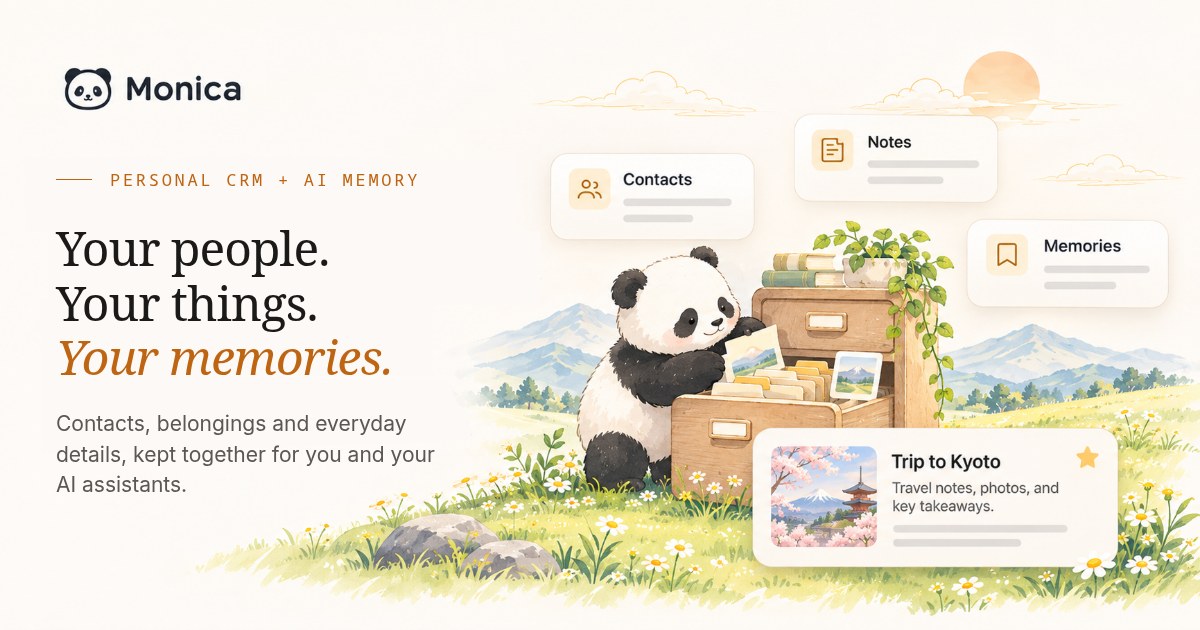
I always thought that his ability to always have you, and whatever you had last talked about with him, on his mind at any moment was some kind of supernatural gift. I was surprised to find out at his funeral that he actually kept an excel spreadsheet of everyone he met and what they needed and were going through. He reviewed this constantly. It didn't lessen his genuine love for everyone, just let him be a little more super human.
It's not that I hate Zuckerberg that I find it hard to use Facebook, but that I trust them less than the other super-presences outs there (justified or not), and I dislike how it changes my perceptions of some of my friends. The constant posting of inane shit starts to look less like keeping in touch and more like an addiction to my eyes. I still like those people, and enjoy their company, but being constantly exposed to their posts feels like being in their living room as they crack open that 8 AM beer after waking up. It gets uncomfortable, but it's also not something I'm sure it's my place to butt into, since to this point it appears mostly harmless.
It is the best tool to keep in contact we currently have though, so I do pop in every week or two to check on notifications. The times I go longer I end up missing events friends have put together and not notified in other ways about, so I try to remember to check in fairly regularly. I only hope they don't swing their attention towards those of us that shun the feed any time soon, and try to find a way to tweak our reward response for that as well (or at least in a more effective way. I'm sure they've put at least some attention to it).
Yeah, I don't get that. I see some people who like to reflect their interests online but I don't consider it inane or addiction. You have a hobby, why not share it online?
I still sometimes wonder if anyone else has a good name for what Facebook lost somewhere in the switch between the much more ephemeral "Status" system of 2004's TheFacebook to today's "Posts" and their littered, ad-filled home the "News Feed".
Even the "Notes" system in the middle of the transition was more "opt in" than firehose and a bit more rare and curated by the fewer users using it. There is a spirit to the old systems lost to the new ones that I can't quite name. In the rush to increase communication overall, and build an addictive platform that people feel a need to check often, perhaps too much of the signal has been drowned out in noise. But that doesn't feel a strong description either because the signals become so different, too.
I wonder if you have a slightly over-romanticized view of the old FB. I got on FB sometime in 2007 and for a few years it was overrun with quizzes and games and such spam. It was a different kind of spam from ad-spam but today's FB seems much more streamlined in many senses.
Weird programming analogy that works for me: it went from being a library to being a framework. For your life.
As in, Facebook used to expect you to have to come and poll it. There was information there about the current state of things, and that information was replaced when people updated their status et al. You had to look, and look often, if you wanted to keep up. It was addictive, in both the good and bad senses of that word. Today's Facebook is active, making your interaction with it passive; it keeps up to date on things for you, and notifies you when it thinks you would be interested in knowing something. You're the delegate module. You don't talk to it; it talks to you. You never actually have to check it or look at it. Actually, for another analogy: today's Facebook is almost like a secretary. (It'd be one for real if it could guess your intentions well-enough to automatically accept/reject event invitations.) Like a secretary, there's no reason to go bother them. Nothing useful to be gained by polling. Zero addiction potential. What's popular these days? Snapchat. Guess why?
Statuses were great as a brief update of a friend's change in their state of mind. I could follow up as I saw fit, often just keeping it in mind for the next time we met up. Posts and news is just a steady steam of information... repeated opinions, content that forms their opinion, attempts at converting others, or minor events that would have been interesting to talk about but bland now that I've seen the highlights online... Often in impersonal monologue form, or equally impersonal many-to-many chat. Those features gutted the middle of the friend spectrum, their UX no longer aligns with natural social patterns. Humans talk more and about different things as we become closer friend's, slowly acclimating to each other. Facebook is optimized for tight social groups. News posts are useful for my inner group, but I had to unfriend most of my more nebulous connections because their updates were basically spam in the context of my life. Facebook's features no doubt provides better revenue from ads/targeted spam for shareholders, but they've lost what I found useful for networking and developing new relations. If anything, their new features are impediments. At this point, I've completely dropped Facebook in favor of email and chat (mix of apps)... It's a better experience than Facebook news and posts, obvious data privacy wins, and my friends and I can share higher resolution pictures without coupling to any specific platform. I haven't found a good alternative for networking, aside from LinkedIn (okish) and plain ol' phone calls/sms/in-store meetups. Maybe that's the best there is.
That's what you think you'd LIKE to use FB for. But remember, the medium is the message. You can't escape the interactive narrow mindedness of FB because it is inherent to the design of the overall product.
In reality, you use FB to have your data packaged up and sold to advertisers, brands, and government agencies. You're the product, not the customer.
Yeah, but if you have 10 or more friends your 'wall' gets littered with all kinds of useless information. Unless you unfollow and explicitly tell to not to show any of their likes and other random information.
Yeah, fb should kill this open source startup! ;p Seriously, though, i think it would really creep people out if fb had a feature to take notes about what you talked with people who aren't even joined up.
would greatly disagree with your statement. It may not be the answer for everyone, but it could be that tool for a large chunk of the world's population.
I'm also curious as to the format of the spreadsheet! How did Uncle add new events &c - just modify a cell or add a new row with some kind of key? I'm interested in tracking interactions with my adult education students...
Been thinking about this at the same time I've been trying to find a use for Airtable. It seems like a great product but I've never had an obvious use case until now. Seems like it could be a great fit.
Dale Carnegie wrote about doing just this in How to Win Friends and Influence People. This is very common among successful people, and shows an astonishing level of caring imo.
I feel like him doing that with a spreadsheet is more impressive than having some kind of photographic social memory.
He cared about people enough to make familiarity and kindness a discipline and habit that he lived. Despite many of our apps, life hacks, and "social medias" we miss the simple insight; social kindness is rooted in just giving enough of a damn to have a discipline for it. Any tool is secondary.
If you want to become a generous person such as him, when do you know when you've reached a limit in compassion? Would someone like your uncle ever think, for someone who is excessively rude, uncaring, disagreeable, unfriendly: "he is not worth my time, I should move on?"
Comments (568) 125 threads
Show all comments
Showing thread 2 of 125
I always thought that his ability to always have you, and whatever you had last talked about with him, on his mind at any moment was some kind of supernatural gift. I was surprised to find out at his funeral that he actually kept an excel spreadsheet of everyone he met and what they needed and were going through. He reviewed this constantly.
It didn't lessen his genuine love for everyone, just let him be a little more super human.
I'm sorry for your loss. Your uncle sounds like a great human being.
It is the best tool to keep in contact we currently have though, so I do pop in every week or two to check on notifications. The times I go longer I end up missing events friends have put together and not notified in other ways about, so I try to remember to check in fairly regularly.
I only hope they don't swing their attention towards those of us that shun the feed any time soon, and try to find a way to tweak our reward response for that as well (or at least in a more effective way. I'm sure they've put at least some attention to it).
Continue this thread — 5 replies
Even the "Notes" system in the middle of the transition was more "opt in" than firehose and a bit more rare and curated by the fewer users using it.
There is a spirit to the old systems lost to the new ones that I can't quite name. In the rush to increase communication overall, and build an addictive platform that people feel a need to check often, perhaps too much of the signal has been drowned out in noise. But that doesn't feel a strong description either because the signals become so different, too.
Continue this thread — 3 replies
As in, Facebook used to expect you to have to come and poll it. There was information there about the current state of things, and that information was replaced when people updated their status et al. You had to look, and look often, if you wanted to keep up. It was addictive, in both the good and bad senses of that word.
Today's Facebook is active, making your interaction with it passive; it keeps up to date on things for you, and notifies you when it thinks you would be interested in knowing something. You're the delegate module. You don't talk to it; it talks to you. You never actually have to check it or look at it.
Actually, for another analogy: today's Facebook is almost like a secretary. (It'd be one for real if it could guess your intentions well-enough to automatically accept/reject event invitations.) Like a secretary, there's no reason to go bother them. Nothing useful to be gained by polling. Zero addiction potential.
What's popular these days? Snapchat. Guess why?
Continue this thread — 2 replies
Statuses were great as a brief update of a friend's change in their state of mind. I could follow up as I saw fit, often just keeping it in mind for the next time we met up.
Posts and news is just a steady steam of information... repeated opinions, content that forms their opinion, attempts at converting others, or minor events that would have been interesting to talk about but bland now that I've seen the highlights online... Often in impersonal monologue form, or equally impersonal many-to-many chat.
Those features gutted the middle of the friend spectrum, their UX no longer aligns with natural social patterns. Humans talk more and about different things as we become closer friend's, slowly acclimating to each other. Facebook is optimized for tight social groups. News posts are useful for my inner group, but I had to unfriend most of my more nebulous connections because their updates were basically spam in the context of my life.
Facebook's features no doubt provides better revenue from ads/targeted spam for shareholders, but they've lost what I found useful for networking and developing new relations. If anything, their new features are impediments.
At this point, I've completely dropped Facebook in favor of email and chat (mix of apps)... It's a better experience than Facebook news and posts, obvious data privacy wins, and my friends and I can share higher resolution pictures without coupling to any specific platform. I haven't found a good alternative for networking, aside from LinkedIn (okish) and plain ol' phone calls/sms/in-store meetups. Maybe that's the best there is.
Continue this thread — 2 replies
My main issue is people tagging each other in those "Tag a mate who X" or "@g has to X" shitposts. It just clutters my newsfeed with useless shit.
In reality, you use FB to have your data packaged up and sold to advertisers, brands, and government agencies. You're the product, not the customer.
Continue this thread — 1 reply
Continue this thread — 1 reply
would greatly disagree with your statement. It may not be the answer for everyone, but it could be that tool for a large chunk of the world's population.
I'm also curious as to the format of the spreadsheet! How did Uncle add new events &c - just modify a cell or add a new row with some kind of key?
I'm interested in tracking interactions with my adult education students...
He cared about people enough to make familiarity and kindness a discipline and habit that he lived. Despite many of our apps, life hacks, and "social medias" we miss the simple insight; social kindness is rooted in just giving enough of a damn to have a discipline for it. Any tool is secondary.
Well said! Thanks for sharing!
Continue this thread — 5 replies
Continue this thread — 2 more replies