That's unfortunate if so. You'd have thought there would have been plenty of extra fuel to obviate the need for a hard landing, given that the actual Roadster payload is a small fraction of the rocket's capability. This wasn't a mission where they were stretching fuel to make the landing, like they have with some of the marginal Falcon 9 launches in the past where the payload size was just at max for the vehicle.
Was there anything special about the center core other than boosting longer and needing to land out at sea? Seems like they've landed plenty out at sea, but not while landing two on land.
I thought this was impressive: "With a total of 27 first-stage engines, Falcon Heavy has engine-out capability that no other launch vehicle can match—under most payload scenarios, it can sustain more than one unplanned engine shutdown at any point in flight and still successfully complete its mission." http://www.spacex.com/falcon-heavy
The centre core is significantly strengthened to cope with the additional load from the side boosters. It also has slightly different aerodynamic properties because of the fixed struts that hold the boosters in place. Either of these could have affected the landing. They'll collect data and fix it.
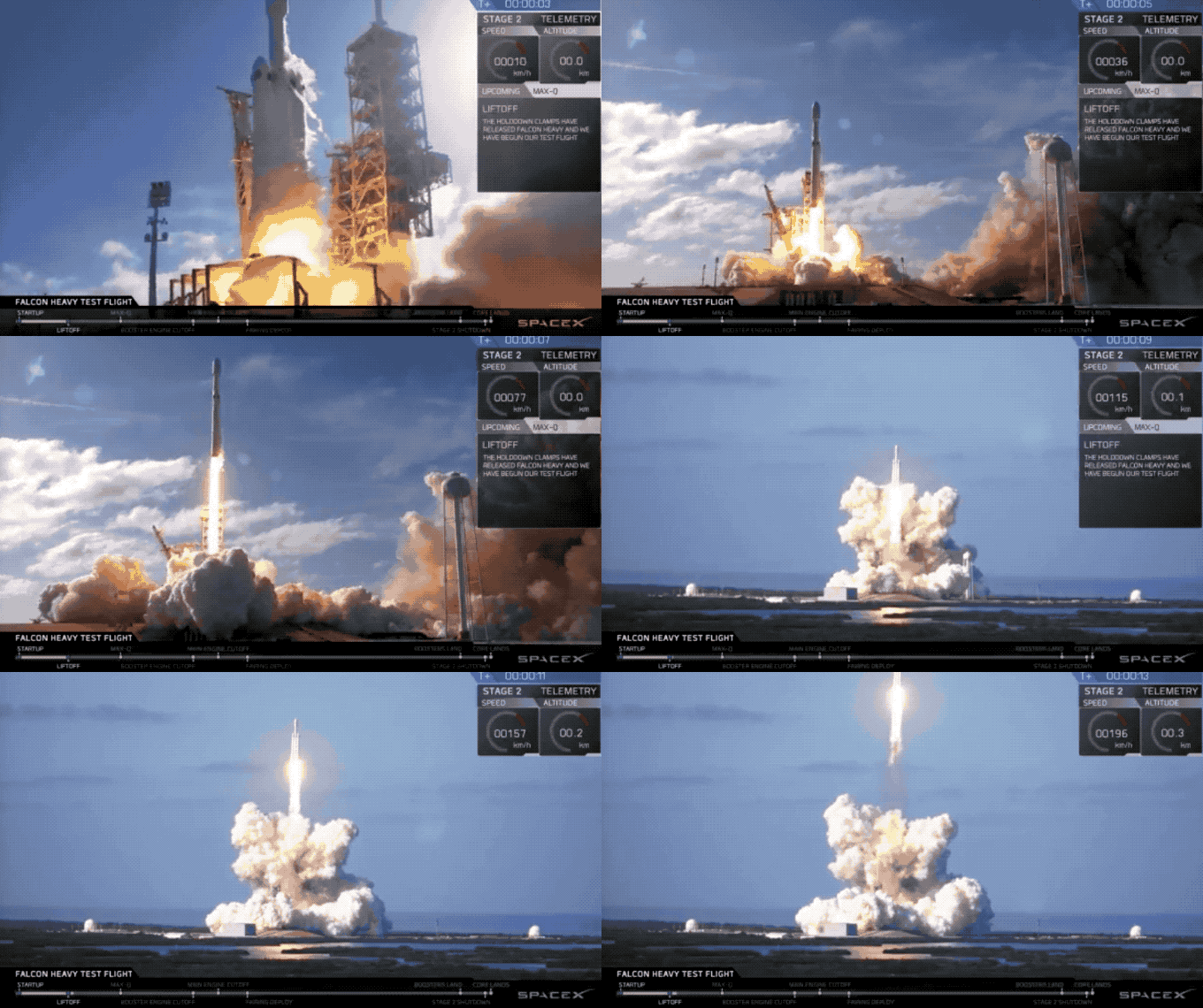
Here are some really rough numbers derived from pausing the live stream.
Falcon Heavy Side Booster Separation - 61km, 6,881 km/hr Falcon Heavy Core 1st Stage Separation - 92.5km, 9,474 km/hr Also a link to screen caps of speeds/altitudes of previous Falcon 9 separations http://www.planetary.org/multimedia/space-images/charts/falc...
It is probably the fastest/highest burn they've ever tried to land, and thus needs the most fuel to land, expeirences the most structural stress, etc. etc.
Comments (871) 132 threads
Show all comments
Showing thread 14 of 132
But 2/3 is impressive! Seeing the simultaneous landings had me in tears!
Continue this thread — 4 replies
I thought this was impressive: "With a total of 27 first-stage engines, Falcon Heavy has engine-out capability that no other launch vehicle can match—under most payload scenarios, it can sustain more than one unplanned engine shutdown at any point in flight and still successfully complete its mission." http://www.spacex.com/falcon-heavy
Continue this thread — 1 reply
Falcon Heavy Side Booster Separation - 61km, 6,881 km/hr
Falcon Heavy Core 1st Stage Separation - 92.5km, 9,474 km/hr
Also a link to screen caps of speeds/altitudes of previous Falcon 9 separations
http://www.planetary.org/multimedia/space-images/charts/falc...