I guess you have to actually try to pass the class as well, right? Otherwise you trash your academic record and/or jeopardize your ability to do this again next year.
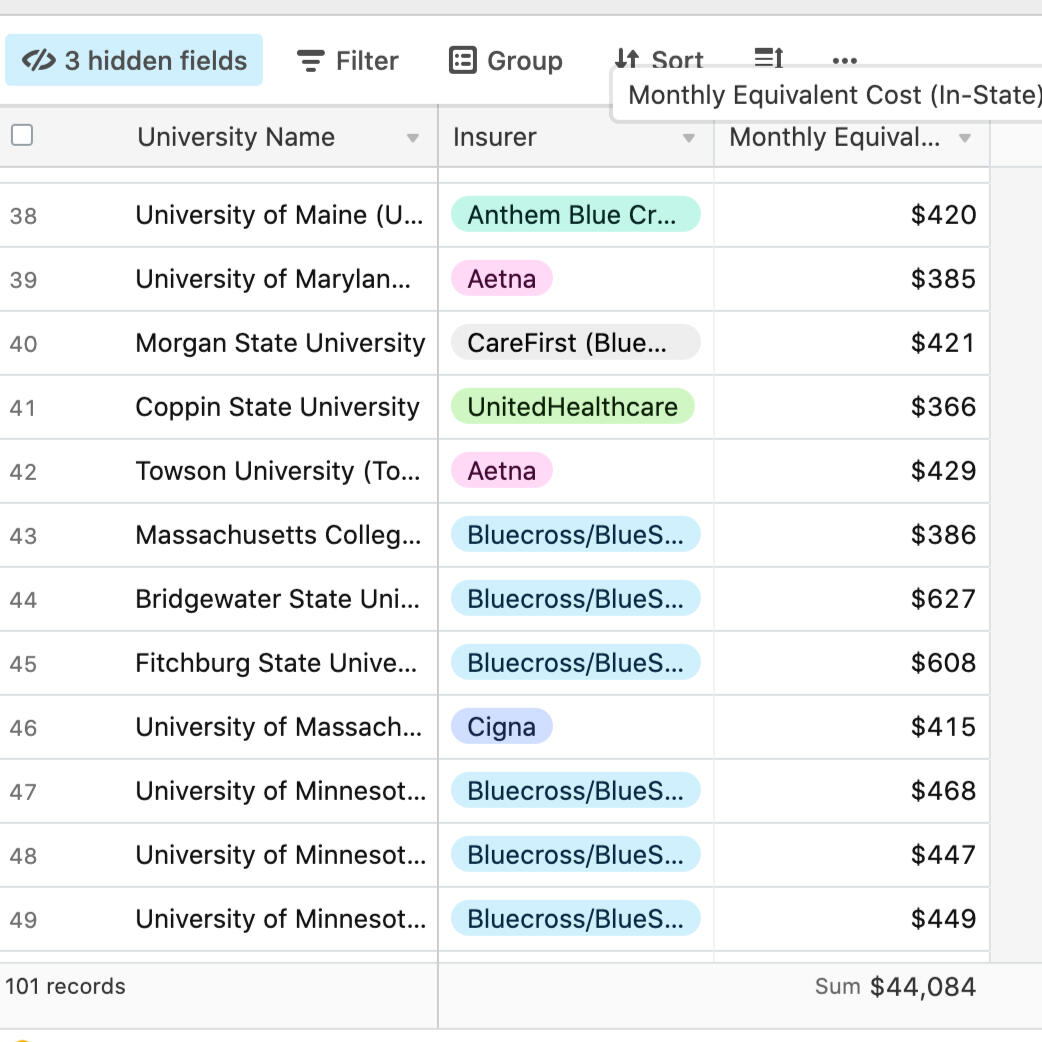
That not only requires your time, it might also require you to spend money on textbooks, etc. Although maybe not if there are schools that let you drop all your classes but stay eligible for health insurance for the rest of the term.
You don't have to pass the class you just can't get kicked out of the school.
One BIG caveat with these plans is that coverage ends if you leave school. That's how the insurers cover their asses. They're able to provide cheaper plans because many of the sickest will drop out. It's dumb. Read this article by Charles Gaba for deeper insights than I can muster: http://acasignups.net/20/08/26/updated-how-much-can-risk-poo...
Or neither dumb or evil, but just an expected result of the way group insurance works.
1. University: Has group of people they want to insure 2. Insurer: Measures risk of that group You're either in the group or your not. Sick people drop out of school not because insurance is making them drop out, but because academics is hard to do when your health issue prevents you from doing so. The people at fault are your representatives, who forgot about university group plans when drafting COBRA.
As long as it exists, private health insurance will incentivize providers to cherry-pick, lemon-drop, and sell insurance that they have every intention of not making good on. Those are the core "innovations" they are in a position to deliver, and they are the core innovations that get delivered. The concept is evil, the act of carrying it out is evil, and regulators are to blame precisely to the extent that they allow private health insurance to exist in the first place. They are complicit, to be sure, but "simply following incentives" does not absolve the private side of this equation from moral responsibility. Legal responsibility, yes, moral responsibility, no. Hence: evil.
Are they a company that maximizes their profit or are they moral? In this case, the profit motive points in the wrong direction, so they can't be both.
Comments (283) 29 threads
Show all comments
Showing thread 16 of 29
That not only requires your time, it might also require you to spend money on textbooks, etc.
Although maybe not if there are schools that let you drop all your classes but stay eligible for health insurance for the rest of the term.
One BIG caveat with these plans is that coverage ends if you leave school.
That's how the insurers cover their asses. They're able to provide cheaper plans because many of the sickest will drop out.
It's dumb.
Read this article by Charles Gaba for deeper insights than I can muster: http://acasignups.net/20/08/26/updated-how-much-can-risk-poo...
Continue this thread — 1 reply
1. University: Has group of people they want to insure
2. Insurer: Measures risk of that group
You're either in the group or your not. Sick people drop out of school not because insurance is making them drop out, but because academics is hard to do when your health issue prevents you from doing so.
The people at fault are your representatives, who forgot about university group plans when drafting COBRA.
Continue this thread — 1 reply