I went through some reviewers LinkedIn profiles. Most of them are 22-30y old claiming to be senior SW developers, architects or team leads. Maybe your problem isn't the resume but an imposter syndrome...
I've noticed that a lot of the younger crowd likes to over-embellish their titles. For example, maybe they worked on a team of 2 software developers and they call themselves "Senior Software Developer" because they had 2 years of experience and the other guy (or gal) was an intern.
That might seem like a joke, but it isn't. I have seen that many times. Another popular one is people that put "CTO" or "CEO" on their resume because they did freelance work for their cousin's friend's brother's pizza restaurant once. They started a company called "AAA Software Enterprises" and made themselves CEO. Then closed the company after that project finished. These people need to realize that overembellishing your resume can often hurt you more than under-crediting yourself. I have also noticed that the 2-3 year experience gap is a dangerous gap in Software Development. Developers have learned enough at this point that they are walking all over the other junior developers that are doing basic bug fixes. They feel like a God and feel like they can do anything. But what they don't realize is that they might have too much experience for the Junior Developer position, but they don't have enough experience to realize how much they actually don't know yet, because they have never experienced it. So some developers fall in this trap of never being pushed hard enough in their early years and not realizing how much they still have to learn. So they think they know it all and tend to overembellish, without realizing how dumb they look because they have no idea how niave they still are.
Most large American tech companies have something akin to a “junior engineer” position as the lowest level in the full-time ladder, that’s handed out to new college graduates, industry hires with only 1-2 years of experience, and otherwise very rarely. Having a masters degree might let you skip it, having a PhD will always let you skip it. People are generally expected to get promoted out of this introductory position at around the 2-3 year mark you mention.
> When you interact with people, be mindful of these roles and their constraints. When a recruiter messages or calls you about a rejection, know that they are often a messenger. They are as invested in you getting the job as you are! As much as both the resume screening and the interview process can seem like a black box, it’s run by people who try and do their best.
Thank you. I think it's important to understand and empathise with everyone involved.
As always, thoughtful resources, especially provided gratis, are a wonderful contribution, and appreciated!
That said, I think there's a fundamental problem with what determines a 'good resumes'! Resumes are generally assessed by a wide range of hirers and various layers or recruiters or hr in the middle - and the people who assess it they all have (very) different ideas of what is good! I've seen this play out many times where person 1 says make it longer, person 2 says make it shorter, person 3 says not enough detail, person 4 says too much etc .. So on balance I don't think it's possible to make an objectively perfect format of resume that will always be more successful than a different format for any given job application. Other variables like number of applications, personal connection with the people you talk to etc are possibly going to be more valuable to focus efforts on in a job search, once your resume is 'good enough'. Then expect to modify it to suit various people's preference if you are really interested in a specific role. My 2c ..
On the pricing page, it’s difficult to scan and see the difference between the two packages. You could do “everything in basic plus:” or change colors or something else to add contrast.
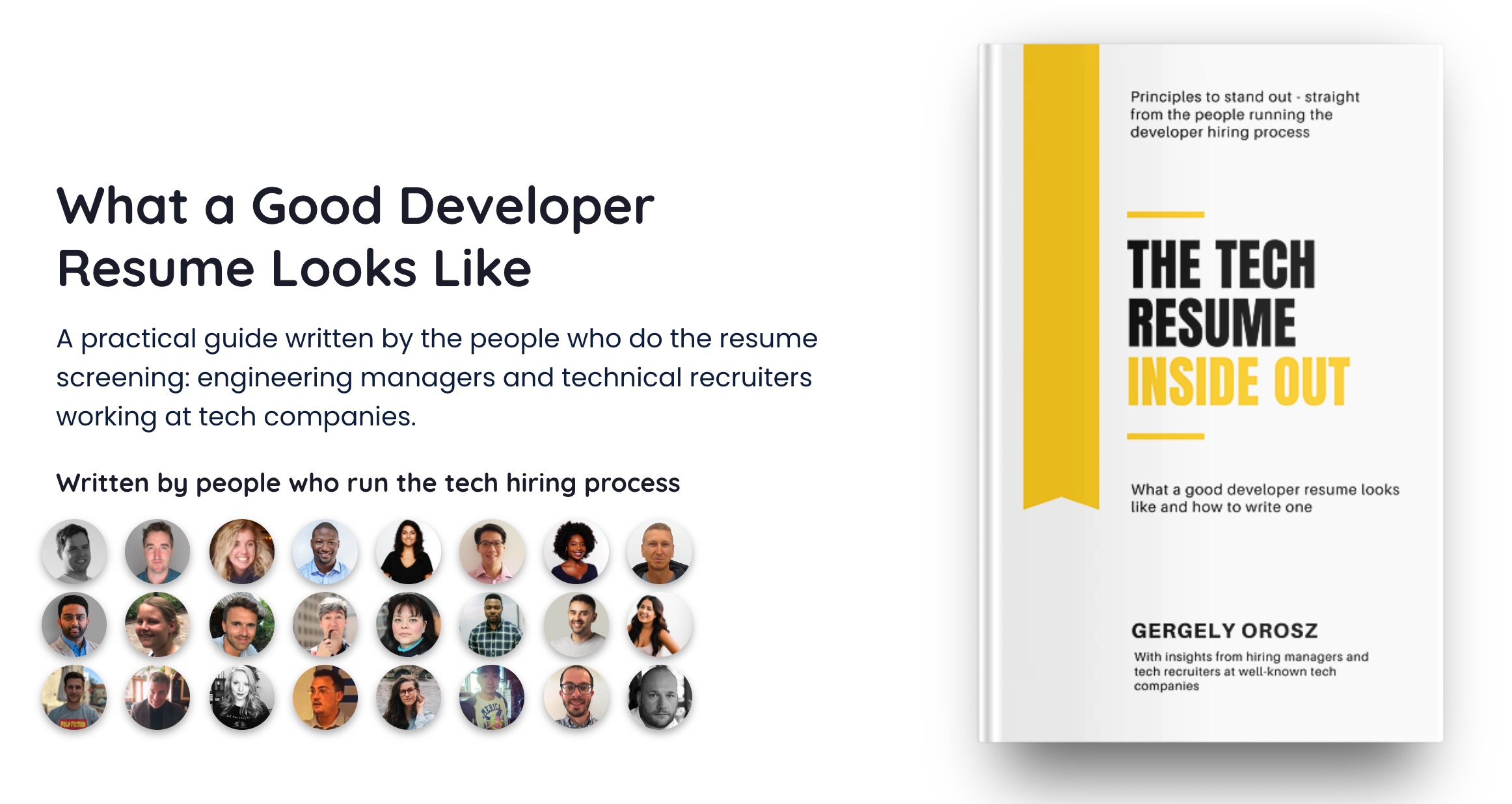
Also you should charge more for this book, I think it’s worth at least $30. The extra value added package could be $50 and include the templates and case studies or a personal resume review. See Rock and Roll with Ember.js: https://www.balinterdi.com/rock-and-roll-with-emberjs/
For the contrast: you have a good point. I'm seeing if I can do something, but I am seeing a good variety of sales across packages. I might just leave it for today, come back to it later. For pricing: I'm aiming to optimize for reach over revenue for this one. I'd like to keep the book affordable, and give people a good deal. But by people paying, I'm hoping to target those who will actually read it, over just download numbers. I especially would not want to overcharge as resume advice is... a subjective field, and no one can guarantee results (maybe some gurus say they can, but I don't want to be that guru). Originally, the whole book was supposed to be two pages in the next book I'm (still) writing on growing as a software engineer, in the job search section [1]. I just hope the other parts won't expand as much as this one has :) [1] https://blog.pragmaticengineer.com/book/
Comments (108) 30 threads
Earlier commentsThat might seem like a joke, but it isn't. I have seen that many times.
Another popular one is people that put "CTO" or "CEO" on their resume because they did freelance work for their cousin's friend's brother's pizza restaurant once. They started a company called "AAA Software Enterprises" and made themselves CEO. Then closed the company after that project finished.
These people need to realize that overembellishing your resume can often hurt you more than under-crediting yourself.
I have also noticed that the 2-3 year experience gap is a dangerous gap in Software Development. Developers have learned enough at this point that they are walking all over the other junior developers that are doing basic bug fixes. They feel like a God and feel like they can do anything. But what they don't realize is that they might have too much experience for the Junior Developer position, but they don't have enough experience to realize how much they actually don't know yet, because they have never experienced it. So some developers fall in this trap of never being pushed hard enough in their early years and not realizing how much they still have to learn. So they think they know it all and tend to overembellish, without realizing how dumb they look because they have no idea how niave they still are.
Thank you. I think it's important to understand and empathise with everyone involved.
That said, I think there's a fundamental problem with what determines a 'good resumes'!
Resumes are generally assessed by a wide range of hirers and various layers or recruiters or hr in the middle - and the people who assess it they all have (very) different ideas of what is good!
I've seen this play out many times where person 1 says make it longer, person 2 says make it shorter, person 3 says not enough detail, person 4 says too much etc ..
So on balance I don't think it's possible to make an objectively perfect format of resume that will always be more successful than a different format for any given job application.
Other variables like number of applications, personal connection with the people you talk to etc are possibly going to be more valuable to focus efforts on in a job search, once your resume is 'good enough'. Then expect to modify it to suit various people's preference if you are really interested in a specific role.
My 2c ..
Also you should charge more for this book, I think it’s worth at least $30. The extra value added package could be $50 and include the templates and case studies or a personal resume review. See Rock and Roll with Ember.js: https://www.balinterdi.com/rock-and-roll-with-emberjs/
For the contrast: you have a good point. I'm seeing if I can do something, but I am seeing a good variety of sales across packages. I might just leave it for today, come back to it later.
For pricing: I'm aiming to optimize for reach over revenue for this one. I'd like to keep the book affordable, and give people a good deal. But by people paying, I'm hoping to target those who will actually read it, over just download numbers. I especially would not want to overcharge as resume advice is... a subjective field, and no one can guarantee results (maybe some gurus say they can, but I don't want to be that guru).
Originally, the whole book was supposed to be two pages in the next book I'm (still) writing on growing as a software engineer, in the job search section [1]. I just hope the other parts won't expand as much as this one has :)
[1] https://blog.pragmaticengineer.com/book/
All comments shown.
Couldn't load more comments. Check your connection and try again.