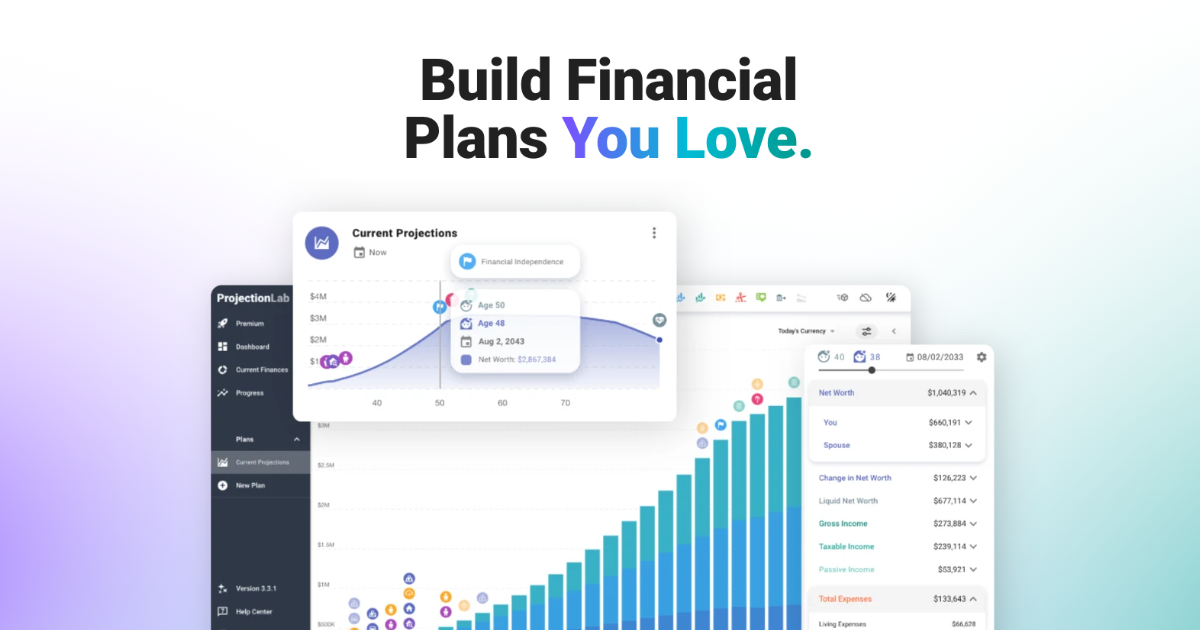
Looks interesting, but based on the privacy policy terms of data usage, transferability, and so forth, I can't in good faith test with real financial data:
https://projectifi.io/privacy-policy.html
Everytime I see a tool that shouldn't need to be hosted remotely as a service and could reasonably be deployed to the client where they have more control over their data (not as a service), it's a non-starter for me. I get it, that's the industry model now and it's how you can get comped for your time investment, gain passive income, control IP, etc. Unfortunately, those cost models will get no comp from me in any way. Having more data rights and ownership for a week or so free trial version where you can later shift to a pay model in which your data is still owned entirely by you during the entire course of the application usage would make more sense for people like me who still want privacy. I'm probably not the target market for something like this though and the number of people like me seem to be on the decline, so there's that.
Thanks for the feedback! I've thought about maybe creating a version which is wrapped up as an Electron app and runs natively and with no google analytics, etc. Does it sound like that might alleviate some of your concerns?
I guess I should also add that with the current web version, you can opt out of sending telemetry data via cookie preferences, and with the Premium version you choose whether or not you want your data persisted or not. (there is also a button to remove all your data at a later date if desired). Perhaps something else that might be helpful to add is an import/export button so you can save and load data locally(?)
> I guess I should also add that with the current web version, you can opt out of sending telemetry data via cookie preferences, and with the Premium version you choose whether or not you want your data persisted or not.
Rather than ameliorate concerns about privacy, this intensifies them. This is the approach I would expect from a megacorporation hellbent on mining my private data to death while pointing to the by-sheer-coincidence-hidden option to opt out of telemetry. And the choice to pay for the ability to not be data-mined to death. These are the design choices I expect from a product team that regards privacy as something to be defeated and evaded. It's the sort of thing I would expect from Facebook. Perhaps a privacy-centered approach might be worth considering? What might the user experience look like if behavior was not tracked until the user explicitly consented to just specifically that? What if the ability to upload your data was a premium option, with the local-only privacy-preserving experience the default? What data do you need to let people do incredibly personal calculations, as opposed to what data do you want?
Oops, it seems my attempt to add clarity on the current implementation only added more confusion. Sorry about that. Let me try to break down the status quo in more detail.
1. User arrives on the site, no google analytics activated unless user accepts cookie settings (which includes option to accept some types and not others). 2. User onboards and creates a plan for free, experiments with app -- no plan data or results are transmitted. Everything done client-side in JavaScript and goes away on page refresh. 3. User decides to upgrade to premium. If they do, the app asks if they would like to enable persistent data. If they enable this feature, only then is plan data saved.
I think part of the disconnect is communicating what the app actually does vs. what the terms permit it to do in the future.
It sounds like you've put genuine thought into this, and your privacy policy is very readable, but it suffers from the generic "WTFPL" clauses. For example, you clearly specify who the third-parties are and what data is shared, which again is commendable. But it's combined with "we may use your data for [any] other purposes", "we may sell and may have sold [extremely personal PII]", and so on. Are you doing this? Doesn't seem like it. Could you? Apparently, and that's part of the concern.
I would really be interested in that approach as well. I don't necessarily need my data synced to the cloud. A way to import and export data for backups would be nice.
I just created an account but did not feel comfortable uploading data, having already associated my account with my identity via Gmail. Would love to run something locally.
You should be able to use the app without making an account. And plan data is not synced to the cloud unless you upgrade to premium and also explicitly enable that feature.
How is data hoarding evil? Data lets us improve things, know what services need to be made, connect everything better. There's potential for abuse as in anything but we don't call cough syrup evil.
Hoarding of any type is a disorder, just like how addiction used to (still is) be considered a moral defect.
Cough syrup not being evil -used as intended to alleviate symptoms but not cure OR chugged like a panacea ambrosia delivered by the gods- is such a weird analogy to write as the burden of use falls on the individual rather than the collector. How dare people prescribed highly addictive advertised as nonaddictive cocaine start taking it spoonful up the butthole~
- Offer a service. - Claim that your service exists to make the world better in some vague way. - Train yourself to sound like a compassionate, altruistic person that cares about others. - Sell user data. Hide the information about what data is
being sold and who is buying it and why as much as possible. - Become wealthy selling data from users who trusted you. - Buy bona-fide companies and put them to the service of your evil cause. - Normalize evil behavior. Force other companies to become evil in order to compete. - Turn the Internet into a privacy nightmare. - Turn the field of computer science into satanism.
People thought that data is the new oil, but it turns out it's not. Data is the new uranium. Powerful, yet toxic and irradiates everything in proximity. You most emphatically do not keep large piles of it if you can help it, and if you do, you silo and audit the sh*t out of that to control access and prevent theft because the potential for abuse is very high.
I agree. The trend of handing over all your data (especially your financial data) to some nebulous service isn't exactly my favourite. Which is why I built https://ufincs.com, a nebulous service where you hand over all your financial data!
Yes, that was a joke. In reality, uFincs is more of a stop-gap between what you seek (native app where you own the data) and what the status quo is (web-based app where your data ownage is dubious). Yes, uFincs is a web app, but we take the extra step to do client-side encryption so that the only financial data being stored in our database is a jumble of base64; I don't want to touch your actual financial data with a 10-foot pole. Of course, like some other people in this thread have mentioned, having a completely client-side app is also pretty important. Well, we have exactly that: https://ufincs.com/noaccount. You can use uFincs right away, without any account, and the app works completely client-side, completely offline. You can even export your data and then re-import it later if you so prefer! Of course, the tech that enables this 'no account' option is also what makes the logged-in app work offline-first, so I think it's pretty cool :) And if anyone asks "Well, why a web app at all then?", it's because I wanted a web app. Yes, I do enjoy accessing my finances on all my devices, thank you very much. But we do have plans to build out standalone desktop/mobile apps in the future.
ufincs looks very cool! During my December holiday, I was thinking of making a web-based platform that had a more modern UI than GNUcash, and it looks like you built it already!
Just curious, what's your tech stack, how long have you been working on it, and how many users do you have?
That's exactly what uFincs is, a modern version of GnuCash! I had the exact same thoughts as you did :)
The simple tech stack breakdown is that the client-side is React + Redux + TypeScript + Sass. Of note, I use redux-saga, which has been an absolute boon for some of the more complex flows. Design system is completely custom. Backend API is Node + Feathers. Database is Postgres. Marketing site is served separately from the app and is React + NextJS + Tailwind CSS. I intend to write up a more complete breakdown of the tech stack sometime in the future. In terms of how long it's taken to get this far, longer than I'd like to admit... there was a version '0.1' that was built as a capstone project over the course of 2019, then the redesigned version (uFincs as it exists now) that's been ongoing since the start of 2020. And the user situation can look... misleading. I only 'officially' launched last week, so for the longest time the only user has been le-moi (and some friends that did testing), but I actually did just acquire my first paying customer yesterday!
I wonder if the "most private" way to do this would be to distribute as a jupyter notebook or some sort of local bundle/distro to run as a local webapp?
Well, uFincs is a PWA, so you could 'install' it that way. We send a little in-app notification whenever a new update is pushed, so you could theoretically just ignore those and never update to keep using that one version of uFincs forever (assuming your browser never decides to update it otherwise).
But yeah, in terms of more standalone distribution and sandboxing, that's where the future desktop/mobile apps would be more appropriate. Of course, they'd be Electron-esque, but that would at least fulfill my end-goals of being privacy-first, offline-first, and providing 'long-term' software.
You could store the data in the user's cloud (or local) storage, so you don't have a copy of the data.
Having an "encrypted" copy of the data, with a key controlled by you (unless there's some browser API for encrypting using the user's key?) is a lot shorter than a "ten foot pole"
That's the thing, the key isn't controlled by me. The key is derived from your account password. If you want some more technical details, feel free to check out https://ufincs.com/policies/security. tl;dr Yes, that browser API is called WebCrypto.
As for storage, all data is kept in-browser in local storage (specifically, IndexedDB), until it gets saved to our database. And before it leaves the browser to be saved in our database, it gets encrypted using the user's key. Finally, if you only ever use the 'no account' option (https://ufincs.com/noaccount), then all your data is only ever stored in-browser; it never gets saved to our database because you don't even have an account to save it to! Feel free to monitor the network requests to prove it for yourself (or even turn off your network connection). Hopefully that makes things more clear.
Comments (255) 80 threads
Show all comments
Showing thread 7 of 80
Everytime I see a tool that shouldn't need to be hosted remotely as a service and could reasonably be deployed to the client where they have more control over their data (not as a service), it's a non-starter for me. I get it, that's the industry model now and it's how you can get comped for your time investment, gain passive income, control IP, etc.
Unfortunately, those cost models will get no comp from me in any way. Having more data rights and ownership for a week or so free trial version where you can later shift to a pay model in which your data is still owned entirely by you during the entire course of the application usage would make more sense for people like me who still want privacy. I'm probably not the target market for something like this though and the number of people like me seem to be on the decline, so there's that.
Continue this thread — 1 reply
Do you keep database backups?
Continue this thread — 2 replies
Rather than ameliorate concerns about privacy, this intensifies them. This is the approach I would expect from a megacorporation hellbent on mining my private data to death while pointing to the by-sheer-coincidence-hidden option to opt out of telemetry. And the choice to pay for the ability to not be data-mined to death.
These are the design choices I expect from a product team that regards privacy as something to be defeated and evaded. It's the sort of thing I would expect from Facebook.
Perhaps a privacy-centered approach might be worth considering? What might the user experience look like if behavior was not tracked until the user explicitly consented to just specifically that? What if the ability to upload your data was a premium option, with the local-only privacy-preserving experience the default? What data do you need to let people do incredibly personal calculations, as opposed to what data do you want?
1. User arrives on the site, no google analytics activated unless user accepts cookie settings (which includes option to accept some types and not others).
2. User onboards and creates a plan for free, experiments with app -- no plan data or results are transmitted. Everything done client-side in JavaScript and goes away on page refresh.
3. User decides to upgrade to premium. If they do, the app asks if they would like to enable persistent data. If they enable this feature, only then is plan data saved.
It sounds like you've put genuine thought into this, and your privacy policy is very readable, but it suffers from the generic "WTFPL" clauses.
For example, you clearly specify who the third-parties are and what data is shared, which again is commendable. But it's combined with "we may use your data for [any] other purposes", "we may sell and may have sold [extremely personal PII]", and so on.
Are you doing this? Doesn't seem like it. Could you? Apparently, and that's part of the concern.
Maybe another analogy would be like if you had to give your full banking information to every restaurant your family dines at?
imo this is the single correct perspective to have about data
Cough syrup not being evil -used as intended to alleviate symptoms but not cure OR chugged like a panacea ambrosia delivered by the gods- is such a weird analogy to write as the burden of use falls on the individual rather than the collector.
How dare people prescribed highly addictive advertised as nonaddictive cocaine start taking it spoonful up the butthole~
- Offer a service.
- Claim that your service exists to make the world better in some vague way.
- Train yourself to sound like a compassionate, altruistic person that cares about others.
- Sell user data. Hide the information about what data is being sold and who is buying it and why as much as possible.
- Become wealthy selling data from users who trusted you.
- Buy bona-fide companies and put them to the service of your evil cause.
- Normalize evil behavior. Force other companies to become evil in order to compete.
- Turn the Internet into a privacy nightmare.
- Turn the field of computer science into satanism.
Continue this thread — 1 reply
Continue this thread — 2 replies
Yes, that was a joke.
In reality, uFincs is more of a stop-gap between what you seek (native app where you own the data) and what the status quo is (web-based app where your data ownage is dubious). Yes, uFincs is a web app, but we take the extra step to do client-side encryption so that the only financial data being stored in our database is a jumble of base64; I don't want to touch your actual financial data with a 10-foot pole.
Of course, like some other people in this thread have mentioned, having a completely client-side app is also pretty important. Well, we have exactly that: https://ufincs.com/noaccount. You can use uFincs right away, without any account, and the app works completely client-side, completely offline. You can even export your data and then re-import it later if you so prefer!
Of course, the tech that enables this 'no account' option is also what makes the logged-in app work offline-first, so I think it's pretty cool :)
And if anyone asks "Well, why a web app at all then?", it's because I wanted a web app. Yes, I do enjoy accessing my finances on all my devices, thank you very much. But we do have plans to build out standalone desktop/mobile apps in the future.
Just curious, what's your tech stack, how long have you been working on it, and how many users do you have?
The simple tech stack breakdown is that the client-side is React + Redux + TypeScript + Sass. Of note, I use redux-saga, which has been an absolute boon for some of the more complex flows.
Design system is completely custom.
Backend API is Node + Feathers. Database is Postgres.
Marketing site is served separately from the app and is React + NextJS + Tailwind CSS.
I intend to write up a more complete breakdown of the tech stack sometime in the future.
In terms of how long it's taken to get this far, longer than I'd like to admit... there was a version '0.1' that was built as a capstone project over the course of 2019, then the redesigned version (uFincs as it exists now) that's been ongoing since the start of 2020.
And the user situation can look... misleading. I only 'officially' launched last week, so for the longest time the only user has been le-moi (and some friends that did testing), but I actually did just acquire my first paying customer yesterday!
Continue this thread — 5 replies
But yeah, in terms of more standalone distribution and sandboxing, that's where the future desktop/mobile apps would be more appropriate. Of course, they'd be Electron-esque, but that would at least fulfill my end-goals of being privacy-first, offline-first, and providing 'long-term' software.
Having an "encrypted" copy of the data, with a key controlled by you (unless there's some browser API for encrypting using the user's key?) is a lot shorter than a "ten foot pole"
As for storage, all data is kept in-browser in local storage (specifically, IndexedDB), until it gets saved to our database. And before it leaves the browser to be saved in our database, it gets encrypted using the user's key.
Finally, if you only ever use the 'no account' option (https://ufincs.com/noaccount), then all your data is only ever stored in-browser; it never gets saved to our database because you don't even have an account to save it to! Feel free to monitor the network requests to prove it for yourself (or even turn off your network connection).
Hopefully that makes things more clear.
Continue this thread — 5 replies
Continue this thread — 3 more replies
Continue this thread — 6 more replies