Show HN: I built an app for when I talk too much in online meetings (opens in a new tab)unblah.me
451 pointsAlexis here, I’m a product manager and software developer in Berlin by way of New York.
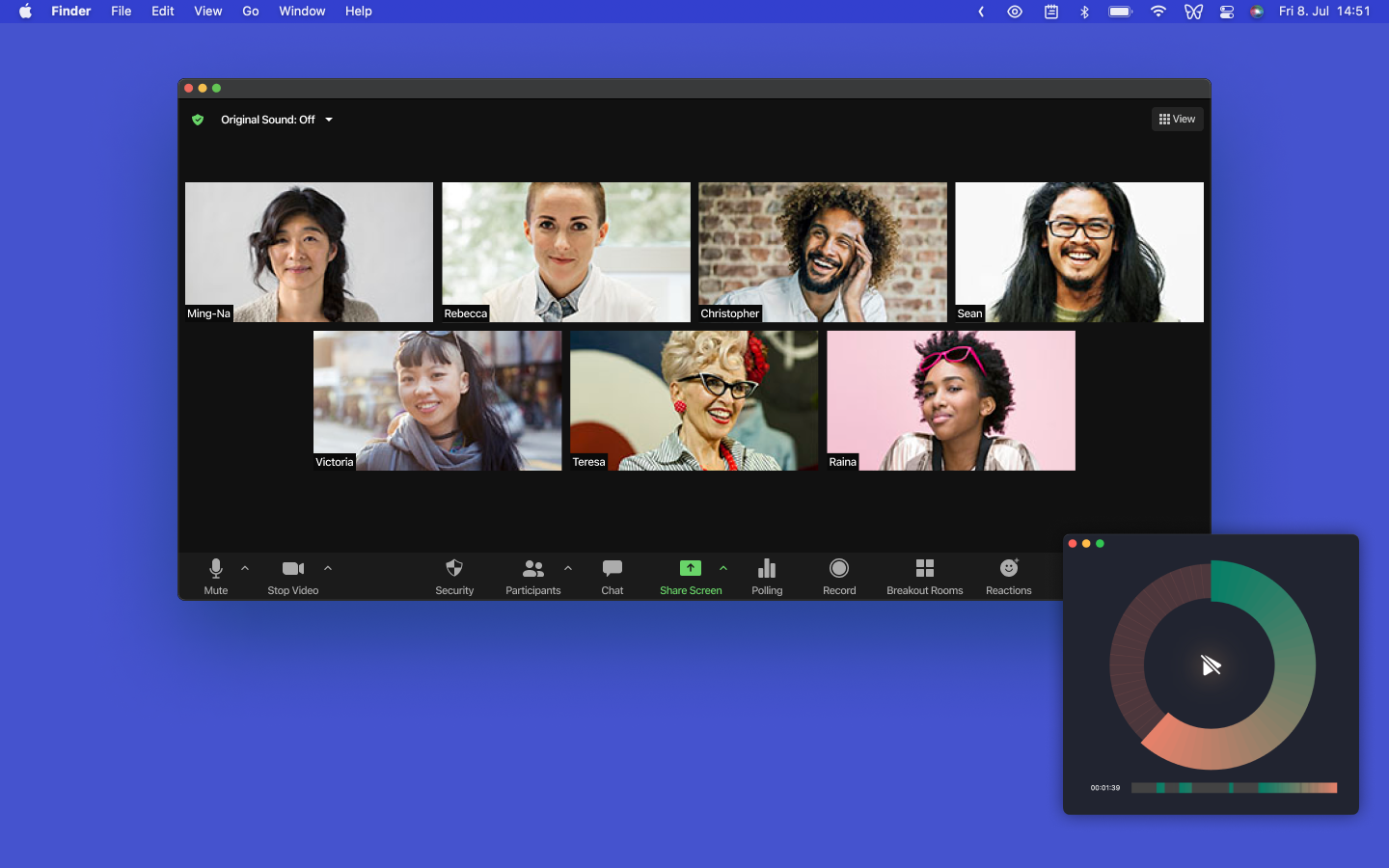
I want to show you this app I made – It’s like a "buddy" for those, like myself, who inadvertedly talk too much in meetings.
The app gives me feedback and a little more in control of what I have influence over by:
* Keeping track of how long I’ve been speaking
* Catching myself before I talk too much
* Developing a better sense of timing
I truly love having conversations with people in real-life.
But online meetings, especially group calls, tend to make me nervous. I can't read body language. The tone of voice, micro-experessions and social cues get lost.
If you, too, accidentally talk too much too often, check it out "Unblah". Watch the quick 2-minute demo and download the macOS app over at https://unblah.me/.
Cheers!
Alexis
PS: There’s a whole FAQ section for common questions you may have – Including if this is yet another "native" Electron app ;)
edit: bullet-list formatting
Comments (189) 56 threads
Earlier commentsI published an FAQ (https://unblah.me/#faqs) earlier today. Posting it here for simplicity:
---
Question: I have this person on my team who talks WAY too much and never notices it. They LOVE hearing themselves talk and never shut up. Should I tell them to get this app?
---
Answer: First off... I believe your struggle with this person is 100% real. I fully believe their behavior is affecting you negatively.
But, my answer is a STRONG NO. Please don’t use Unblah as a proxy for a difficult conversation that sounds like it needs to be had.
Think about it: They would never use it anyways, because, as you’re saying yourself “...and never even notice it.”.
They don't have a problem.
You do.
I don't know how much rapport you two have, how much safe space you can create for resolving this situation, etc.
So, to keep everyone safe, please check with HR or leadership on how to best deal with this situation if it impacts you, your team and your performance.
For learning more on this kind of topic, I can recommend “Difficult Conversations: How to Discuss What Matters Most” by Bruce Patton, Douglas Stone, and Sheila Heen.
One of the advantages of getting older is the experience one gains. It is often the case that I can relate a current situation to one that has occurred in my past. This can help me make good decisions by anticipating expected similar outcomes to the most obvious approaches.
Yet the other side of this is I can find myself droning on about old war stories to junior engineers. What I mean to be well-intentioned advice can turn into a monologue. This is especially true when I am giving advice "off-the-cuff" in response to situations brought up in 1:1 meetings with direct reports. I might struggle finding the best way to communicate my experience. This can cause me to rephrase the same idea several different ways in an attempt to clearly convey my thought.
I feel this kind of tool could help me focus more on listening to the people I manage.
Middle-aged here – I've been in that situation as well.
> What I mean to be well-intentioned advice can turn into a monologue.
+1 – So well-intended ("So they don't make my stupid mistakes") but hard to really take in.
> I feel this kind of tool could help me focus more on listening to the people I manage.
Please, if you do, let me know if it helps.
Also, if those are personal 1:1 you could always just call it out and ask them to give you live feedback tech-free (?)
1. https://christian.gen.co/conversation-monitor/
All comments shown.
Couldn't load more comments. Check your connection and try again.