Show HN: I built an app for when I talk too much in online meetings (opens in a new tab)unblah.me
451 pointsAlexis here, I’m a product manager and software developer in Berlin by way of New York.
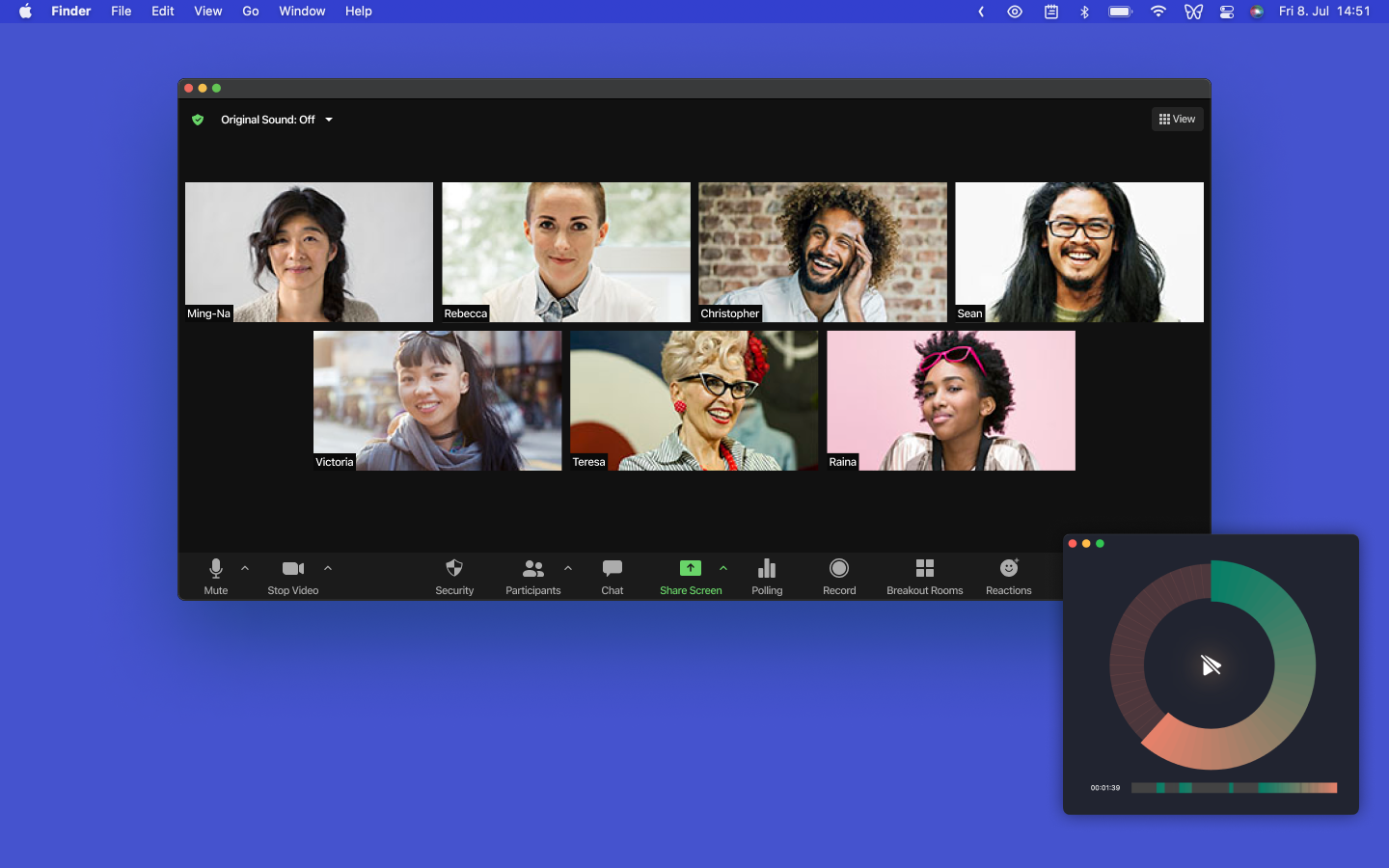
I want to show you this app I made – It’s like a "buddy" for those, like myself, who inadvertedly talk too much in meetings.
The app gives me feedback and a little more in control of what I have influence over by:
* Keeping track of how long I’ve been speaking
* Catching myself before I talk too much
* Developing a better sense of timing
I truly love having conversations with people in real-life.
But online meetings, especially group calls, tend to make me nervous. I can't read body language. The tone of voice, micro-experessions and social cues get lost.
If you, too, accidentally talk too much too often, check it out "Unblah". Watch the quick 2-minute demo and download the macOS app over at https://unblah.me/.
Cheers!
Alexis
PS: There’s a whole FAQ section for common questions you may have – Including if this is yet another "native" Electron app ;)
edit: bullet-list formatting
Comments (189) 56 threads
Earlier commentsI prefer the organic method. The natural variations of life and people. The best "app" to moderate your own conversation skills, is the one between your ears.
My mother talks too much because she strings unrelated stories together back to back without pausing. She could fix this by simply pausing at the end of one story, allowing others to chime in. She doesn't need an app to do that.
Sometimes people take longer to reach their point. Or sometimes in meetings we are trying to solve problems, or understand background info which one person might focus on, while others listen. It's a slippery slope to involve artificial timers when not everyone in meeting may have equal amounts to share.
Love the idea for this, will be trying it out!
Please don't tell me you're getting a browser error after the click (?)
Do you know who/how can help me update that title?
Attendees of a meeting will quickly disengage if someone talks for too long. Attendees of a lecture or presentation have different expectations.
That's the key question that will frame how I schedule my attention and interjections.
The reason I chose the times as seen is because they jive with my personal experience and the content of this article here: https://hbr.org/2015/06/how-to-know-if-you-talk-too-much
1. Understand who the listener is, and what they care about. What are their reinforcers, and attractors? What are the things they want to achieve that they haven't been able to so far. What is relevant information for them? What is their state of mind? Are they tired? Do they need to sleep, eat, go to the bathroom?
2. Understand the information content of the speech. A person can say a lot in a little time or a little in a lot of time (with the dependencies being questions listed above in #1. What is a 'little' for someone might be 'a lot' for someone else depending on how much they know).
My concern with an app like this is multi-fold. Firstly, I have some very smart friends who read a lot and talk for hours but I never tire of it because they're always saying something new and interesting. Secondly, sometimes these friends are working out thoughts on the fly that they haven't before. Stopping before the thought is complete risks losing hidden gems, maxims/aphorisms, well-articulated and profound crystallizations of thought. A ticking time-bomb clock adds pressure to end this line of thought that may need time to manifest itself fully.
That being said I totally see the flip side, that it can go on for too long, but I'd point back to all the concerns in #1.
I have had this on my radar as well and, in a way, you can totally use it to track your non-speaking as well.
Here's an idea: What if there was a toggle for your scenario and the count-down of "other people talking" started when you're silent.
The colors on timeline would be inverted, you'd see your "airtime" as a few gray dots.
What do you think? Would this be helpful?
All comments shown.
Couldn't load more comments. Check your connection and try again.