This man needs a genius grant, and this is about the 6th time I've thought this.
Any one of these pages would be a feat, an achievement to be proud of, but as a collection, it forms one of the greatest educational resources of its type that I have known. These things can give you more intuition about a subject in 45 minutes than a textbook might be able to in 3 months, because it's interesting and not dry. I wish I had more time to rant about this right now, but I haven't, so: Kudos. Another amazing job.
I don't. The quality can only get worse as it changes from hobby to a job. Give him money, yes; but don't demand increase in publishing or any commitment.
I saw your comment and was like: "wait a minute... surely its not the same guy as the mechanical watch thing, is it?!?!?!"
Absolutely blown away. As someone with a "design for learning" degree which I've found to be rather useless, I'd gladly have traded by dozens of thousands of dollars for a chance to learn with this guy. The technical sophistication combined with the incredibly didactic and clear flow of his work is truly insane.
Pretty much, I'm scrolling for few minutes and every demo is more impressive than the previous one.
And the part about sound bouncing in the room is basically "acoustic room design 101" and beautifully illustrates how shape and dampening of the room can massively change how it sounds
The markets we have are perversions. They are captured; regulated and deregulated in all the wrong places. It is possible that small changes in how money or capital works could enable far better markets.
Not necessarily. I'm a major fan of the "value for value" approach (i.e., you pay how much you think they're worth). It's been proven to work in some places already (e.g., Bandcamp, The Chosen), and we haven't really jumped onto its potential yet.
Basic income could let people work on stuff like this without the fear of starvation.
The tech is there, the resources are there. The will is there, if you ask the right questions. But powerful interests like things the way they are, and are willing to kill millions to keep things that way.
They way he is able to explain complex subjects by starting from first principles, gently adding more and more layers, with beautiful, custom-made figures and animations is truly, literally, awesome. I strongly recommend supporting the author via his Patreon if you enjoy his blog posts.
The article on mechanical watches had so much depth and such good explanations I thought he was a mechanical watch engineer or enthusiast who happened to also have web design, 3d animation, and writing skills
He does :) hope he doesn't mind me sharing from his Patreon:
> I myself don't even own any traditional watches, so the topic was very new to me. Thankfully, it was easy to understand the gist of how mechanical watches work just from watching some YouTube videos and I decided to give the topic a go. If you subscribe -- you should subscribe!! -- you can read his "making of" posts which are also fascinating. I don't think he's a domain expert in anything he's written about, he just does a ton of research and only produces a few articles per year.
He has an commentary article on Patreon where he says he doesn't even own any traditional watches, and had to buy a movement to take apart and understand
These are amazing - from the design to the interactive demos to the writing. I think "digital monograph" is almost a more apt description than "blog post". I've written tons of blog posts and they have almost nothing in common with what he's doing. 8,000 well written words plus formatting and links plus 50 or so embedded demos is really an astounding amount of work. What I appreciate most is the use of the medium itself. Imagine if the standard format for academic papers was updated from the black and white two-column format used for a half century to something like this?
This is how school must be. I'd rather pay people like him to create interactive content than pay the school to teach my kids useless material in dry, rigid ways.
+1 for the recommendation for "The Scientist and Engineer's Guide to
Digital Signal Processing" by Steven W. Smith. I spoke to Steven many
years ago about his putting all of the book PDFs online for free and
since then have recommended at least 5 university libraries to buy it
because the students could get free copies of a great book that can be
referenced in the library.
FWIW the The Scientist and Engineer's Guide doesn't actually cover a
lot on sound. It starts in a particular DSP way with frequency domain
definitions and convolution - and I actually think Steven's background
is in medial imaging, though I could be mistaken.
pdfs are the chapters are available freely on that website, but if anyone wants to spare themselves the effort of combining them all into one for easier perusal, feel free to email me (in bio) and I can send the combined pdf. I'm currently around page 200, and it's been great as an introductory resource as someone with no other background in DSP.
Wow. Such a profound insight could not get published for 15 years because others couldn’t grasp it. Including Lagrange!
It’s an uncomfortable reminder of how essential reputation and credibility are in the machinery of science. ”The paper contained the controversial claim that any continuous periodic signal could be represented as the sum of properly chosen sinusoidal waves. Among the reviewers were two of history's most famous mathematicians, Joseph Louis Lagrange (1736-1813), and Pierre Simon de Laplace (1749-1827).
While Laplace and the other reviewers voted to publish the paper, Lagrange adamantly protested. For nearly 50 years, Lagrange had insisted that such an approach could not be used to represent signals with corners, i.e., discontinuous slopes, such as in square waves. The Institut de France bowed to the prestige of Lagrange, and rejected Fourier's work. It was only after Lagrange died that the paper was finally published, some 15 years later.“ from chapter 8
http://www.dspguide.com/ch8/1.htm
> Lagrange had insisted that such an approach could not be used to represent signals with corners, i.e., discontinuous slopes, such as in square waves.
Isn't that true though? You can only approximate it, right?
In practice, yes you can only approximate it, because in theory it requires an infinite series of sinusoidal waves. But since maths is all about the theory, Laplace's objections were silly.
(though I admit I don't know what the state of acceptance of infinite series was at that time)
Also, it's fine to cut off the infinite series of sinusoidal waves because all physical systems cut off around a given frequency, for example human hearing around ~20kHz.
I was 20 minutes into this before I realized the interactive bits were automatically turning themselves off and on based on which one was visible in the viewport. That seems obvious, but the fact that it worked so intuitively and without bugs on my system says a great deal. This is what master UX design looks like.
Comments (206) 87 threads
Any one of these pages would be a feat, an achievement to be proud of, but as a collection, it forms one of the greatest educational resources of its type that I have known.
These things can give you more intuition about a subject in 45 minutes than a textbook might be able to in 3 months, because it's interesting and not dry.
I wish I had more time to rant about this right now, but I haven't, so: Kudos. Another amazing job.
He says this is his weekend hobby. I really wish he could work on these things full-time. The world needs more people like him.
Absolutely blown away. As someone with a "design for learning" degree which I've found to be rather useless, I'd gladly have traded by dozens of thousands of dollars for a chance to learn with this guy. The technical sophistication combined with the incredibly didactic and clear flow of his work is truly insane.
I agree with parent comment. This man should be given funding to do this for the rest of his life.
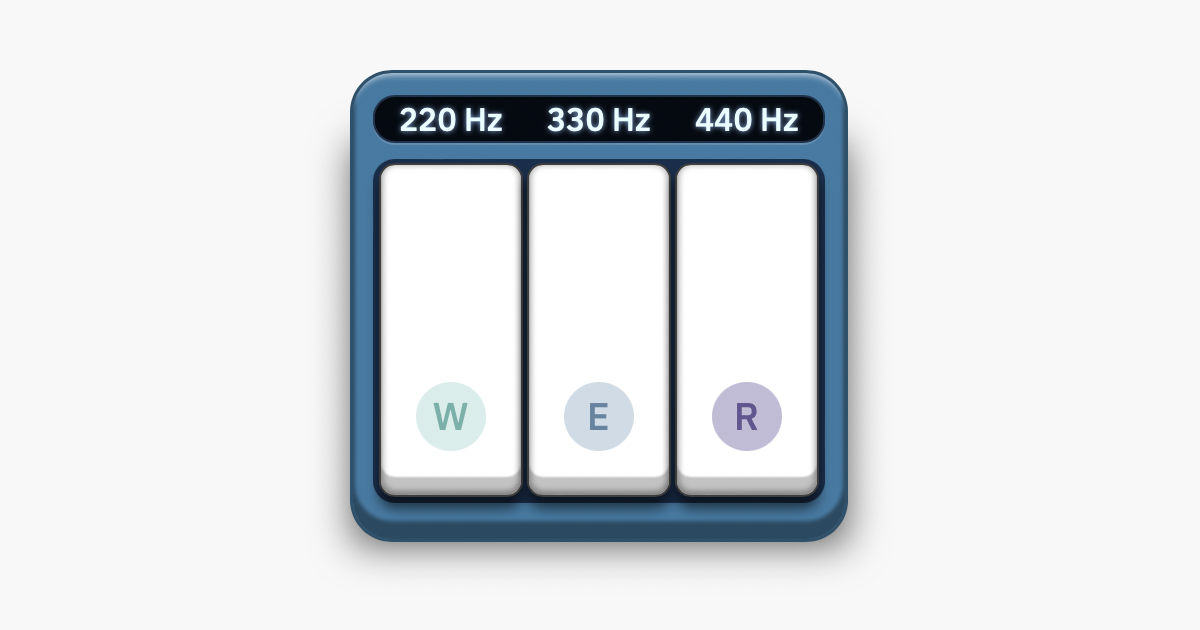
Hmm, is it me or does the 440Hz sound seem higher pitched than it should? I'm not a musician at all but the 330Hz sounds closer to what I'd expect.
Continue this thread — 1 reply
And the part about sound bouncing in the room is basically "acoustic room design 101" and beautifully illustrates how shape and dampening of the room can massively change how it sounds
What if there was a market that incentivized the creation of top-quality educational content like this? Create it for one topic, usable forever.
The markets we have are perversions. They are captured; regulated and deregulated in all the wrong places.
It is possible that small changes in how money or capital works could enable far better markets.
Continue this thread — 1 reply
The tech is there, the resources are there. The will is there, if you ask the right questions. But powerful interests like things the way they are, and are willing to kill millions to keep things that way.
Continue this thread — 1 more reply
They way he is able to explain complex subjects by starting from first principles, gently adding more and more layers, with beautiful, custom-made figures and animations is truly, literally, awesome.
I strongly recommend supporting the author via his Patreon if you enjoy his blog posts.
> I myself don't even own any traditional watches, so the topic was very new to me. Thankfully, it was easy to understand the gist of how mechanical watches work just from watching some YouTube videos and I decided to give the topic a go.
If you subscribe -- you should subscribe!! -- you can read his "making of" posts which are also fascinating. I don't think he's a domain expert in anything he's written about, he just does a ton of research and only produces a few articles per year.
Continue this thread — 1 reply
FWIW the The Scientist and Engineer's Guide doesn't actually cover a lot on sound. It starts in a particular DSP way with frequency domain definitions and convolution - and I actually think Steven's background is in medial imaging, though I could be mistaken.
[1] https://www.analog.com/en/education/education-library/scient... [2] https://www.analog.com/media/en/technical-documentation/dsp-...
It’s an uncomfortable reminder of how essential reputation and credibility are in the machinery of science.
”The paper contained the controversial claim that any continuous periodic signal could be represented as the sum of properly chosen sinusoidal waves. Among the reviewers were two of history's most famous mathematicians, Joseph Louis Lagrange (1736-1813), and Pierre Simon de Laplace (1749-1827). While Laplace and the other reviewers voted to publish the paper, Lagrange adamantly protested. For nearly 50 years, Lagrange had insisted that such an approach could not be used to represent signals with corners, i.e., discontinuous slopes, such as in square waves. The Institut de France bowed to the prestige of Lagrange, and rejected Fourier's work. It was only after Lagrange died that the paper was finally published, some 15 years later.“
from chapter 8 http://www.dspguide.com/ch8/1.htm
Isn't that true though? You can only approximate it, right?
Also, it's fine to cut off the infinite series of sinusoidal waves because all physical systems cut off around a given frequency, for example human hearing around ~20kHz.
Continue this thread — 4 replies
Continue this thread — 3 more replies
Continue this thread — 3 more replies
Continue this thread — 7 replies
All comments shown.
Couldn't load more comments. Check your connection and try again.