Interesting side note - using the "basic" frequency/amplitude slider section, you can tell if you have any hearing loss in a certain ear at a certain frequency, as well as high frequencies in general. As an ex-musician, I have some hearing loss caused by playing and being around extremely loud music. Between 6KHz and 7KHz, I felt the sound shift towards my right hear, indicating some hearing loss at that frequency in my left ear. Between 10KHz and 11.5KHz, I felt a strong shift toward my left ear, indicating hearing loss at those frequencies in my right ear. Above about 12.3KHz, I lost the sound entirely. One very gentle bit of feedback (haha) to the author would be to provide anchors to each section so they could be more easily linked.
> Interesting side note - using the "basic" frequency/amplitude slider section, you can tell if you have any hearing loss in a certain ear at a certain frequency, as well as high frequencies in general.
If you're on headphones maybe but might "only" be shit speakers
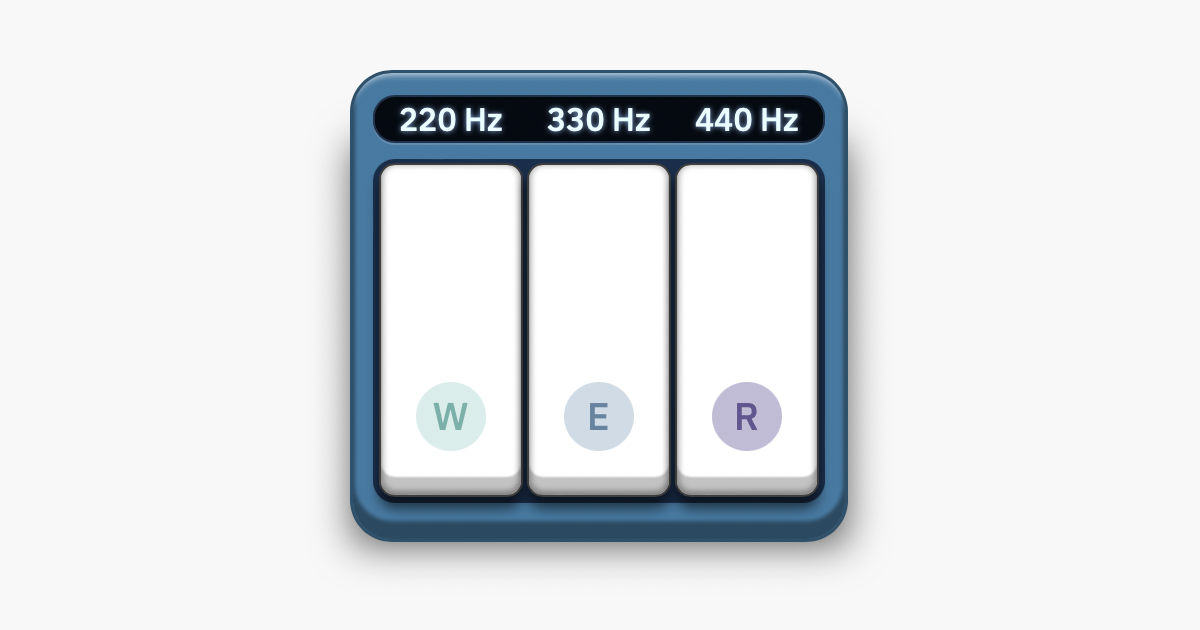
The three keys piano at the beginning is so responsive and nice that I was stuck playing with it for 5 minutes, that's how you hook someone to read an article
I love it when I'm halfway through something and take a second to pause and wonder why someone put so much effort into it, and them I appreciate that they did. This is amazing.
One thing that surprised me the first time I learned it is how 'dense' air is under normal circumstances. The 'mean free path' is the mean distance that a particle travels before changing velocity (typ due to collision). The mean free path of atmospheric air at standard pressure is ~65 nanometers, with ~2x10^19 (20 billion billion) molecules per cubic centimeter experiencing about 10^33 collisions per second. This is roughly the volume of an adult's ear canal.
Whilst I imagine he'd produce content regardless of income, he does have a slightly successful Patreon. To encourage this effort, consider supporting him in some form, if you don't.
I was able to reach 10^-7 mbar with a good vacuum system and I though I would have few thousand molecules, turns out there is a billion (10^9) molecules per cubic centimeter at that vacuum level.
And yet somehow, as far as we know, the energy of every molecular collision is faithfully preserved during a supernova, when effectively the entire volume of a star collapses into its core in less then a second.
That's not accurate. Only the inner core collapses (hence the "core-collapse supernova"; there are also other types), the rest rebounds, is heated up by core-produced neutrinos, and gets ejected. The Wikipedia article is a good start, also there are plenty of good papers on arxiv (e.g. on still-not-too-successful numerical modeling of the aforementioned "heating", without which the thing simply doesn't go bang).
I love the web audio API. I've been making a game where the theme is "I don't do art" so my assets are CSS, emojis, and manually made sounds using frequency and sinewaves and such.
The one lesson I learned the hard way is that if you run a full-volume sine wave long enough you can permanently destroy your laptop speakers.
Reminds me of Marcan trying to make Asahi not do that on MacBooks, and so far failing (https://github.com/AsahiLinux/linux/issues/53). I didn't know that Windows laptops also had speakers that would burn out with high-volume playback.
Comments (206) 87 threads
Earlier commentsInteresting side note - using the "basic" frequency/amplitude slider section, you can tell if you have any hearing loss in a certain ear at a certain frequency, as well as high frequencies in general.
As an ex-musician, I have some hearing loss caused by playing and being around extremely loud music. Between 6KHz and 7KHz, I felt the sound shift towards my right hear, indicating some hearing loss at that frequency in my left ear. Between 10KHz and 11.5KHz, I felt a strong shift toward my left ear, indicating hearing loss at those frequencies in my right ear. Above about 12.3KHz, I lost the sound entirely.
One very gentle bit of feedback (haha) to the author would be to provide anchors to each section so they could be more easily linked.
If you're on headphones maybe but might "only" be shit speakers
One thing that surprised me the first time I learned it is how 'dense' air is under normal circumstances. The 'mean free path' is the mean distance that a particle travels before changing velocity (typ due to collision). The mean free path of atmospheric air at standard pressure is ~65 nanometers, with ~2x10^19 (20 billion billion) molecules per cubic centimeter experiencing about 10^33 collisions per second. This is roughly the volume of an adult's ear canal.
Reality is very strange.
Continue this thread — 1 reply
The one lesson I learned the hard way is that if you run a full-volume sine wave long enough you can permanently destroy your laptop speakers.
Don't hold your breath. It'll be rudimentary. I'm making it for my own joy and learning, but will probably publish it by EOY.
Minutes? Hours?
I never repeated the experiment. Maybe my laptop was a dud or something.
All comments shown.
Couldn't load more comments. Check your connection and try again.