Show HN: Trading cards made with e-ink displays (opens in a new tab)wyldcard.io
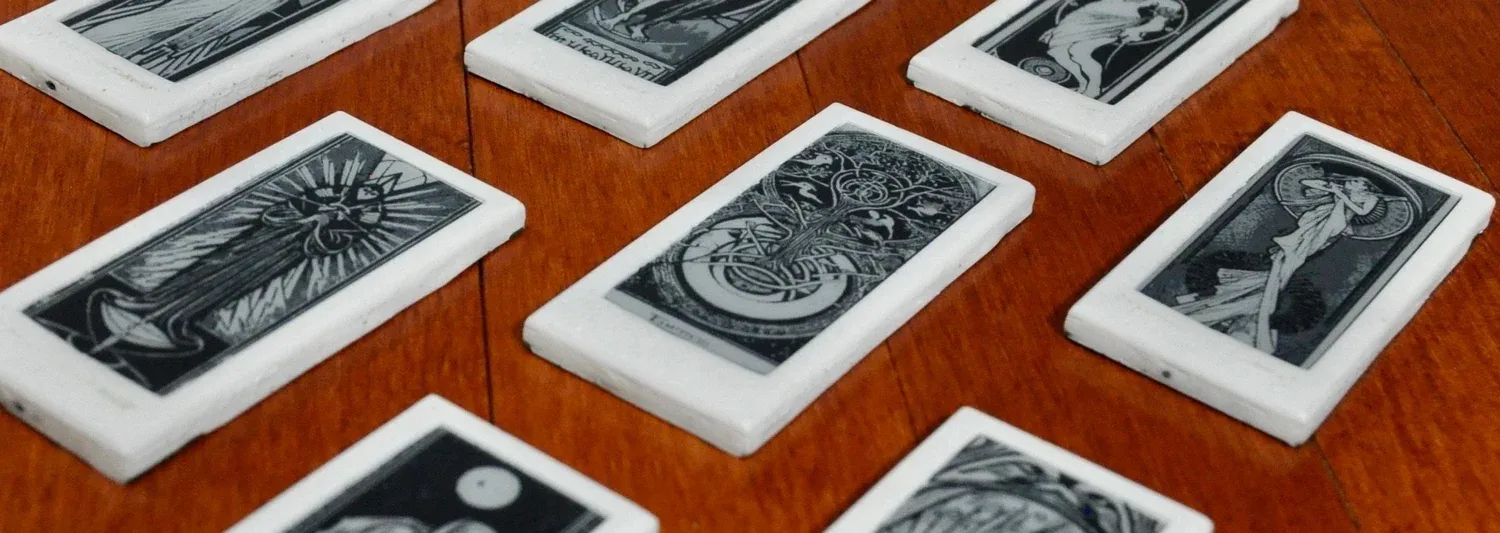
1149 pointsI made a thing!
In 2014, I was holding a stack of iPhones and thought to myself:
"Hey, if I had each phone display a playing card, I could click a button and they'd shuffle themselves"
Right now, each card costs me about $20 each, but with only a bit more scale, I think I can get that down to $10.
In doing this project, I learned how to design electronics and circuit boards. I learned Rust and wrote my first driver, I upped my CAD skills, 3D printed, and did my first resin casting. I generated the images on the cards using stable-diffusion.
HN always seems to appreciate new uses for e-ink. Thought I'd share :)
Comments (291) 95 threads
Show all comments
Showing thread 34 of 95
I knew no Rust at all before starting. Yikes was it frustrating to learn a completely new language. I had to go through the whole rust book, not skipping any basics, in order to get there. I also assigned myself a homework assignment to get used to the concepts. See the other blog post on wyldcard.io/blog
Honestly, by the time I got to the finished prototype, I could have just done the whole thing with Javascript. Although intending to use an SDM32F7 for the finished project, it was really convenient to use a raspberry pi for development. Using VS Code, I could program remotely on the pi from my Mac and iterate really quickly.
the awesome-embedded-rust[1] repo was very helpful.
TBH, embedded rust really feels like it's not ready for hobbysists who aren't embedded experts already.
[1] https://github.com/rust-embedded/awesome-embedded-rust