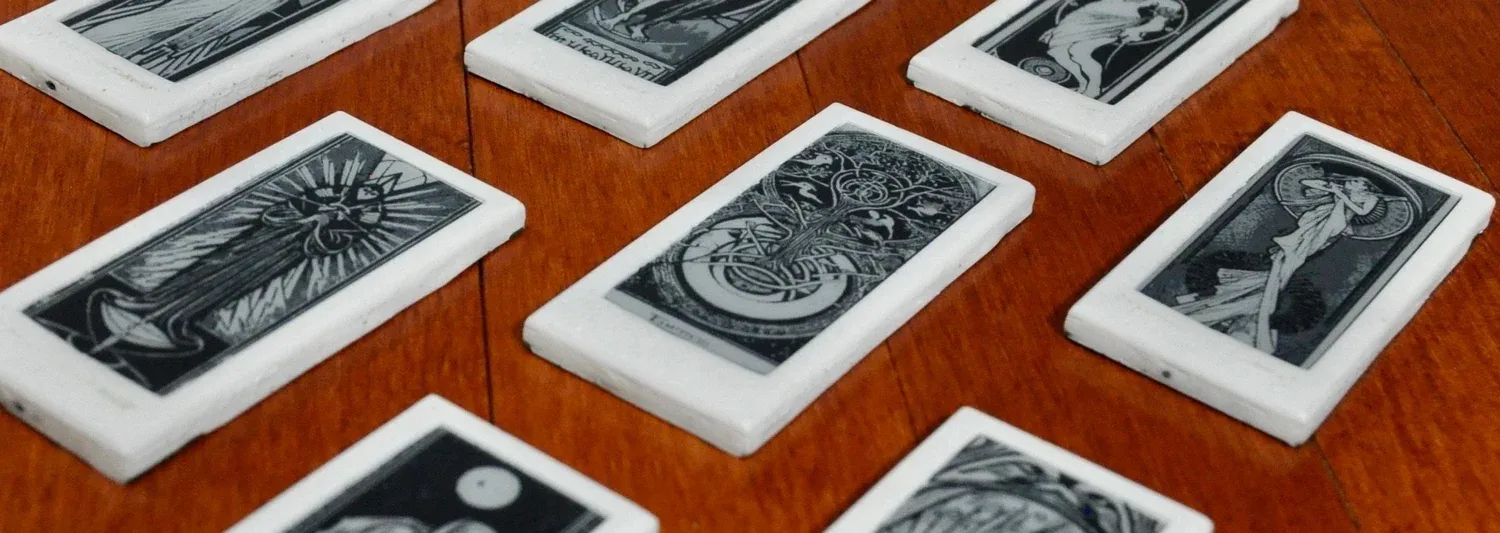
Show HN: Trading cards made with e-ink displays (opens in a new tab)wyldcard.io
1149 pointsI made a thing!
In 2014, I was holding a stack of iPhones and thought to myself:
"Hey, if I had each phone display a playing card, I could click a button and they'd shuffle themselves"
Right now, each card costs me about $20 each, but with only a bit more scale, I think I can get that down to $10.
In doing this project, I learned how to design electronics and circuit boards. I learned Rust and wrote my first driver, I upped my CAD skills, 3D printed, and did my first resin casting. I generated the images on the cards using stable-diffusion.
HN always seems to appreciate new uses for e-ink. Thought I'd share :)
Comments (291) 95 threads
Show all comments
Showing thread 39 of 95
But let's say all trading cards in the world were like the e-ink ones you invented, and then somebody came along and said, "I printed 52 trading cards on glossy card paper, in vibrant color. They are 1 millimeter thick, weigh practically nothing, and cost about a penny each to produce. The drawback is you have to shuffle them in your hands".
The paper version would be a massive upgrade in almost every sense.
>The cards also contain a memory chip, so they can store stats, moves, and keep changes and status effects from one game to the next. ... >I think these cards have the potential to unlock a new paradigm of tabletop gaming. They are rooted in the physical world, but can implement complex game mechanics run by a computer.
e.g. Magic The Gathering has a TON of modifiers - +1/1 counters, etc - and this could live-update and keep track of those in a physical/offline setting.