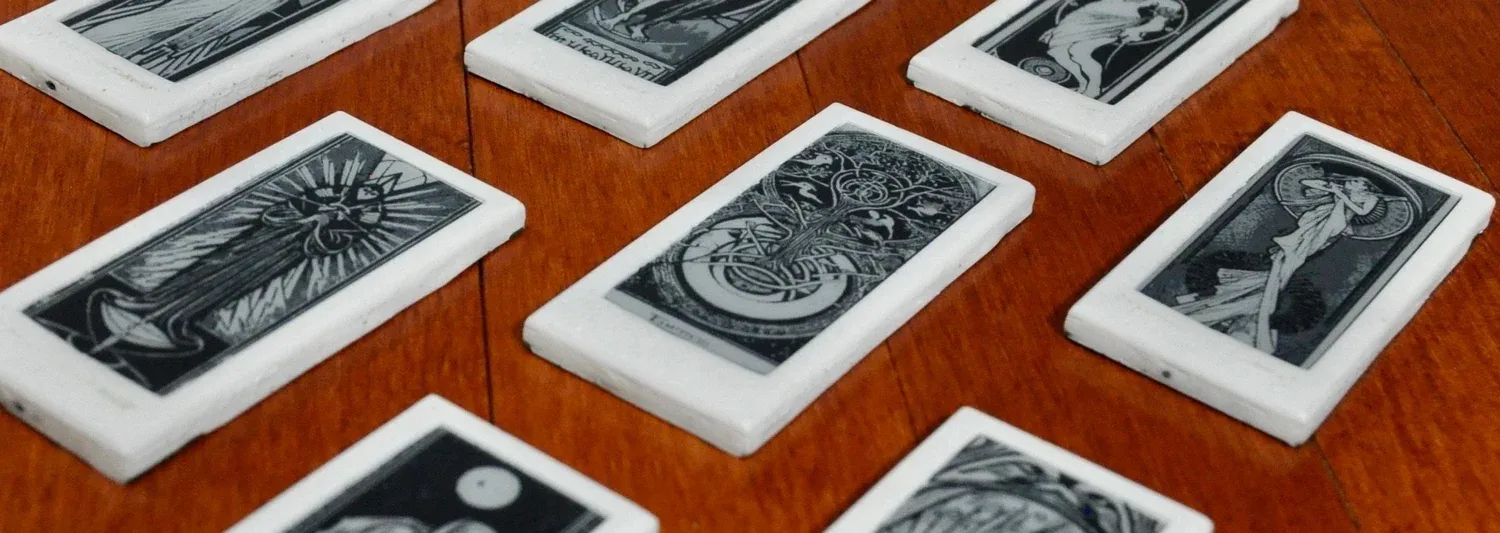
Show HN: Trading cards made with e-ink displays (opens in a new tab)wyldcard.io
1149 pointsI made a thing!
In 2014, I was holding a stack of iPhones and thought to myself:
"Hey, if I had each phone display a playing card, I could click a button and they'd shuffle themselves"
Right now, each card costs me about $20 each, but with only a bit more scale, I think I can get that down to $10.
In doing this project, I learned how to design electronics and circuit boards. I learned Rust and wrote my first driver, I upped my CAD skills, 3D printed, and did my first resin casting. I generated the images on the cards using stable-diffusion.
HN always seems to appreciate new uses for e-ink. Thought I'd share :)
Comments (291) 95 threads
Show all comments
Showing thread 3 of 95
Adventure card games,[2][3] which blend tabletop RPG and card game mechanics to play through a story and often rely on mutable and custom third-party or player-created cards, are another niche that could rock programmable cards. They don't rely on collectability or random card packs - everything to play comes in a base set, and expansions take the forms of additional classes or adventures. But they can be tedious to set up, card mutability means marking and smudging cards or sleeving them, and using third-party or player-made cards usually requires getting them printed to fit into the deck seamlessly - programmable cards can dodge all of those issues.
1: https://www.youtube.com/watch?v=8ZLXSmq9s1A
2: https://www.strangeassembly.com/2019/review-pathfinder-adven...
3: https://play.google.com/store/apps/details?id=net.obsidian.p...