Show HN: Reverse-Engineering a Switch Lite with 1,917 wires (opens in a new tab)usoldering.com
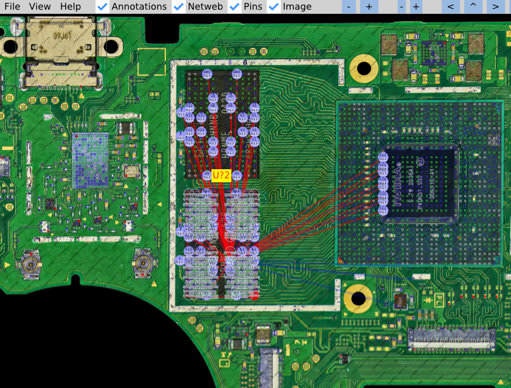
513 pointsMost public boardviews are almost entirely the result of industrial espionage, other than a few encrypted subscription based software platforms that provide extensive access. The process output is released as donationware, as my main concern is that even released as a low-cost purchase, there is a very strong culture to share this type of information at no cost. I would like to have a more sophisticated suggested donation system adaptive to user country, but I wasn't able to find a good solution.
In terms of 'good startup ideas', I don't think this is one of them. The very high level of soldering skill required makes it difficult to scale, and the prevailing piracy culture makes it challenging to monetize. My main advantage is that costs are very low now that I have the entire thing working. Other than forge ahead at a loss and hope for the best, or to pivot hard leveraging the imaging technology, I'm not sure what other options I have. It feels too complicated and repetitive for shoft-form video content. If you have any feedback, questions, suggestions, etc., I'd love to hear them.
Comments (114) 22 threads
Show all comments
Showing thread 1 of 22
This model would be similar to the notorious Denuvo DRM cracker Empress, who is essentially the only person who can break this gaming anticheat. https://en.m.wikipedia.org/wiki/Empress_(cracker) . I will warn they have quite some drama about them, but the financials seem to be working.
I would also consider what your work could be useful for / value proposition for others. The trimmed-down Wii consoles come to mind. Perhaps a small group of people would heavily value a netlist of their favorite circuit that they could recreate even smaller with more layers/modern techniques.
We've grown up. We got solid, well paying developer jobs. I do not want to even risk violating some law. It's been a hoot 1987-2004 but I have not opened IDA in two decades. That book is closed. I doubt I am alone.
Once... so long ago... I could disassemble Z80 in my head. Today? C9 was RET. The rest I forgot.
Continue this thread — 6 replies
Continue this thread — 3 replies
A couple weeks ago I played around with a piece of software for my personal usage, and I certainly won’t release anything at all.
Not worth the trouble with the law, I’m not underage anymore and a day job gets in the way of keeping the required mental state/context for RE.
Ah, the simpler times at the University when I had the time and energy.
Well, yeah, there was a time for that.
But, I can guess I can openly say this twenty years later, I was helping out one of the admins of the one of the largest warez sites in Central Europe and when that was raided (Operation Fastlink) -- police only found the proxies and couldn't find the owner so no one ever got indicted over this site -- I had a little chat with myself and, as I said above, closed that chapter of my life.
That server was really something else: imagine a normal mid tower chassis PC of the era but stuffed with IDE cards and next to it several piles of hard drives separated by little pieces of wood so they didn't overheat from touching. By the end, if memory serves, it was multiple terabytes.
Continue this thread — 5 replies
Or did you think that it was some sort of wild coincidence that the vast majority of software piracy groups are Russian?
There are plenty of projects where a new PCB for an old device would be desirable:
* The vintage computers prone to capacitor/battery damage. There are a few Mac replacements, for example, but these are obviously hand-done labours of love.
* Classic Hi-Fi involves a lot of 40 year old boards with failing materials (for example, early two-sided PCBs where the second layer was literally painted on) An accurate netlist might also help improve quality of schematic info that's sometimes ancient service manual scans that are nearly illegible.