Show HN: We built PriceLevel to find out what companies pay for SaaS (opens in a new tab)pricelevel.com
532 pointsHey HN! Christine and Steven here. As a PM and engineer, we’ve both evaluated and purchased a lot of software. One of the biggest frustrations was figuring out how much it would cost us without having to go through the sales process. When we did have a quote, we had no idea if we were getting a good deal or ripped off.
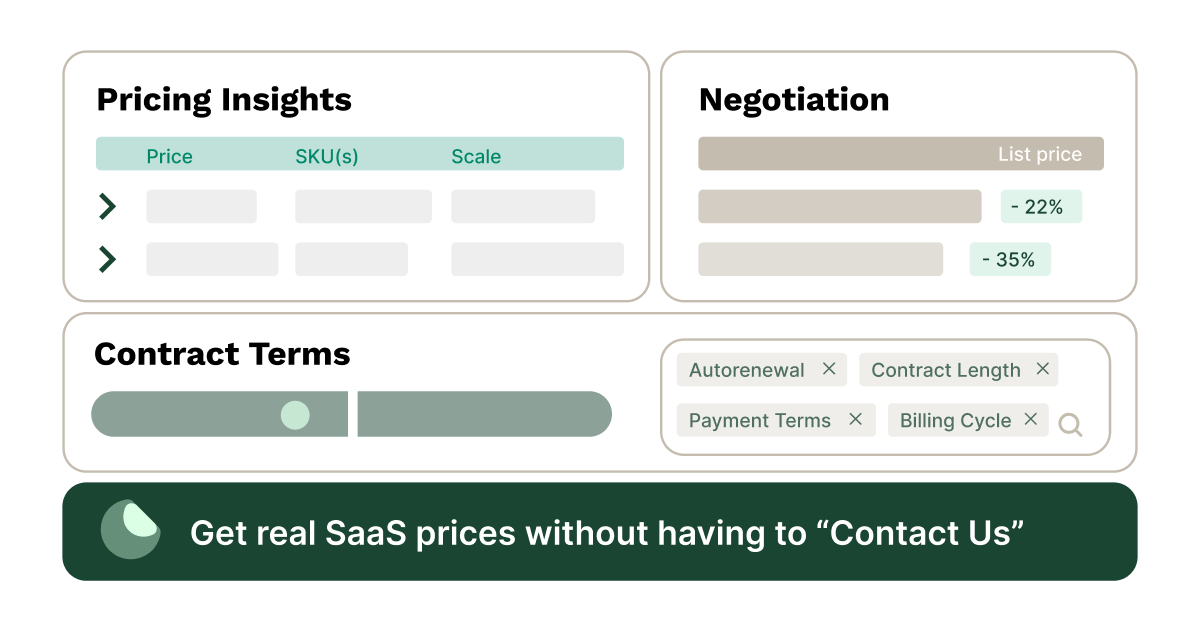
We built a site where you can see what other companies are actually paying for SaaS and enterprise software. Buyers contribute prices via quotes, pricing proposals, and other documentation to ensure quality.
We unlocked Talkdesk for Show HN users so that you can use the product without needing to sign in or upgrade. Check it out at https://www.pricelevel.com/showhn. Would love to hear any feedback, thank you!
Comments (176) 52 threads
However, as a provider I can totally see a situation where I (proverbially, I'm not in this business) sue you for disclosing what amounts to a trade secret (depending on what's in the fine print) and compel you to give up all documents so I can go after my loose-lipped client too.
I hope you've got your legal bases covered
This is with the obvious caveat that public tenders are the exception, but only after it's awarded
You'll see there's some cited court cases that supported pricing as a trade secret, and some that held it was not.
It seems to be still pretty muddy legally.
I've found in competitive price analysis there's some companies that do very, very, well at hiding their pricing. If they've worked that hard, that long, to protect/hide pricing they're not going to take it lying down.
Not making a value judgement and happy to be corrected if this is not a thing.
Continue this thread — 3 replies
(1) https://www.lplegal.com/content/what-are-trade-secrets-and-h...
Is there a basis for this in recent case law? And how difficult would it be to enforce against a 3rd party actively publishing pricing, and therefore competitive, strategy?
Nope I'm not staying they should shut down or they will get sued, but they should do the sensible thing and talk to a good lawyer
prices wouldn't be enforceable because knowing how much you charge isn't revealing anything proprietary (because you have to tell your customers in order to get them to make a decision).
Also not exactly possible to expect confidentiality around prices because your banks and their staff will see it..
Continue this thread — 5 replies
Not being allowed to expose the buying price of a service would go against many of these procedures/obligations.
We could look at it the same way disclosing one's salary can't be illegal: how do you then apply for a loan for instance ?
Source: I'm a 3L about to graduate with an IP specialization and got an award for being the best student in my trade secret law class.
Continue this thread — 8 replies
Our microsoft reseller was using pricing and contract info on a deal he closed last week to assure us he would and could get us a similar deal.
Gartner will literally cutthtoat re-negotiate any large contract you have, using pricing data they have gathered from their members.
Call them up tomorrow, tell them your current cost for Splunk, they will tell you exactly how much you can save.
So this type of thing is not illegal and not even frowned upon for the big players.
I personally hate it but it's just how the game is played and it's why all enterprise software has stupidly high advertised prices so they can give "90% discounts" and let people think that is a good deal when it is ultimately just the real price that all the big players are getting anyway.
Continue this thread — 1 reply
Continue this thread — 5 more replies
As an operator, I know a lot of SaaS agreements include language saying the customer will protect the vendor's confidential data including information about pricing. I doubt it's legal in the majority of the time for buyers to share this data. And if the buyer is sharing confidential data with you, you're likely taking on risk by sharing it publicly, even in aggregate form.
You could add something saying that the buyer agrees that they have the legal rights to share the information with you, to protect yourself. But at some point you should know that the majority of the time, even if that box is checked, they don't.
Sure, they get some good insight, but they don't know how many seats, what level of support, etc etc. They just see a transaction $X from company A -> company B.
For even more privacy you could show faceted aggregates with error bars instead of individual accounts once your samples are big enough.
I don't care if it's $91,132 or $90,725 or $91,412 - all of those are effectively the same as $91k (unless I'm the vendor trying to work out who's leaking my pricing).
What I'm looking for as a potential new customer is to see if it's going toi cost me ~200k or ~90k or ~10k or ~3k.
731 seats @ $77492.32 could be ~700-750 seats at ~$75k-$80k and that's still a useful guide for me.
A lot of estimations are done with "t-shirt sizes", and just knowing a rough range with a rough margin of error makes things so much easier. I'll let my procurement team fight for the $3k or 31 user difference, and do the back and forth with quotes, but I can run w/ those broad numbers right now
> Buyers contribute prices via quotes, pricing proposals, and other documentation to ensure quality.
Stop using words that makes it sounds like a crime. It’s a survey. Nobody is under any legal requirement to provide correct info.
Continue this thread — 15 replies
Continue this thread — 1 more reply
All comments shown.
Couldn't load more comments. Check your connection and try again.