Show HN: iFixit created a new USB-C, repairable soldering system (opens in a new tab)hackaday.com
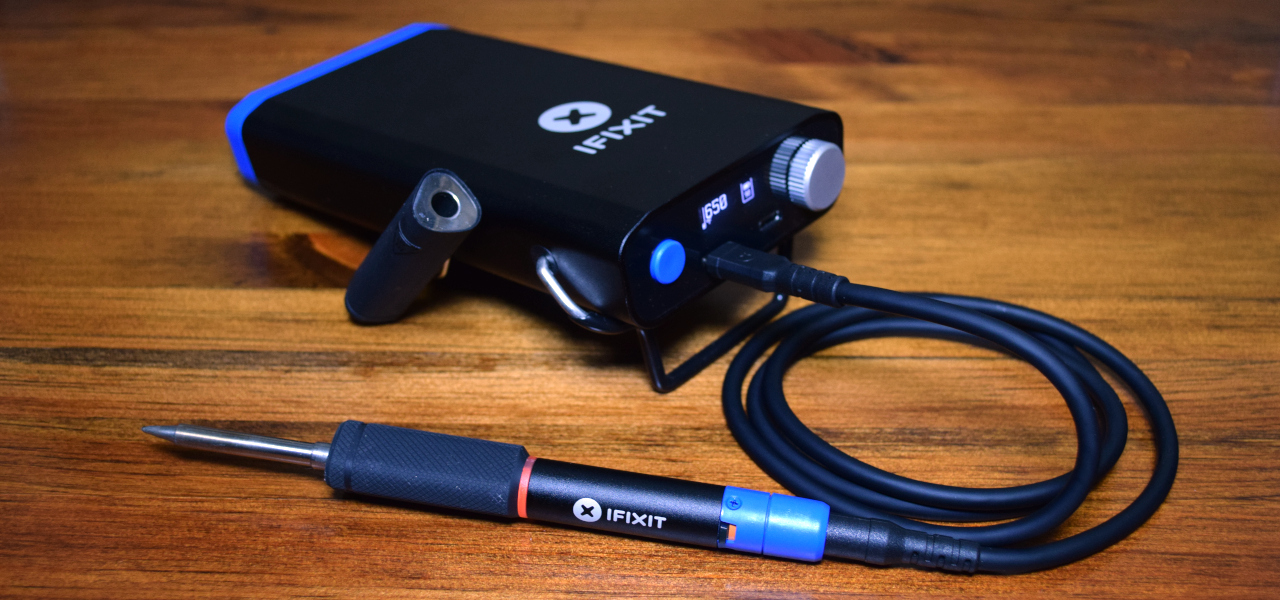
928 pointsIt's a USB-C powered soldering iron and smart battery power hub. Super repairable, of course. Our goal is to make soldering so easy everyone can do it:
https://www.ifixit.com/fixhub
We didn’t want to make just another iron, so we spent years sweating the details and crafting something that met our exacting standards. This is a high-performance iron: it can output 100W of heat, gets to soldering temperature in under 5 seconds, and automatically cools off when you set it down. The accelerometer detects when you pick it up and heats it back up. Keeping the iron at a lower temperature while you’re not soldering shouold prolong the life of the tip.
What’s the difference between this iron and other USB-C irons on the market? Here’s a quick list:
Higher power (our Smart Iron is 100W, competitors max out at 60W over USB-C, 88W over DC Supply)
Heat-resistant storage cap (you just have to try this out, it’s a real game changer in day-to-day use)
Polished user experience
A warranty and a local company to talk to (I can’t find any contact information for Miniware)
Comfier / more natural grip
Shorter soldering tip length
No-tangle, heat-resistant cable
Locking ring on the cable, so it can’t snag and get disconnected (this happens to me all the time on other irons)
More intuitive settings, either on the Power Station or on the computer
We used Web Serial https://caniuse.com/web-serial for the interface, which is only supported in Chromium browsers. The biggest bummer with that is that no mobile browsers support it, yet. Hopefully that changes soon.
Hardware is hard! It's been a journey for us. Happy to answer any questions about how we made it.
Schematics and repair information are online here: https://www.ifixit.com/Device/FixHub_Portable_Soldering_Stat...
Comments (405) 75 threads
Show all comments
Showing thread 66 of 75
Also, can you safely put 100W through a headphone jack? The ones I can find on Digikey that list a power rating seem to max out at 75W but most are well below that. Headphone jacks aren't exactly meant for high power, there is only a small amount of contact between the terminals since there's very little power required for line audio. Obviously big speakers require more power but those use things like XLR, RCA, and wire posts that provide way more contact.
Adding to this, I don't want to use their Chrome-only web app to configure it. Is this thing actually a serial device or is it something that only Chrome can talk to? If the former, just make it an Electron app if you want to be lazy. Can I still run the web app locally if iFixit decides to stop hosting it?
iFixit acts like they are all for open hardware and then go make something that uses proprietary tips and a (likely) closed source web app. I'm glad I could repair it if necessary but seems like a step back from a cheap solder station from Amazon that has a control panel and takes Hakko tips.
Continue this thread — 1 reply