Show HN: iFixit created a new USB-C, repairable soldering system (opens in a new tab)hackaday.com
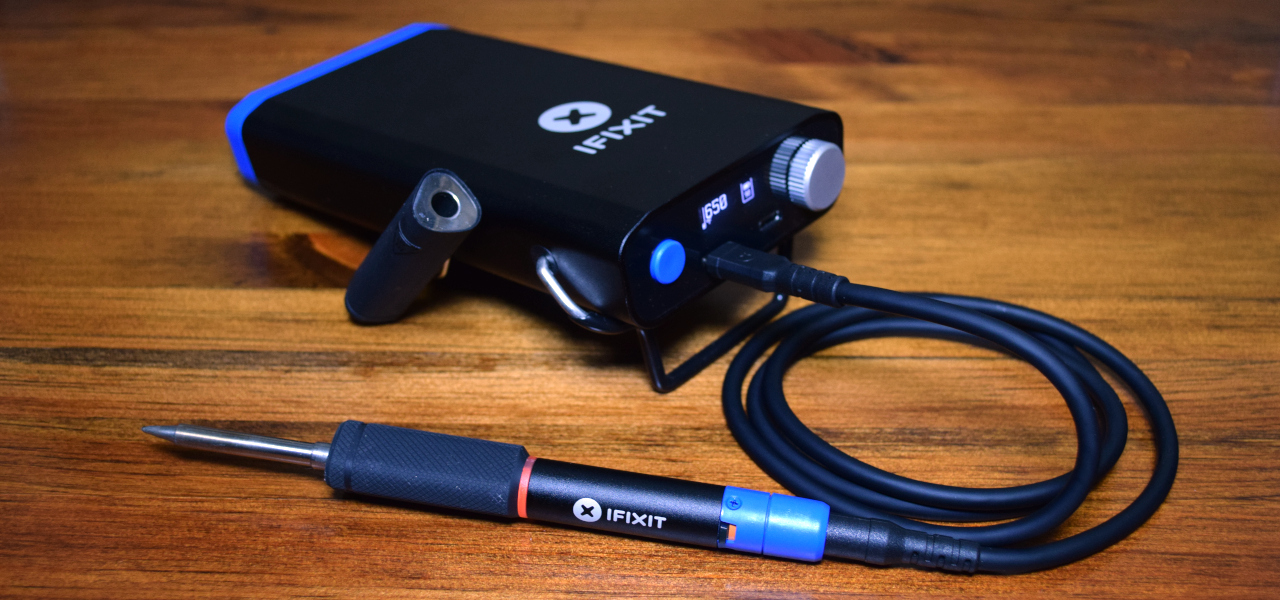
928 pointsIt's a USB-C powered soldering iron and smart battery power hub. Super repairable, of course. Our goal is to make soldering so easy everyone can do it:
https://www.ifixit.com/fixhub
We didn’t want to make just another iron, so we spent years sweating the details and crafting something that met our exacting standards. This is a high-performance iron: it can output 100W of heat, gets to soldering temperature in under 5 seconds, and automatically cools off when you set it down. The accelerometer detects when you pick it up and heats it back up. Keeping the iron at a lower temperature while you’re not soldering shouold prolong the life of the tip.
What’s the difference between this iron and other USB-C irons on the market? Here’s a quick list:
Higher power (our Smart Iron is 100W, competitors max out at 60W over USB-C, 88W over DC Supply)
Heat-resistant storage cap (you just have to try this out, it’s a real game changer in day-to-day use)
Polished user experience
A warranty and a local company to talk to (I can’t find any contact information for Miniware)
Comfier / more natural grip
Shorter soldering tip length
No-tangle, heat-resistant cable
Locking ring on the cable, so it can’t snag and get disconnected (this happens to me all the time on other irons)
More intuitive settings, either on the Power Station or on the computer
We used Web Serial https://caniuse.com/web-serial for the interface, which is only supported in Chromium browsers. The biggest bummer with that is that no mobile browsers support it, yet. Hopefully that changes soon.
Hardware is hard! It's been a journey for us. Happy to answer any questions about how we made it.
Schematics and repair information are online here: https://www.ifixit.com/Device/FixHub_Portable_Soldering_Stat...
Comments (405) 75 threads
Show all comments
Showing thread 41 of 75
Webserial and such makes for a cool tech demo, but I just want portable soldering with standard field-replaceable batteries.
I normally power mine off either a power bank with PD, or a LiPo battery that I also use for drones.
I don't actually need 90W in the application I have in mind. I'd be more than happy with 60, and there are quite a few 18650 cells that can do 20A comfortably. Runtime at full power would be short of course, but I don't find I'm continuously heating work for very long in the field.
Here's a test of the VTC6. It does look like it's struggling a bit at 30A, but it's happy at 20. https://lygte-info.dk/review/batteries2012/Sony%20US18650VTC...
I figure that might be workable for a few power cycles and a few big solder joints, but it would probably be a frustrating experience for anything more than quick fixes in the field.
Continue this thread — 3 replies