Lurker News
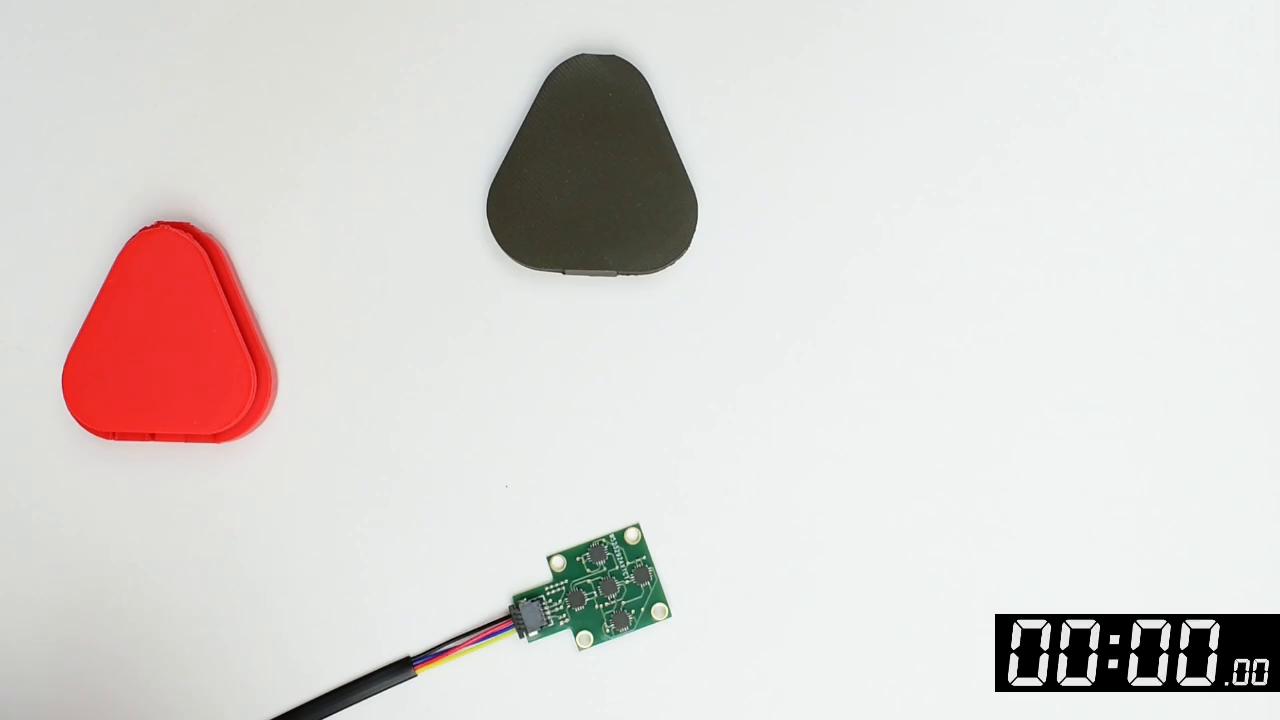
We just released a very excited touch sensor that finally simplifies touch sensing for robotics.

Our most exciting result: Learned visuotactile policies for precise tasks like inserting USBs and credit card swiping, that work out-of-the-box when you replace skins! To the best of our knowledge, this has never been shown before with any existing tactile sensor.
Why is this important? For the first time, you could now collect data and train models on one sensor and expect them to generalize to new copies of the sensor -- opening the door to the kind of large foundation models that have revolutionized vision and language reasoning.
Would love to hear the community's questions, thoughts and comments!
Comments (66) 27 threads

Show all comments

Showing thread 5 of 27

ugh1231 reply#
For inserting USBs and similar tasks, is it sensing the angular change (and/or pressure differences between the two 'fingers') as the robot aligns into the hole? (as if the robot is 'feeling' it's way to aligning the usb plug).

Other questions: Is the primary skin material a molded silicone or possibly TPU (can be 3d printed)?

raunaqmb1 reply#
Yes, you can 3D print a mold and we release this design tool: https://cad.onshape.com/documents/f3ec62110b01a3ad0fcb6d85/w... You can make whatever 2D shape you want in shape_sketch, as long as it is within the bounding square, and we automatically generate molds with the requisite inlet and outlet channels! It is still in prototype mode and we are working to make it robust, but it generally works and was used to make all the different shapes you see on the website and in the paper.
raunaqmb#
As for what it is sensing, we learn end to end policies in this case, and allow the neural network can pick up on whatever it needs for the particular task! but we have run experiments with a predecessor of AnySkin, ReSkin: https://reskin.dev that indicate you can localize contact at sub-mm scale as well as sense normal and shear forces!
eichin#
https://formlabs.com/blog/inside-production-robot-hand/ is from almost a decade ago, but yeah - print a mold, stick electronics in slots in the mold, pump silicone around it. Back then it was sort of novel that commercial-grade resin printers could produce smooth enough surfaces for this; I expect that today, hobbyist-grade ones probably suffice.
serf#
there are a lot of magnetic-particle FDM materials out there, I guess a project like this is waiting for a filament house that wants to start experimenting with magnetic powders + TPU.