Show HN: Put this touch sensor on a robot and learn super precise tasks (opens in a new tab)any-skin.github.io
390 pointsWe just released a very excited touch sensor that finally simplifies touch sensing for robotics.
Our most exciting result: Learned visuotactile policies for precise tasks like inserting USBs and credit card swiping, that work out-of-the-box when you replace skins! To the best of our knowledge, this has never been shown before with any existing tactile sensor.
Why is this important? For the first time, you could now collect data and train models on one sensor and expect them to generalize to new copies of the sensor -- opening the door to the kind of large foundation models that have revolutionized vision and language reasoning.
Would love to hear the community's questions, thoughts and comments!
Comments (66) 27 threads
Show all comments
Showing thread 3 of 27
[1] https://www.digikey.com/en/products/detail/melexis-technolog...
ReSkin: versatile, replaceable, lasting tactile skins https://arxiv.org/abs/2111.00071
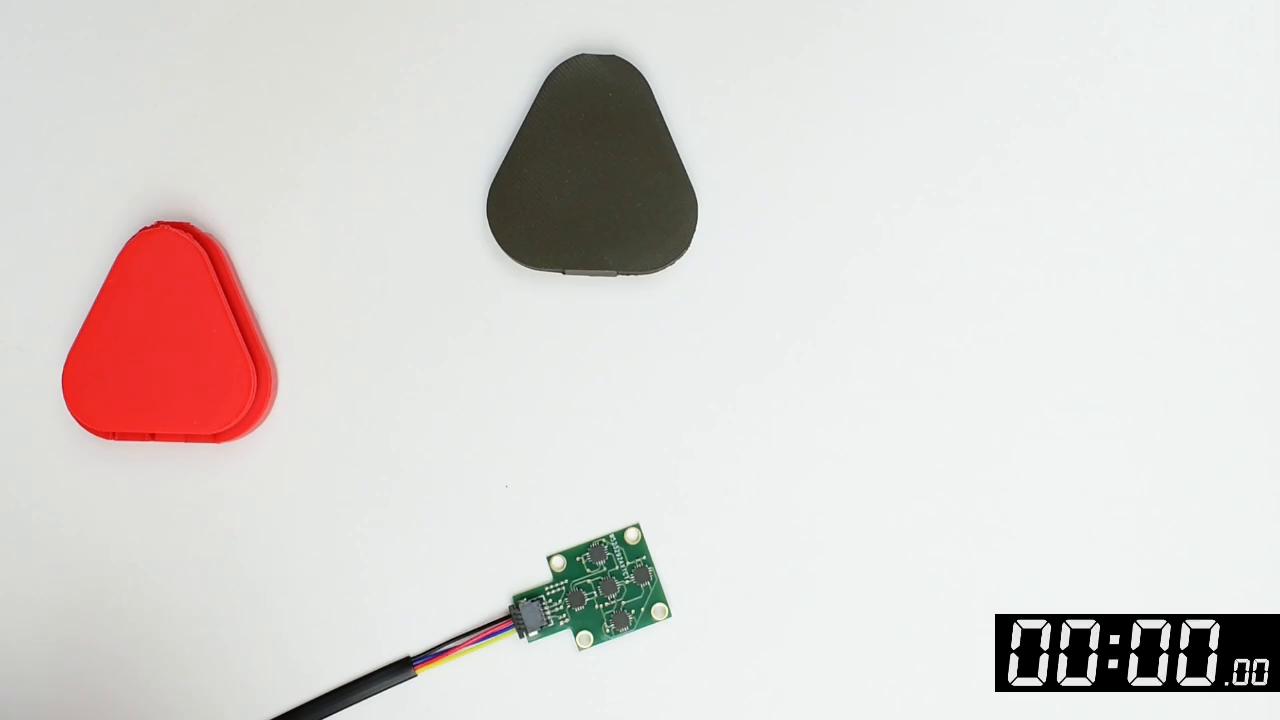
> Z- coordinate system [36]. For an overall sensing area of 20mm x 20mm (Figure 3), we measure magnetic flux changes using 5 magnetometers. Four magnetometers (MLX90393; Melexis) are spaced 7mm apart around a central magnetometer. All 3D-printed molds, circuit board files, bill of materials, and libraries used have been publicly released and opensourced on the website
https://reskin.dev/
a breakboard is available here https://www.adafruit.com/product/4022
More than happy to answer questions about it either here or on my email as the corresponding author on the paper!