Lurker News
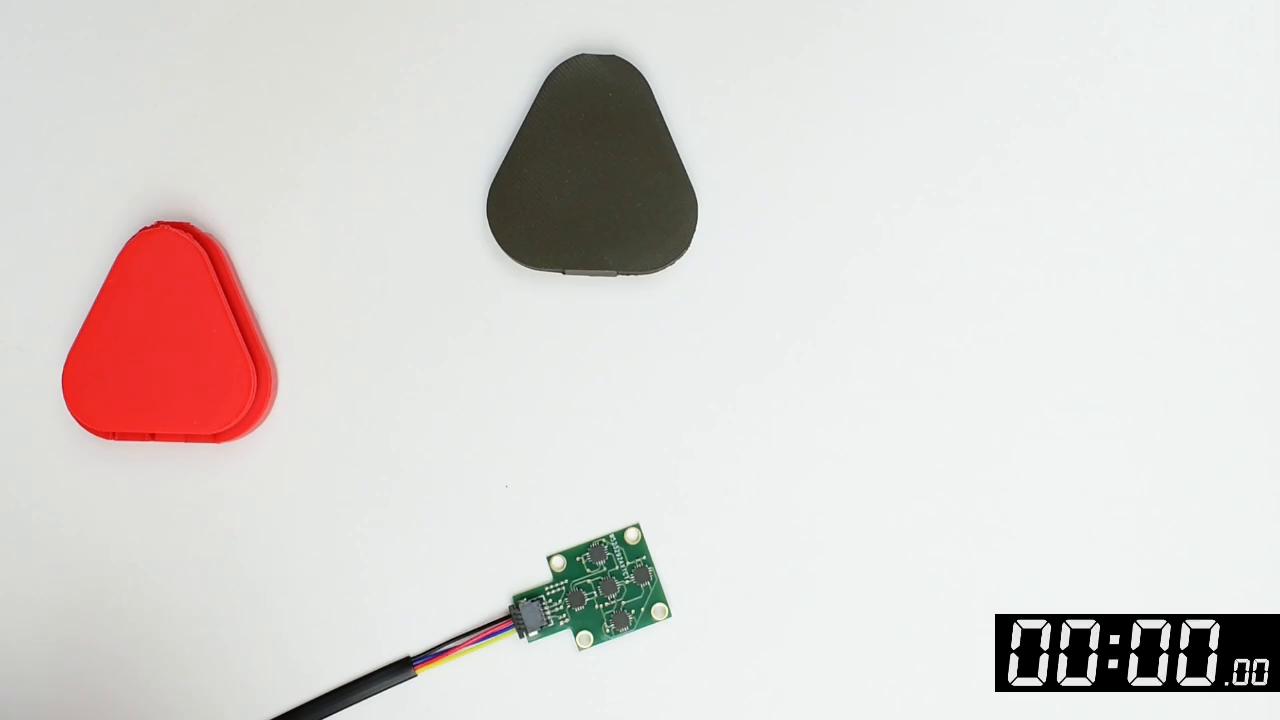
We just released a very excited touch sensor that finally simplifies touch sensing for robotics.

Our most exciting result: Learned visuotactile policies for precise tasks like inserting USBs and credit card swiping, that work out-of-the-box when you replace skins! To the best of our knowledge, this has never been shown before with any existing tactile sensor.
Why is this important? For the first time, you could now collect data and train models on one sensor and expect them to generalize to new copies of the sensor -- opening the door to the kind of large foundation models that have revolutionized vision and language reasoning.
Would love to hear the community's questions, thoughts and comments!
Comments (66) 27 threads

Show all comments

Showing thread 4 of 27

mkl4 replies#
This seems like it would be really useful for electronic musical instruments. E.g. Linnstrument (https://www.rogerlinndesign.com/linnstrument) which uses a grid of force sensing resistor strips. Do these sensors interfere with each other if they're sitting side by side?
shermantanktop1 reply#
Why? You could just hardwire the control. Simulating a finger adds nothing.

This might be interesting for musical instruments with more tactile feedback, like hand drums or violins. But an electronic control surface like that only exists because human musicians aren’t already robots.

mkl1 reply#
I think you've misunderstood - there are no robots in my proposal. You use this sensor as a key, then touch it with your finger, and it can detect force and directionality. Put together a grid of these sensors and you've got an instrument with really expressive potential.
shermantanktop#
Ohhhh - yes that’s awesome, love that. It’s like 3d aftertouch.
dceddia#
This was my first thought too! Other stuff in this category I know of are the Roli instruments (Seaboard, Blocks) and the Haken Continuum. All of these are pretty darn expensive for the larger models and I wonder if this new tech would be a cheaper way to make these work.
jamilton1 reply#
Maybe you could just make a big one.
moffkalast#
Yeah I doubt you couldn't make one long strip and a few dozen magnetometers in a grid below it. Might be tricky to implement close multitouch reliably though.
dimatura#
Agreed, if these can be put into an array without interfering with each other it seems like it'd make a really cool expressive instrument. Cost would be a concern, though many of the existing instruments are exactly low-cost as is.