Show HN: Put this touch sensor on a robot and learn super precise tasks (opens in a new tab)any-skin.github.io
390 pointsWe just released a very excited touch sensor that finally simplifies touch sensing for robotics.
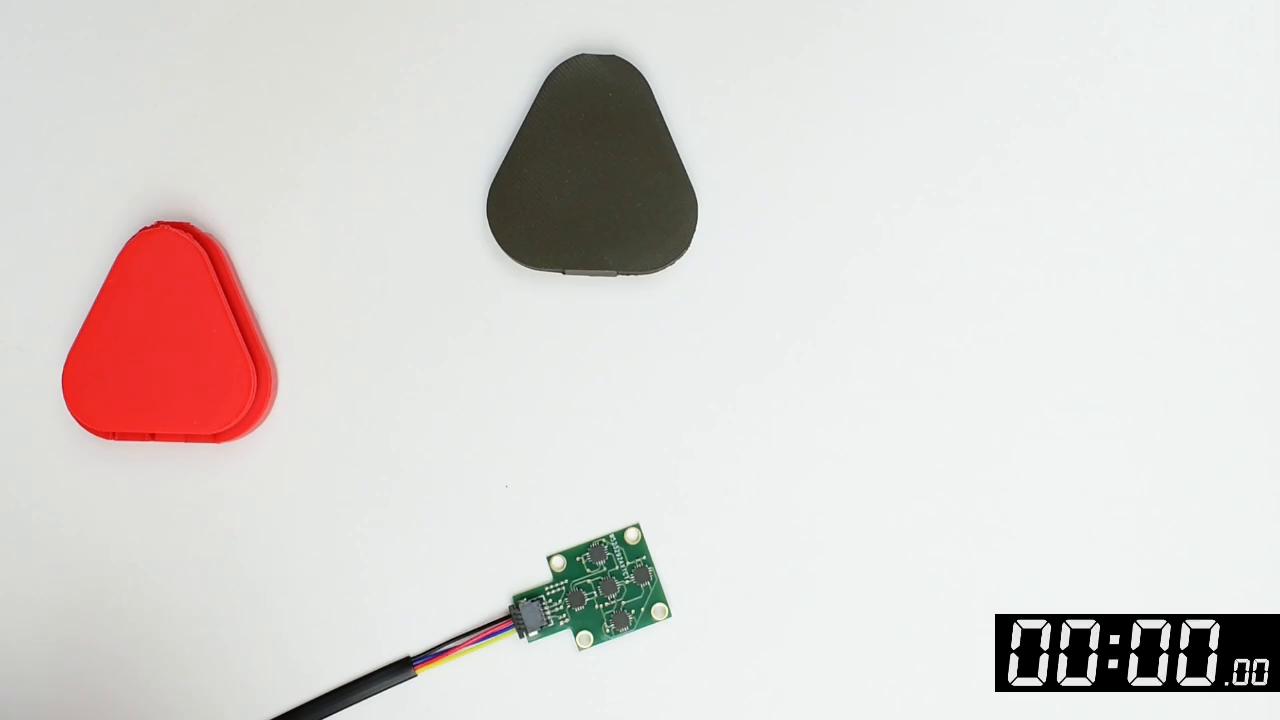
Our most exciting result: Learned visuotactile policies for precise tasks like inserting USBs and credit card swiping, that work out-of-the-box when you replace skins! To the best of our knowledge, this has never been shown before with any existing tactile sensor.
Why is this important? For the first time, you could now collect data and train models on one sensor and expect them to generalize to new copies of the sensor -- opening the door to the kind of large foundation models that have revolutionized vision and language reasoning.
Would love to hear the community's questions, thoughts and comments!
Comments (66) 27 threads
Show all comments
Showing thread 6 of 27
How tech-independent is the policy learning part? Do the models end up relying on how the board is giving you direction vectors, rather than contact location? (Nothing wrong with that, I'm just wondering if the directional aspect "factors out" certain kinds of change, and thus simplifies the learning process.)
That being said, the exact quantities the policy depends on are hard to interpret, given the use of deep learning. This could potentially be modality agnostic, but there has been no sensor so far that has shown (1) the ability to detect intuitively relevant quantities like contact location and 3-axis forces, and (2) sufficient signal consistency for deep learning models to generalize across instances. This was a key motivating factor for AnySkin, and we found a relatively straightforward fabrication procedure that enables this for magnetic sensing.
The reason we don't want to do this is that it is difficult to cover all possible characteristics. Say we do single point contact localization, and 3-axis forces prediction. What happens when we have multi-point contact? The calibration has only been used to calibrate/align in a lower dimensional space. This is primarily why not needing calibration and baking this into the hardware is a lot more appealing. The user/designer no longer needs to think about the task and the dimensions of alignment required for that task.