Show HN: boringBar – a taskbar-style dock replacement for macOS (opens in a new tab)boringbar.app
520 pointsI recently switched from a Fedora/GNOME laptop to a MacBook Air. My old setup served me well as a portable workstation, but I’ve started traveling more while working remotely and needed something with similar performance but better battery life. The main thing I missed was a simple taskbar that shows the windows in the current workspace instead of a Dock that mixes everything together.
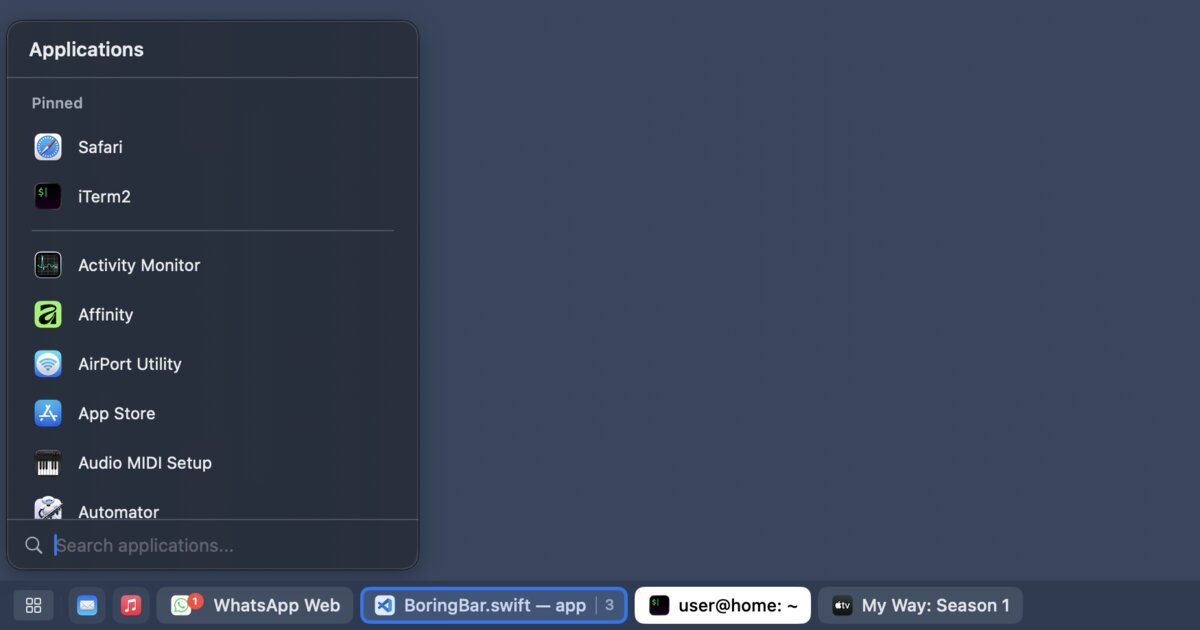
I built boringBar so I would not have to use the Dock. It shows only the windows in the current Space, lets you switch Spaces by scrolling on the bar, and adds a desktop switcher so you can jump directly to any Space. You can also hide the system Dock, pin apps, preview windows with thumbnails, and launch apps from a searchable menu (I keep Spotlight disabled because for some reason it uses a lot of system resources on my machine).
I’ve been dogfooding it for a few months now, and it finally felt polished enough to share.
It’s for people who like macOS but want window management to feel a bit more like GNOME, Windows, or a traditional taskbar. It’s also for people like me who wanted an easier transition to macOS, especially now that Windows feels increasingly user-hostile.
I’d love feedback on the UX, bugs, and whether this solves the same Dock/Spaces pain for anyone else.
P.S. It might also appeal to people who feel nostalgic for the GNOME 2 desktop of yore. I started my Linux journey with it, and boringBar brings back some of that feeling for me.
Comments (308) 131 threads
Show all comments
Showing thread 5 of 131
No judgement either way, I get that developers want to be compensated for their time. I just always found the difference in culture curious. I guess it's because if you're willing to spend the extra premium for Apple products, you're probably also willing to spend a little extra premium on the software too.
Depends. If you build software for others then of course you should be paid. But if you build sth for youself, to scratch you own itch, isn't that already compensation? Why try to milk that cow to for such a mini tool that just took a few weekends to build? (The author said that.) If everybody had followed that philosophy then the whole OSS ecosystem wouldn't exist. Time to pay back to the community and open source such a project.
Meanwhile I guess FOSS communists can continue to enjoy working for free programming crucial net infrastructure for companies like Google, Meta and Microsoft.
That's a solid combination of ideas. If anybody is forming a group of FOSS comrades - count me in!
Continue this thread — 2 replies
Any customer support that has to do with payments and license checks doesn't count.
Once you have a community of interested folks then fixing security issues and keeping things up to date is much easier. If there isn't enough interest then there isn't much of a monetizeable customer base anyway. It's self-regulating.