Ah the timeless joy of falling through the floor geometry.
Seriously though - it's breathtaking. The first guy who figures out the bridge between splats and dynamism - animation, editing, responsiveness - is going to be one of the immortals of 3d design.
There are many ways to represent 3D data, but animations really only work properly with polygon meshes (e.g. triangle surface meshes or volumetric tetrahedral meshes).
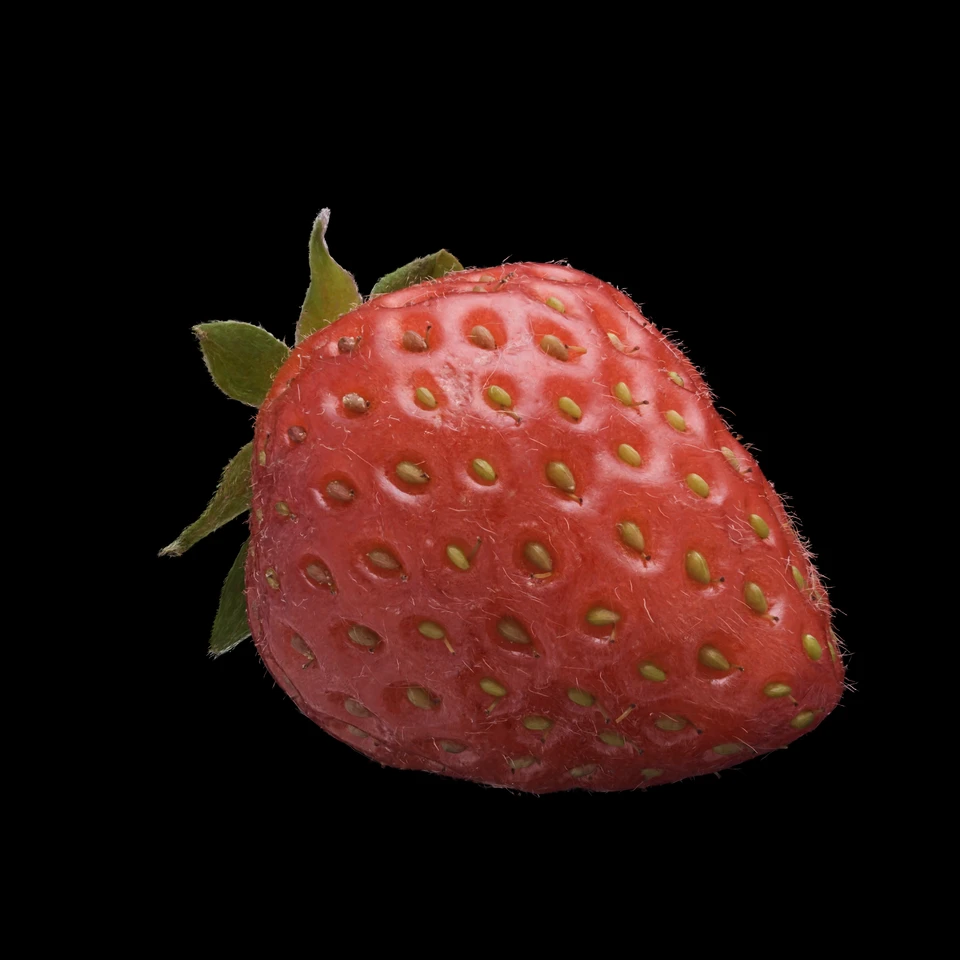
If you don't mind a basic but tangential question... I understand that splats like these are essentially a separate domain from traditional polygonal 3D scenes in a tool like Blender, but is it currently possible to use splats like the strawberry as elements in a Blender scene if they don't animate or interact any more than the camera / lights moving and being occluded by foreground objects?
Remembering how we used to cheat by projecting hi-res texture maps onto simple geometry to save modeling background objects with the trade-off of constraints on size, viewing angle, shadows, etc. With the relative ease of capturing these splats at high-fidelity, can they be used in a scene as projection-map-like 'fakes' except with far fewer constraints?
That one has a strange rendering error for me, the trees and horizon are in front of the mill building and the exterior isn't properly rendered unless you are in orbit mode. But my mind was a little blown when i discovered that I could walk up the stairs. It needs shift to run!
The scene desperately needs some clipping on the boundaries. If you use an app like Scaniverse, you can add a bounding box to cull far away points which are often poorly reconstructed. If you have a newer iPhone with a LIDAR scanner, highly recommended. You can make dolls-house renderings of your house or garden which is surprisingly useful for planning and measuring walls/features.
Lots of translucent blobs composited to produce the appearance of a strawberry.
There is no mesh or model. The visual surface of the strawberry could be made up of blobs spaced far apart physically and not where the surface appears to be. This is why they are called radiance fields, they model the light not the geometry. Practically the blobs positions/rotations can be constrained to better physically match the geometry of a strawberry.
I'm not sure i agree. The blobs are exactly where the surface appear to be because they are constrained by multiple viewing angles.
Otherwise the splat would fall apart as soon as the viewing angle is changed slightly (Which it absolutely does in many examples on supersplat, you cannot really create an out of distribution view with 3GS, it's not magic)
Yes, my statement was loose. The blob doesn’t really have a position since it is theoretically an infinite distribution in 3 space.
It has a mean, and that mean doesn’t have to lie on the surface, consider the case where the mean is deep inside the strawberry but its spike contributes to the surface appearance (e.g a seed could be represented this way, or it could be represented by a small well-oriented blob on the surface, the optimiser doesn’t care)
Oh thanks - I was waiting for a moment where I could turn up sound to watch the other video, but I didn't realise that that would set me back half an hour. This is the perfect amount of background for now!
Others have provided details about how it works. I suggest zooming way in on that image and you'll start 'breaking though' the surface and that'll help you get an idea of how it works. Important thing is there is no defined geometric surface ("mesh"). Also important to know is that it's very, very hard to get a good splat without taking a ton of photos at different angles. It's also really, really easy to create a crappy looking splat. But when it's done right, it's a marvel
When you say its very very hard to create a good splat, what do you mean? And what is good? I would say that strawberry is very detailed and its a good splat. I also kind of like the way some of the 'rougher' splats look. I feel like they'd work well in a car racing simulator.
What I love about gaussian splats is the way they degrade - instead of a hard cutoff or LoD changing spheres into cubes etc., they get increasingly "dreamy" - the basic idea is still there, just less detailed. Take for example this scene: https://superspl.at/scene/e721ea7c If you navigate closer to the trees, things around you become blurry - as if the very fabric of reality unraveled.
I don't know anything about them but it's a cool effect. At least on this strawberry, you're not zooming in but rather traveling closer. I don't see the increasing (made up) detail you'd expect from a zoom, we sort of pop through the skin into an invented interior.
its funny that sky features like clouds and blue patches end up being fit very close to ground level because there isn't a difference in perspective to cue in the algorithm that the skybox should be tall, I wonder if there is any way to incorporate the fitting algorithm with simultaneous lidar data about true distances of things to allow scenes to be viewed from further up
Yeah, it's an incredibly cool effect. Reality breaking down into fog and frosted glass and paint smudges and slivers of northern lights and all the dandelion fluff. Even navigation becomes harder and less predictable as coherence recedes.
This feels so much closer to how minds must store and process spatial information than the usual 3D models do.
Comments (200) 61 threads
This is one of the most endearing things about open source IMHO, the way people can find novel uses for it.
That is indeed a very cool scene being about to wander around and still have decent resolution
Seriously though - it's breathtaking.
The first guy who figures out the bridge between splats and dynamism - animation, editing, responsiveness - is going to be one of the immortals of 3d design.
Continue this thread — 10 replies
Remembering how we used to cheat by projecting hi-res texture maps onto simple geometry to save modeling background objects with the trade-off of constraints on size, viewing angle, shadows, etc. With the relative ease of capturing these splats at high-fidelity, can they be used in a scene as projection-map-like 'fakes' except with far fewer constraints?
Continue this thread — 1 reply
The scene desperately needs some clipping on the boundaries. If you use an app like Scaniverse, you can add a bounding box to cull far away points which are often poorly reconstructed.
If you have a newer iPhone with a LIDAR scanner, highly recommended. You can make dolls-house renderings of your house or garden which is surprisingly useful for planning and measuring walls/features.
[1] https://en.wikipedia.org/wiki/Gaussian_splatting
There is no mesh or model. The visual surface of the strawberry could be made up of blobs spaced far apart physically and not where the surface appears to be.
This is why they are called radiance fields, they model the light not the geometry.
Practically the blobs positions/rotations can be constrained to better physically match the geometry of a strawberry.
Otherwise the splat would fall apart as soon as the viewing angle is changed slightly (Which it absolutely does in many examples on supersplat, you cannot really create an out of distribution view with 3GS, it's not magic)
It has a mean, and that mean doesn’t have to lie on the surface, consider the case where the mean is deep inside the strawberry but its spike contributes to the surface appearance (e.g a seed could be represented this way, or it could be represented by a small well-oriented blob on the surface, the optimiser doesn’t care)
I took maybe 10 pictures of a model I built and threw it at my 3060 during dinner and it came out quite nice.
What I love about gaussian splats is the way they degrade - instead of a hard cutoff or LoD changing spheres into cubes etc., they get increasingly "dreamy" - the basic idea is still there, just less detailed.
Take for example this scene:
https://superspl.at/scene/e721ea7c
If you navigate closer to the trees, things around you become blurry - as if the very fabric of reality unraveled.
https://www.youtube.com/watch?v=arTIRgdEb1g
This feels so much closer to how minds must store and process spatial information than the usual 3D models do.
https://bayardrandel.com/gaussographs
More recent work on my instagram
https://www.instagram.com/bayardrandel/
All comments shown.
Couldn't load more comments. Check your connection and try again.