Apples model to generate Gaussian splats from a single image. Takes about 30 seconds on an M1 Pro. It falls apart once you move too much, but for a little side-wiggling or a second-eye view for VR, it's great. And looks a lot better than the old approach of depth map + vertex shaders that I use in https://github.com/combatwombat/tiefling. But ml-sharp has 2.6 GB weights, a bit too big to run in the browser.
As I have learned about Gaussian Splatting just a few weeks ago, I have (perhaps funny/naive/stupid) question: is there any progress or at least theoretical chance to have dynamic lighting?
out of the box, I imagine that surfaces can be lit, but probably not shadowed correctly. (structures aren’t solids, more like particles in 3d space)
it could look like the real-time lighting of an old game engine on rather modern assets. (quake 2-3 era) or perhaps some "occlusion pre-pass" could be done to create a voxelized sparse volume from the splats that set a "voxel opacity value" for each to absorb light? (not far from how prebaked GI works nowadays) note: not an expert on rendering, just a nutjob that did stuff in opengl in the old days.
There are some works on doing this directly e.g. https://arxiv.org/abs/2601.23065 but getting accurate materials is a challenge for anything more than diffuse.
AI-based relighting will no doubt start working soon.
If I'm reading Chrome right, that's 171 MB, for the website, and the data. If I'm doing the math right, that's 40 seconds worth of the bandwidth from Netflix, at its highest rate.
This one keeps crashing the browser after it reaches 100%. Safari/iOS, iPhone 13. I was able to navigate and use a few of the other ones linked to from the comments, though. Curious.
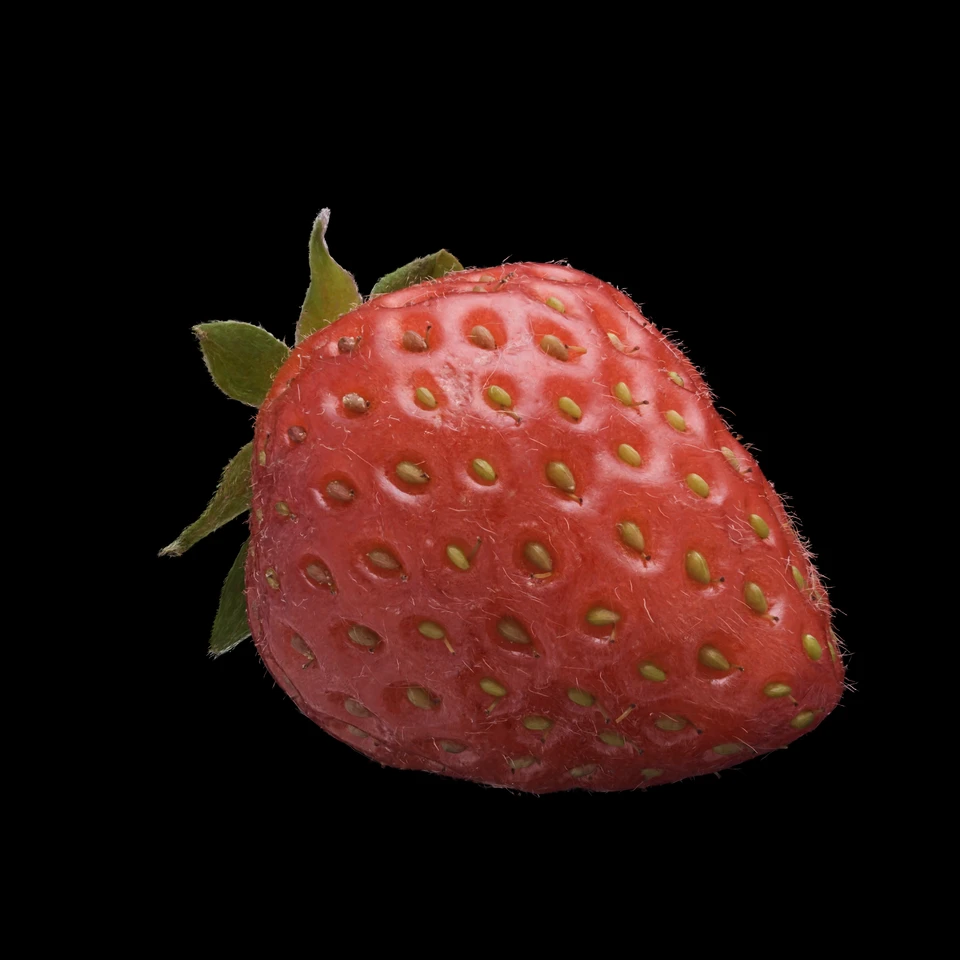
But something looks off: the red area around the "seeds" is pushed towards the center of the strawberry - or that at least the outer most layer is somewhat transparent and some deeper layers are visible.
Comments (200) 61 threads
Earlier commentsApples model to generate Gaussian splats from a single image. Takes about 30 seconds on an M1 Pro.
It falls apart once you move too much, but for a little side-wiggling or a second-eye view for VR, it's great. And looks a lot better than the old approach of depth map + vertex shaders that I use in https://github.com/combatwombat/tiefling. But ml-sharp has 2.6 GB weights, a bit too big to run in the browser.
It seems to work a lot quicker than 30s now on iDevices and Macs.
it could look like the real-time lighting of an old game engine on rather modern assets. (quake 2-3 era)
or perhaps some "occlusion pre-pass" could be done to create a voxelized sparse volume from the splats that set a "voxel opacity value" for each to absorb light? (not far from how prebaked GI works nowadays)
note: not an expert on rendering, just a nutjob that did stuff in opengl in the old days.
AI-based relighting will no doubt start working soon.
As I scrolled through the website, I was even more impressed with this one though!
https://superspl.at/scene/c67edb74
If I'm reading Chrome right, that's 171 MB, for the website, and the data.
If I'm doing the math right, that's 40 seconds worth of the bandwidth from Netflix, at its highest rate.
But something looks off: the red area around the "seeds" is pushed towards the center of the strawberry - or that at least the outer most layer is somewhat transparent and some deeper layers are visible.
All comments shown.
Couldn't load more comments. Check your connection and try again.