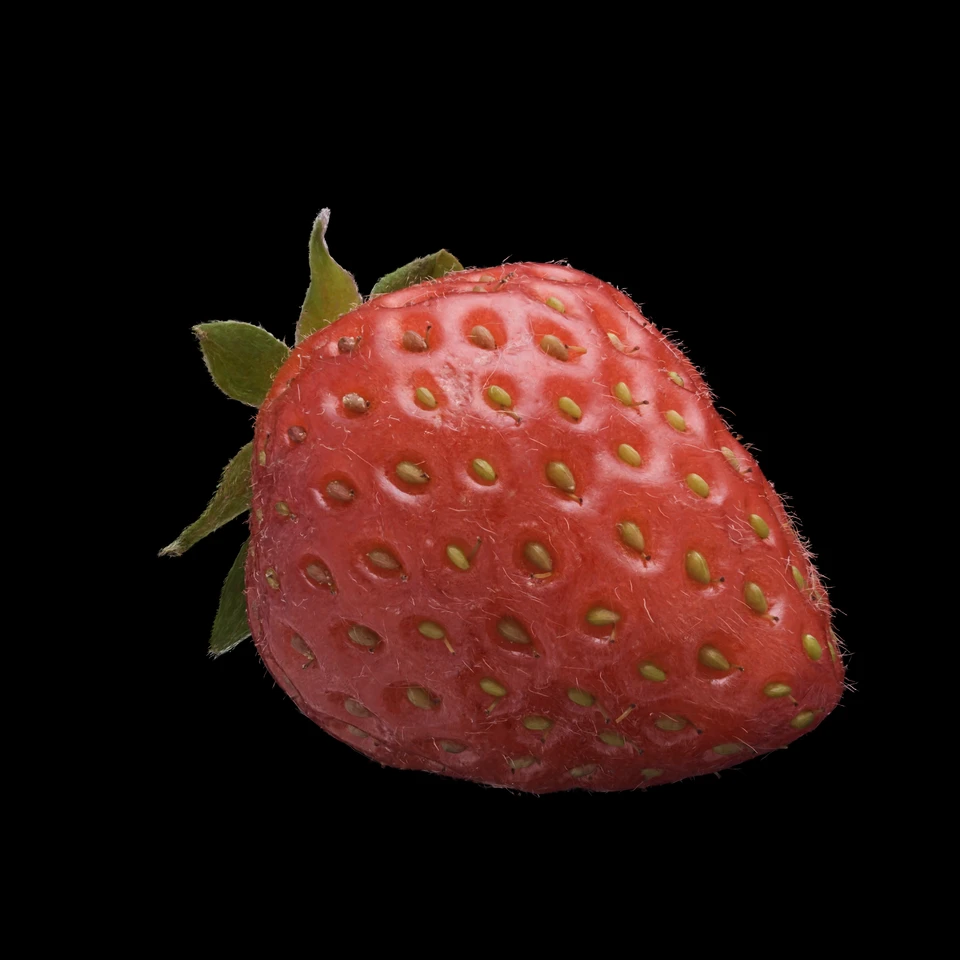
I usually use PostShot.. but the quality was not very good. I want to try LichtFeld but my Graphics Card has too little memory.. so I reached out on twitter, some people ran tests and Mykhailo got some better quality out of it so I took his training. You can d/l the COLMAP dataset for free and try yourself.
I know feelings about AI are mixed. But when AI can dream up gaussian splats in real time, from a prompt, and do refinement as you get closer to things... That's going to be pretty bonkers.
That's kinda what NERFs are (neural radience fields). They actually preceeded this Gaussian story, with Gaussians coming in and outperforming them. Maybe they'll merge later for something even better, I don't know enough about them.
Yes they are image generators. You want image generator generators.
A diffusion style process generating gausians instead of pixels. You could possibly do nerfs that way, but it would be effectively generating a trained network. If you managed to do that it would have broad application throughout the field of AI.
This will be the future of a class of 3d Game. the prompt may not be text however.
An input of a kind of schematic representation of what the designer wants would be better. It may resemble a storyboard or a collection of organised notes that large projects tend to already use. Fully generative could probably do some cool things, but people will still want to bring their peronal vision to life.
Yeah, when you describe that, I picture Wave Function Collapse to generate a map schematic... And then a text prompt, and some style photos the designers want it to match.
Curious, why wouldn't the future be a full world model like Google's Genie? It just renders every pixel so someone could still make their vision come to life via a prompt too.
It could be done that way but you are spending parameters managing the fact that the output changes completely with a change in view position or orientation. A observer independent model only has to manage changes of things that are actually changing in the world.
Since you can view Gaussian splats from any POV you end up generating an output that is closer to the representation of the world instead of a projection that a single observer sees.
I could see a kind of fun game / design tool / worldbuilding where you get a blurry world and you describe what you are seeing, and it comes into focus. The game world, mechanics, aesthetic, and playstyle build as you form your view. A sort of fog of war meets rorschach game.
Looking at all the outdoor scenes that you can walk around, I wonder how long until we start seeing this in places like Google Maps/Earth, as a replacement for the low-res 3D renderings we have now.
I guess the number of samples required to generate a GS is the constraint now, but maybe that will get solved.
rendering them is also non trivial from what i understand, since the millions of indivudal point positions need to be recalculated all the time while moving
Comments (200) 61 threads
Earlier commentsA diffusion style process generating gausians instead of pixels. You could possibly do nerfs that way, but it would be effectively generating a trained network. If you managed to do that it would have broad application throughout the field of AI.
Continue this thread — 3 replies
https://youtu.be/X8yRlA7jqEQ
An input of a kind of schematic representation of what the designer wants would be better. It may resemble a storyboard or a collection of organised notes that large projects tend to already use.
Fully generative could probably do some cool things, but people will still want to bring their peronal vision to life.
Since you can view Gaussian splats from any POV you end up generating an output that is closer to the representation of the world instead of a projection that a single observer sees.
https://research.nvidia.com/labs/sil/projects/lyra2/
I guess the number of samples required to generate a GS is the constraint now, but maybe that will get solved.
https://youtu.be/gXug7Kb3p4I
All comments shown.
Couldn't load more comments. Check your connection and try again.