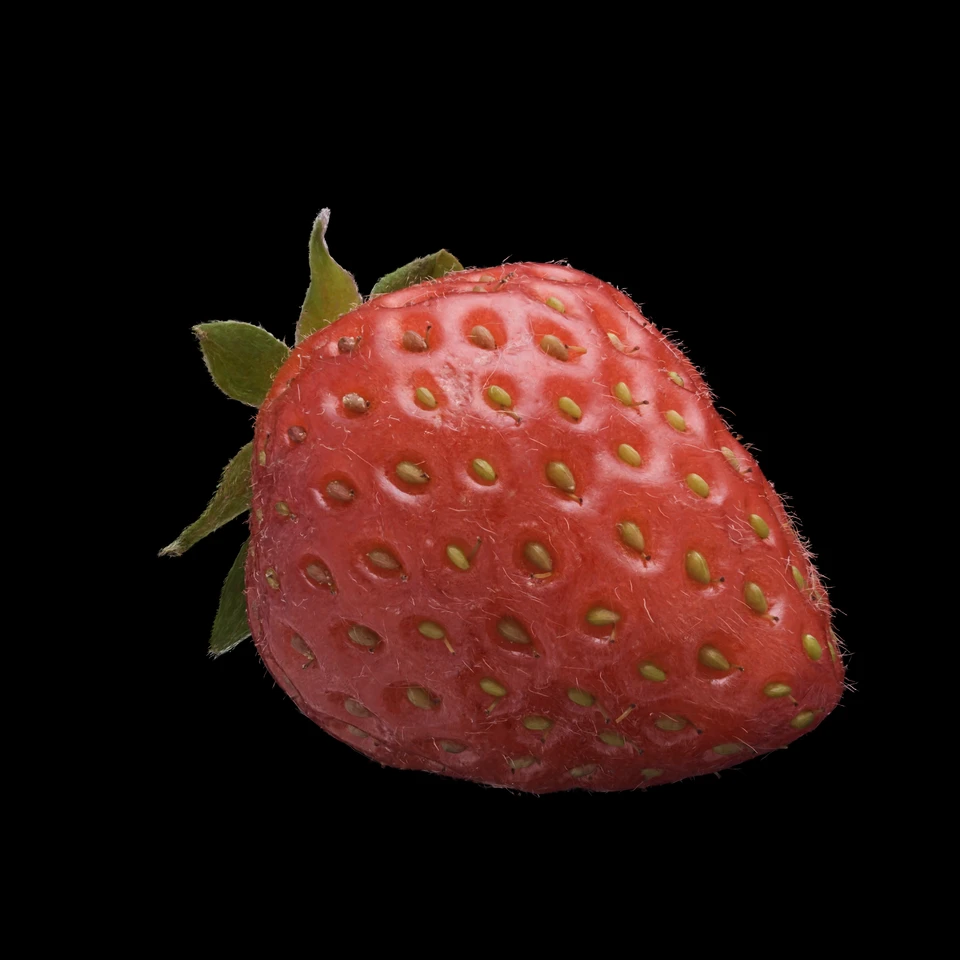
I'm wondering if the splat community has decided this paper is valuable -- https://github.com/fraunhoferhhi/Self-Organizing-Gaussians -- looking at all the detail in the strawberry splat made me wonder how small one can get the download, and what the current state of the art is for compression.
My intuition is that in theory focus stacking should not be necessary as preprocessing step for 3dgs (or photogrammetry). Does anyone know if there is any recent developments in this regard?
Focus stacking generally is not perfect process and can lead to artifacts/errors and I'd imagine those can then compound when stacked images are used for 3dgs. Also the image focus actually provides some depth data in itself that could be useful?
If you don't focus stack and try to train on partially unfocused images, the optimizer will try to match the rendered view to be also partially unfocused.
You would have to mask out the blurry areas for each image. I guess one could just implement a feature where the optimizer only optimizes gaussians within the sharp distances relative to the camera.
Other way of looking at the question is if you could make focus stacking better by using the full multi-view dataset? Afaik focus stacking essentially does depth estimation so it seems like multiple views would help with that.
Another way would be some kind of 4d GS where one dimension is the focus distance. But I'd guess the renders would inherently have shallow depth then, which is less useful usually.
My take.. at a macro scale, the dof is usually so small, that it's hard to get a reliably track. So you'd need some sort of way to tell that these stacked photos belong into a series, and then you sort of are doing focus stacking :-)
I do think the alignment algorithm could be improved. Maybe the approaches I linked could be used to make a much more robust focus stacking algorithm, that also corrects for 3D geometry. That would be really cool!
This was also my first thought when I zoomed in into the strawberry. I wonder if you can achieve a microscope like effect with a more suitable setup. E.g. better lighting, zoom, lens, etc.
I have done 2x macro (an ant).. and want to try 5x.. but as you get closer, the depth of field becomes really shallow. You can do focus stacking but you risk that the individual areas in focus are less ideal aligned and the tracking can't make any sense out of the geometry anymore.
(I'm ... still not sure what I'm looking at on TFA, and whether or not my browser configuration fails to fully present the site as intended.... OK, if all you're seeing is a blurred image of a strawberry, yes, you'll want to enable a bunch of JS resources. I'm using uMatrix, several hosts must be enabled.)
I like to think of Gaussian Splatting as a stage full of improv actors who are iteratively/concurrently filling details in regions down to pixels until the full picture is painted.
Comments (200) 61 threads
Earlier commentsI'm wondering if the splat community has decided this paper is valuable -- https://github.com/fraunhoferhhi/Self-Organizing-Gaussians -- looking at all the detail in the strawberry splat made me wonder how small one can get the download, and what the current state of the art is for compression.
Focus stacking generally is not perfect process and can lead to artifacts/errors and I'd imagine those can then compound when stacked images are used for 3dgs. Also the image focus actually provides some depth data in itself that could be useful?
You would have to mask out the blurry areas for each image. I guess one could just implement a feature where the optimizer only optimizes gaussians within the sharp distances relative to the camera.
Another way would be some kind of 4d GS where one dimension is the focus distance. But I'd guess the renders would inherently have shallow depth then, which is less useful usually.
That seems like the way to do it, someone has to be working on that.
searching...
https://dof-gaussian.github.io/
My take.. at a macro scale, the dof is usually so small, that it's hard to get a reliably track. So you'd need some sort of way to tell that these stacked photos belong into a series, and then you sort of are doing focus stacking :-) I do think the alignment algorithm could be improved. Maybe the approaches I linked could be used to make a much more robust focus stacking algorithm, that also corrects for 3D geometry. That would be really cool!
For example this bumblebee: https://superspl.at/scene/cf6ac78e
Edit: I completely missed that this was posted by him (:
(I'm ... still not sure what I'm looking at on TFA, and whether or not my browser configuration fails to fully present the site as intended.... OK, if all you're seeing is a blurred image of a strawberry, yes, you'll want to enable a bunch of JS resources. I'm using uMatrix, several hosts must be enabled.)
All comments shown.
Couldn't load more comments. Check your connection and try again.