Show HN: Simple algorithm and color space to generate diverse skin tones (opens in a new tab)toneyalexander.github.io
627 pointsHello HN!
I found that picking out plausible but diverse skin tones for my digital art and game development projects was kind of difficult, and I got curious about if there was a way to define a color space that made it easy.
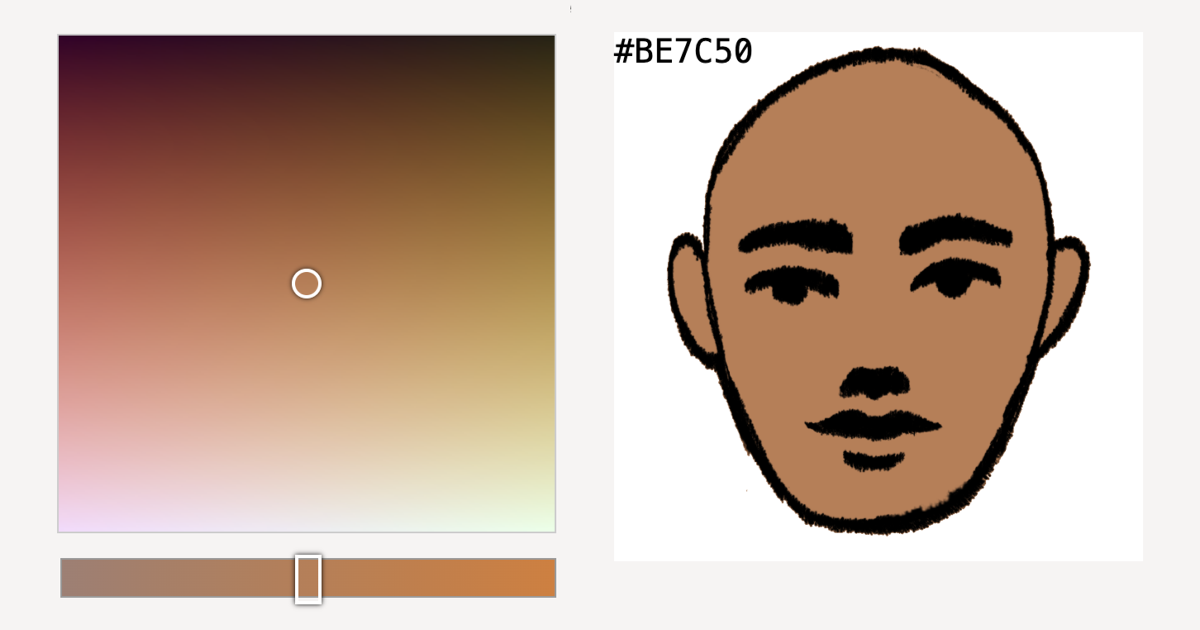
I've built a color picker and procedural generation algorithm based on the space as well as a bunch of other fun js features and demos throughout the page that use the equations. If you find it interesting, I have lots of explanations of how I built it and what properties the space has.
The methodology might be a bit shaky, but hopefully the result is as helpful for others as I have found it! There's lots of room for improvements (see the Future Work section), but I'm really happy with how it turned out.
Comments (99) 54 threads
Earlier comments"Only realistic colors" would be a different problem. And I'm not sure if there's a way to solve that problem without excluding some real colors too.
(Maybe if the colour selector was a different shape? I don't know much about color spaces.)
"not sure if there's a way to solve that problem without excluding some real colors too" - 100% right on that too. A big part of this work was to define a way to tweak/improve the equations in order to approach a solution to these issues - part of my hope in sharing is to get more eyes and brains thinking about this and proposing improvements!
This is a really nice project. Great work and a great write-up. Thanks for sharing.
You'd be surprised: https://en.wikipedia.org/wiki/Argyria
The 2.0 “outliers” cover those skin tones.
Masai and some Somali skin tones, similarly, look better represented by the outliers.
The full range of possible human skin tones is perhaps a bit of a challenge for technical colour representation, partly because diffuse reflectance seems to vary so much and that is hard to approximate on screen (e.g. as any website designer could attest, the difference between representing silver and grey is the use of highlights), though the representation of skin tones is a lot better than the early colour film era.
The issue I ran into was what happens when the space moves beyond RGB, but I think the fix is to just add clamps to the end R, G, B values.
When you’re actually painting, skin can really be any color. Blue is a perfectly valid (and fairly common) skin color - just look at someone in the moonlight. It takes two to tango, and the other dancer is the light source.
All comments shown.
Couldn't load more comments. Check your connection and try again.