Show HN: Simple algorithm and color space to generate diverse skin tones (opens in a new tab)toneyalexander.github.io
627 pointsHello HN!
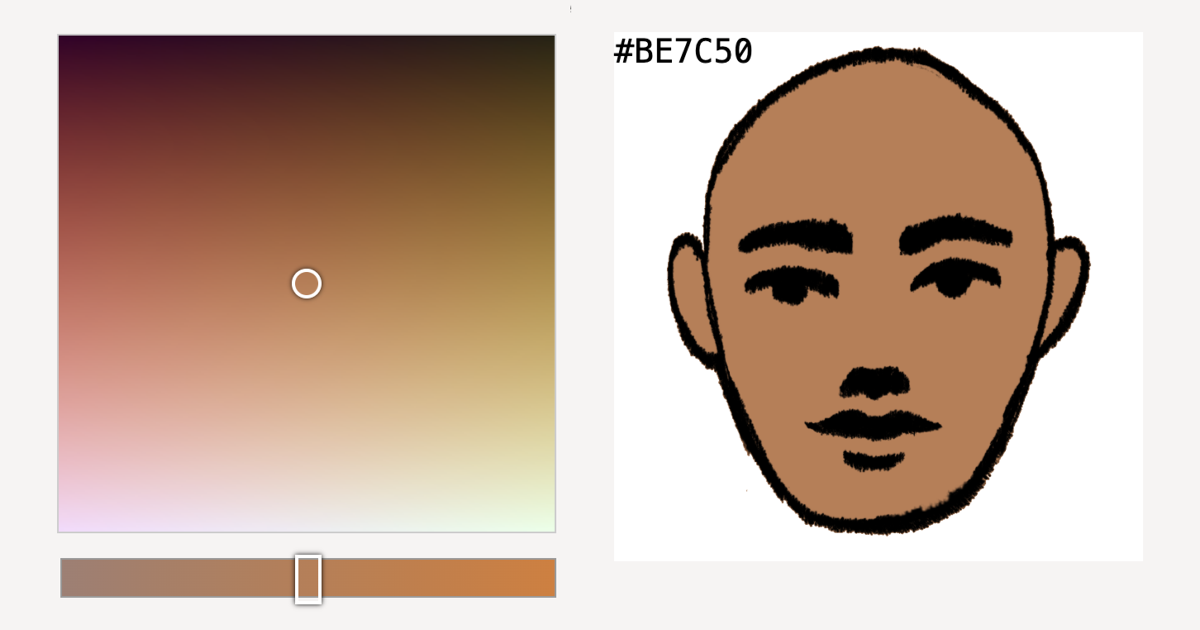
I found that picking out plausible but diverse skin tones for my digital art and game development projects was kind of difficult, and I got curious about if there was a way to define a color space that made it easy.
I've built a color picker and procedural generation algorithm based on the space as well as a bunch of other fun js features and demos throughout the page that use the equations. If you find it interesting, I have lots of explanations of how I built it and what properties the space has.
The methodology might be a bit shaky, but hopefully the result is as helpful for others as I have found it! There's lots of room for improvements (see the Future Work section), but I'm really happy with how it turned out.
Comments (99) 54 threads
Earlier commentsWish I had this on hand like this three or four years ago when I was working on VR avatar software - we had hard-coded skin tone options at the time - would have been a cool addition!
But absolutely the hope is that this is a tool that stays accessible to people for whatever they're building and everyone can slow down on reinventing the wheel here for every character creator/digital art application.
Nb. I'd advise against calling the PCA'd space XYZ because that's a well known standard color space: https://en.wikipedia.org/wiki/CIE_1931_color_space#CIE_XYZ_c...
There is at least one article published by a technical artist at Pixar who describes modeling a skull within a human scan so that subsurface lighting is more accurately rendered.
I suspect you could combine this with dr_scully’s comment and GolDDranks’ to reach the nuance involved in long tail realism details.
All comments shown.
Couldn't load more comments. Check your connection and try again.