Show HN: Simple algorithm and color space to generate diverse skin tones (opens in a new tab)toneyalexander.github.io
627 pointsHello HN!
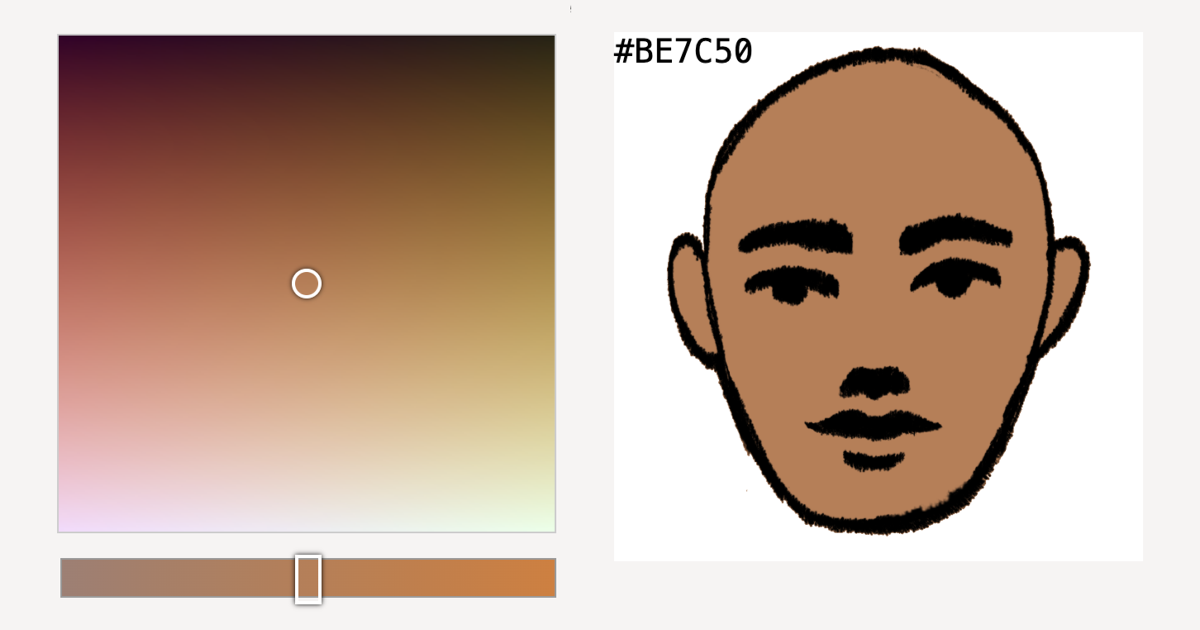
I found that picking out plausible but diverse skin tones for my digital art and game development projects was kind of difficult, and I got curious about if there was a way to define a color space that made it easy.
I've built a color picker and procedural generation algorithm based on the space as well as a bunch of other fun js features and demos throughout the page that use the equations. If you find it interesting, I have lots of explanations of how I built it and what properties the space has.
The methodology might be a bit shaky, but hopefully the result is as helpful for others as I have found it! There's lots of room for improvements (see the Future Work section), but I'm really happy with how it turned out.
Comments (99) 54 threads
Show all comments
Showing thread 4 of 54
Pete Shirley (author of Ray Tracing In One Weekend) is also a part time color scientist, and he clued me into the fact that if you crank the saturation to 100% of pictures of people of any race, the skin color comes out orange. I think I heard that some face detectors may work on this principle, but I don’t remember where I heard that.
So it might not be that surprising that dark skin people turn orange when sat is cranked, but perhaps slightly surprising that light skin people do.
Anyway, I suspect it’s computationally easier to turn everyone orange than brown. Plus, given that brown skin is already a category, orange could be useful terminology/category.
https://www.youtube.com/watch?v=wh4aWZRtTwU