> The FPGA fabric means that games and apps can bring their own unique hardware to load into the fabric.
Curious, can you both execute code on the FPGA and simultaneously write other parts of it? Or do you have to write it in one go, than "start it"? And in the latter case, can you write it incrementally or do you have to erase it first?
Your question is hard to understand. FPGA logic fabric must be loaded at once. There is a method called partial reconfiguration, one can swap pieces of the logic design on the fly, but it’s probably not the case here.
It's weird to see someone refer to a zynq as a FPGA.
Every time I've been involved with one, it's been basically a CPU with various accelerators for specific functions done in the fabric, with the design being CPU-forward. I've never seen anyone approach them from a FPGA-forward angle. Interesting!
I've seen a split. Some people are looking for CPU acceleration. Others say Zynq effectively covers the case where FPGA designs include a soft-core anyway for high-level control, so why not make it a hard block.
The Zynq is definitely an FPGA. It is an FPGA with a hardened ARM core. 10 years ago, they had FPGAs with hardened PowerPC cores. Now that ARM has taken over, it makes sense.
Wow, this was quite a treat to read! Do you have any recommendations to learn more about FPGA (and maybe not Verilog/VHDL, I'm thinking more about a SCALA based language). I always start with beginners tutorial but I always get super bored. Something about making LED drivers makes me really unmotivated.
Thanks! I always recommend getting hands-on for learning more about FPGAs. FPGA boards are cheaper than ever, and you have all different ones now. I'd say get a Lattice ECP5 based board (like this year's Hackaday Supercon badge). The open-source symbiflow toolchain works for these (Xilinx 7-series will be soon!).
With regard to Verilog/VHDL, you'll have to learn at least verilog at some point, but I stay away as much as I can. SpinalHDL (based on Scala) is my goto. Some people like the Python based ones like migen, but I like me some strong typing. I have a couple of blog posts about starting to put together a Gameboy CPU on craigjb.com (not finished yet).
Thank you for the response! I'm definitely going to check out your Gameboy posts! Any other projects you recommend similar to that? I really like the idea of building something I can use.
The ZipCPU tutorials section is also great! They include verilog, using verilator (for simulation), and formal verification. And, personally, I think learning formal verification early is great, since it will probably be used more and more.
It's verilog, but you're going to have to learn some anyway. All of the new-generation HDLs compile down to verilog, which then goes into the various synthesis tools. https://zipcpu.com/tutorial/
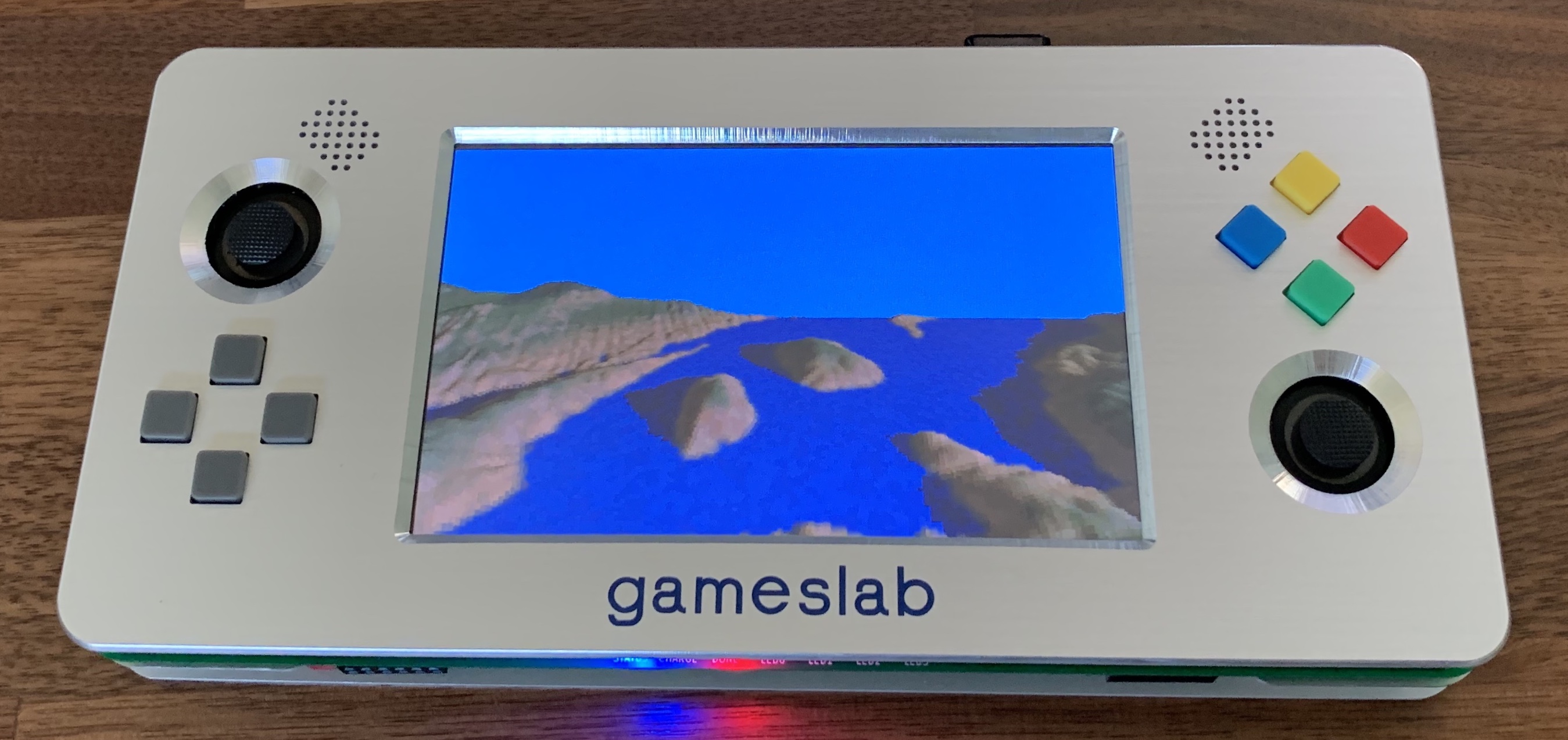
This is awesome. The case fabrication looks great. What materials and fabrication process did you use? I'm particularly interested to hear more details of how you made such a pro looking design.
I had it fabricated for me by a company by Front Panel Express. In a DIY audiophile forum I saw people using them, and if they're good enough for audiophile gear, probably good enough for me :P
Comments (50) 19 threads
Earlier commentsCurious, can you both execute code on the FPGA and simultaneously write other parts of it? Or do you have to write it in one go, than "start it"? And in the latter case, can you write it incrementally or do you have to erase it first?
Every time I've been involved with one, it's been basically a CPU with various accelerators for specific functions done in the fabric, with the design being CPU-forward. I've never seen anyone approach them from a FPGA-forward angle. Interesting!
With regard to Verilog/VHDL, you'll have to learn at least verilog at some point, but I stay away as much as I can. SpinalHDL (based on Scala) is my goto. Some people like the Python based ones like migen, but I like me some strong typing.
I have a couple of blog posts about starting to put together a Gameboy CPU on craigjb.com (not finished yet).
It's verilog, but you're going to have to learn some anyway. All of the new-generation HDLs compile down to verilog, which then goes into the various synthesis tools.
https://zipcpu.com/tutorial/
I had it fabricated for me by a company by Front Panel Express. In a DIY audiophile forum I saw people using them, and if they're good enough for audiophile gear, probably good enough for me :P
All comments shown.
Couldn't load more comments. Check your connection and try again.