Show HN: I built an app for when I talk too much in online meetings (opens in a new tab)unblah.me
451 pointsAlexis here, I’m a product manager and software developer in Berlin by way of New York.
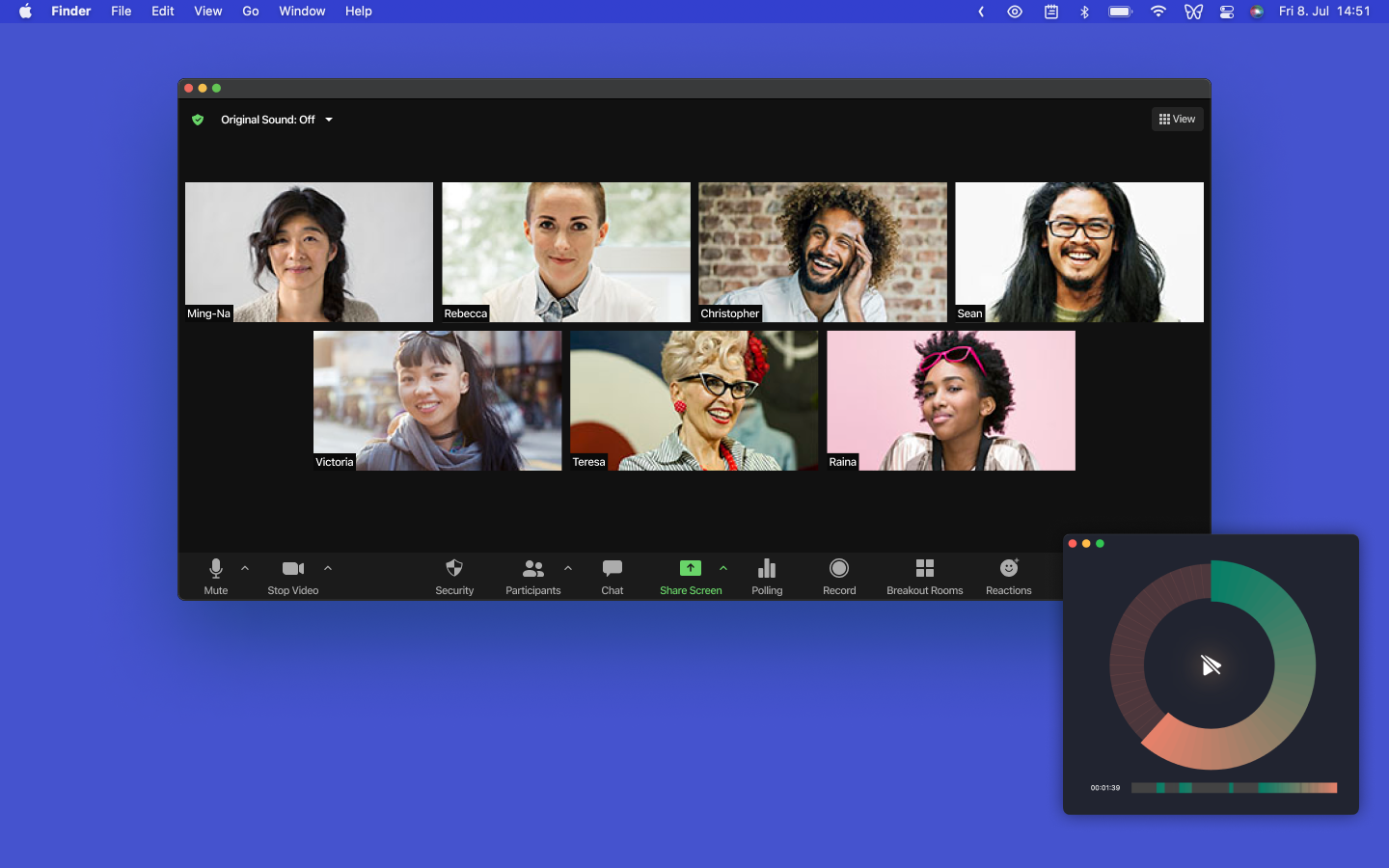
I want to show you this app I made – It’s like a "buddy" for those, like myself, who inadvertedly talk too much in meetings.
The app gives me feedback and a little more in control of what I have influence over by:
* Keeping track of how long I’ve been speaking
* Catching myself before I talk too much
* Developing a better sense of timing
I truly love having conversations with people in real-life.
But online meetings, especially group calls, tend to make me nervous. I can't read body language. The tone of voice, micro-experessions and social cues get lost.
If you, too, accidentally talk too much too often, check it out "Unblah". Watch the quick 2-minute demo and download the macOS app over at https://unblah.me/.
Cheers!
Alexis
PS: There’s a whole FAQ section for common questions you may have – Including if this is yet another "native" Electron app ;)
edit: bullet-list formatting
Comments (189) 56 threads
Show all comments
Showing thread 6 of 56
I can only speak for myself of course: The issue only happens in online meetings and probably only with specific teams. So, I would have "slipped through", if your interview process is in-person.
It starts with the awareness in my opinion. There are people who talk a lot and enjoy dominating the conversation. I wrote an extensive FAQ on why Unblah is not for them.
Those who (like me) talk a lot but are painfully aware – I think aren't extremely damaging. I hope.
I've been trying not to speak at all during meetings, instead following up in chat. As a bonus, this means there's a searchable record of the details, and thus is far more valuable than any in person or video meeting could ever be.
Agreed.
> I've been trying not to speak at all during meetings, instead following up in chat.
How does that work? I mean, interpersonally?
Continue this thread — 1 reply
I do not recommend using the app (especially not without context) as a proxy for a difficult conversation that may have to happen.
Since the question came up earlier, here is my full take on this situation: https://news.ycombinator.com/item?id=32097859
“Dave, found the perfect app for you!” is aggressive. “Wow I might start using this app!” Is better.
Yeah I thought about going this way.
GP is supposed to mediate while at work while their colleague is talking in circles?
Continue this thread — 2 replies
Zoom makes this even worse than in person, as the software often won't even let you insert yourself into someone else's stream-of-consciousness word salad to help them course-correct.
Unfortunately a lot of companies treat them like a pop quiz, ask everyone the same 10 questions, which are mapped to 10 selection criteria and evaluate their 10 mostly prepared responses.
Good interviewers will have a bunch of questions as prompts, but generally ask a lot of follow-ups.
I blame the STAR method mostly, the concept that you have instant recall of past experiences in a high pressure situation, indexed by the questions the company is going to ask, is absolutely crazy. I wonder if there’s been any research into “tell me about a conflict and how you resolved it” type behavioural questions and whether they are effective. Even the most dramatic of employee knows how to tone it down, rewrite/make up scenarios to pass these types of questions.
Corporate meetings are traditionally structured to accommodate those who talk too much in meetings, but they could be structured differently. Deliberate facilitation, for example "taking stack"[1]," can help the puzzle pieces of panel of diverse personalities find their place in contributing maximally to the tasks at hand. Heck, sometimes it's as easy as setting expectations or as simple (albeit not necessarily easy) as establishing an environment of psychological safety[2] in which coworkers feel comfortable pushing back on antisocial behavior, eg asking "can you not interrupt me?"
0. https://en.wikipedia.org/wiki/Fundamental_attribution_error
1. https://techresources.shoestringcollective.com/collaborate/t...
2. https://en.wikipedia.org/wiki/Psychological_safety
People who talk at length during hiring interviews are not necessarily "people who talk at length in meetings", they are doing that because that's what hiring interviews are about. You are misattributing cause.