Is that a different approach than the Tokamak, some piece to make it works, or some other relationship? What does it mean for existing projects such as ITER?
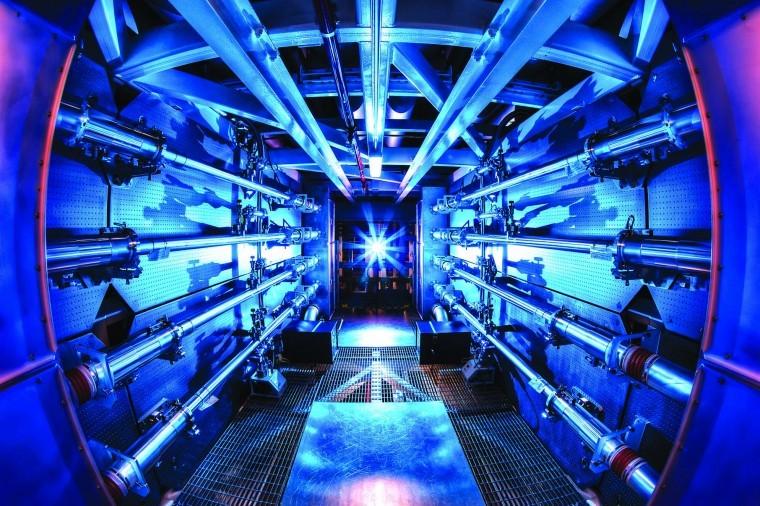
This works in a totally different way, by heating a tiny target fuel pellet with a laser to cause it to collapse and trigger fusion through basically heating and squeezing: more like how a bomb works. It's not easy to see a direct path from this approach to a power plant, but it might involve lining up a steady stream of fuel targets and doing this in a sort of pulsed mode.
Other approaches attempt to create a continuous plasma where fusion can occur confined in a powerful magnetic field, and heated by radio waves to get it going. So there's always fusion happening rather than in short bursts.
In principle inertial confinement is not much different from internal combustion engines where piston compresses the mix, and the explosion energy is harvested. Here lasers compress the mix, and the explosion energy is not yet harvested (but measured).
Tokamaks (the other approach) are more like jet engines in that they sustain burning. But currently the burning in tokamaks requires more energy than it generates.
For the Fusion the particles need to get close - but not to close. So the particles in the Tokamak get heated up to reach that. Also it's designed to run continuously but the challenge is the magnetic field so the particles won't hit the wall. (And cool down very quickly)
The Inertia based fusion works by providing the heat/energy with lasers, so the fuel would have to be replaced continuously.
Comments (1,021) 82 threads
Show all comments
Showing thread 16 of 82
https://en.wikipedia.org/wiki/Tokamak
https://en.wikipedia.org/wiki/ITER
Other approaches attempt to create a continuous plasma where fusion can occur confined in a powerful magnetic field, and heated by radio waves to get it going. So there's always fusion happening rather than in short bursts.
Tokamaks (the other approach) are more like jet engines in that they sustain burning. But currently the burning in tokamaks requires more energy than it generates.
Continue this thread — 1 reply
The Inertia based fusion works by providing the heat/energy with lasers, so the fuel would have to be replaced continuously.