Show HN: 5 Years Ago I made the Recovery Kit, I just made the RK2 (opens in a new tab)doscher.com
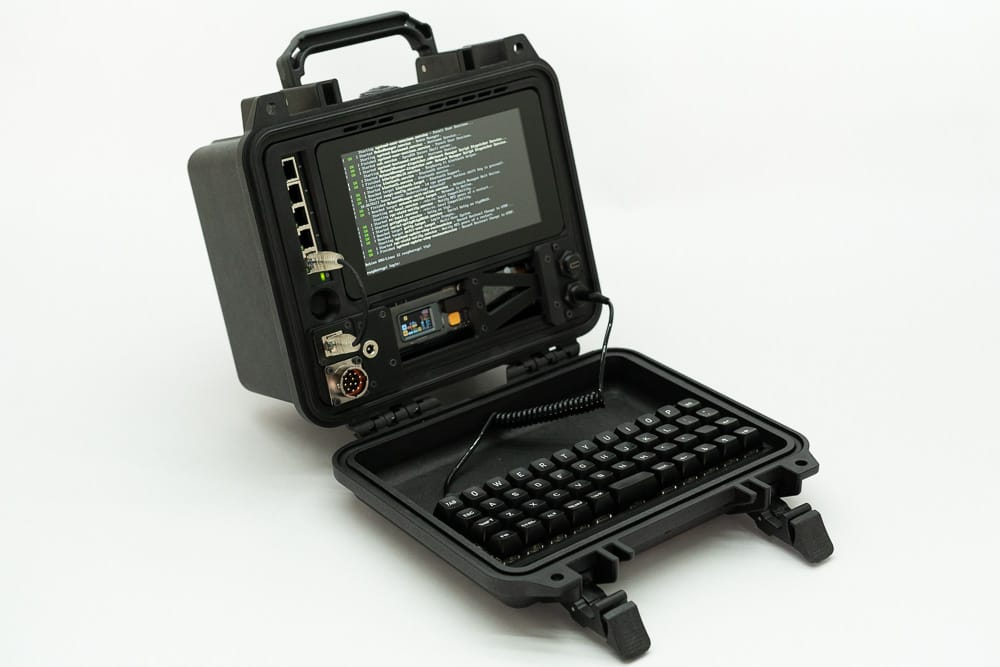
403 pointsThe Recovery Kit 2 is another cyberdeck that for me is part computer, part backup device, and part functional movie prop. It's been fun to build, and the HN community has been great with ideas- especially around hosting and getting me off Squarespace. I hope you all enjoy!
Comments (81) 21 threads
Show all comments
Showing thread 1 of 21
I started collecting screws to put together for my "workshop" were I repair whatever family, friends, enemies want me to look at. I am not great at it, not even good, but I am who they bring things to, and over time I have learned a bit of skills. (Also I fail, sometimes I break stuff and sometimes I hide in my bag and take to a pro without telling anyone.)
Back to screws. I often need one. but there are entirely too many different sizes and shapes. I have spent decent time sourcing various standardized sizes from far and near. Stil I have project where I need two screws and I dont have the right one. I also keep any screw that I come across. If something is broken I harvest the once that are easikly available.
That ends up in a cubbord with lots of different tiny shelves. BUT looking through them so see if one of them is right is again time consuming.
What does this have to do with anything?
Well the design went from 1 type of screws to multiple sizes. (All of well knownm standarized types thank you)
I think it wise to design projects around as few different ones as possible. The previous model managed with one. Clearly somehow V2 could have as well.
Is there I pray an app I have not seen, where I can take a photo of a screw and the app will tell me the exact specifications of it, its name, and where to order them?
Huge selection including obscure styles and finishes. Nuts, bolts, screws, hardware, etc.
One of the best things about them is that they sell small lots including single screws if that is all you need.
Another great thing is that they ship quickly and if your order is relatively small it arrives in your mailbox instead of needing to be delivered by UPS or another shipper. They ship orders in packages appropriate to the order, unlike Amazon.
They also add products to their inventory if customers need something they don't normally carry.
Prices are also reasonable.
I found them years ago and now they are one of my main suppliers. McMaster Carr is another.
[0] https://belmetric.com/
They do seem to suffer from the other part that prevented me from ordering from places like this before though; its hard for a hobby project to break the high free shipping minimum order size. This may again be a problem with being in Canada not the US though :)
Continue this thread — 1 reply
It's actually hundreds of screws, bolts, and nuts, I did the sorting as a relaxing week while watching some shows :D
Someone mentioned M* screws and that got me searching to find out what it is and then ended up on the above amazon page. So I like the indexing scheme there and question OP that it can't be done by image and machine learning. Basically, all those indexes [minus material which you can just select] should be trivially recognizable and that just leaves the precision measures.
[0] https://www.amazon.com/tenluno-Checker-SWTC-44-MaleFemale-Id...
BoltDepot has some fantastic pages (and printable reference posters) that explain how fasteners are measured and described: https://boltdepot.com/Fastener-Information/Fastener-Basics
Once you've got the terminology, it's pretty straightforward to take the measurements. Thread diameter is easy to do with a $2 plastic vernier caliper (I use mine constantly), or fit into the holes in any screw checker. https://www.amazon.com/Stainlesstown-Bolt-Thread-Gauge-Blue/...
Thread pitch is best done with a thread gauge, which is a fold-out affair sort of like a feeler gauge. I've got an inch/metric combo one like this: https://www.amazon.com/ChgImposs-Imperial-Whitworth-Industri...
And then length is easy to do with the ruler on the side of the screw checker, or the calipers themselves. (Use the jaws for the overall length of a flush-type screw, the step-shoulder part for the length of a cap screw.)
There are also combo gauges, I'm intrigued by this type and I should pick one up to see how I like it: https://www.amazon.com/WEN-ME210G-Imperial-Multi-Gauge-Carry...
i don’t know if it is good enough for this use case but theoretically possible without a reference object.