Show HN: I wrote a modern Command Line Handbook (opens in a new tab)commandline.stribny.name
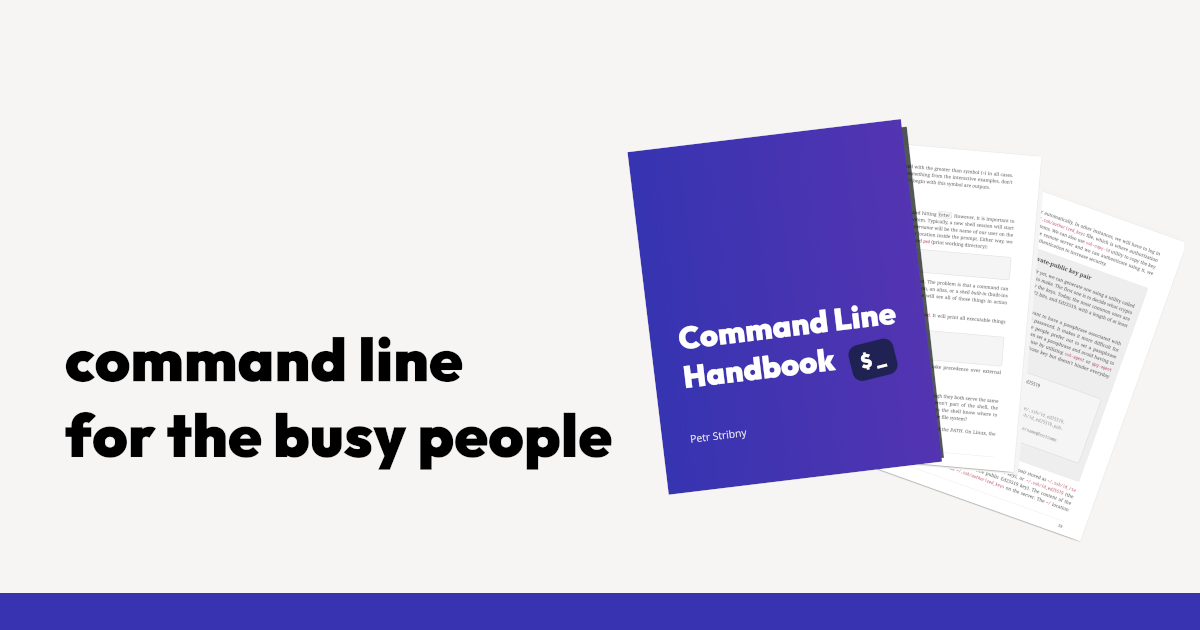
454 pointsA few years back I wrote an ebook about the Linux command line. Instead of focusing on a specific shell, paraphrasing manual pages, or providing long repetitive explanations, the idea was to create a modern guide that would help readers to understand the command line in the practical sense, cover the most common things people use the command line for, and do so without wasting the readers' time.
The book contains material on terminals, shells (compatible with both Bash and Zsh), configuration, command line programs for typical use cases, shell scripting, and many tips and tricks to make working on the command line more convenient. I still consider it "an introduction" and it is not necessarily a book for the HN crowd that lives in the terminal, but I believe that the book will easily cover 80 % of the things most people want or need to do in the terminal.
I made a couple of updates to the book over the years and just finished a significant one for 2025. The book is not perfect. I still see a lot of room for improvement, but I think it is good enough and I truly want to share it with everyone. Hence, pay what you want.
EXAMPLE PAGES: https://drive.google.com/file/d/1PkUcLv83Ib6nKYF88n3OBqeeVff...
https://commandline.stribny.name/
Comments (109) 30 threads
Earlier commentsFor example, in my personal and professional life I use Make everywhere. The book mentions alternatives, but the examples are built on the time-tested tools.
I focused on things that don't require install (if given the option) or the ones that you are more likely to encounter at work. It is a tradeoff and I can see how the reverse would be appealing too.
Continue this thread — 6 replies
My primary motivation is to share the work that I spent a lot of time on because I want to move on and work on other things (I don't want it to just sit on my disk when it can be useful to others before getting outdated etc.). It never was meant to be some primary source of income. In that case I would be writing a book about AI :)
Maybe I will write a blog post with some reflections about making the book at some point :)
All comments shown.
Couldn't load more comments. Check your connection and try again.