Show HN: If you lose your memory, how to regain access to your computer? (opens in a new tab)eljojo.github.io
402 pointsDue to bike-induced concussions, I've been worried for a while about losing my memory and not being able to log back in.
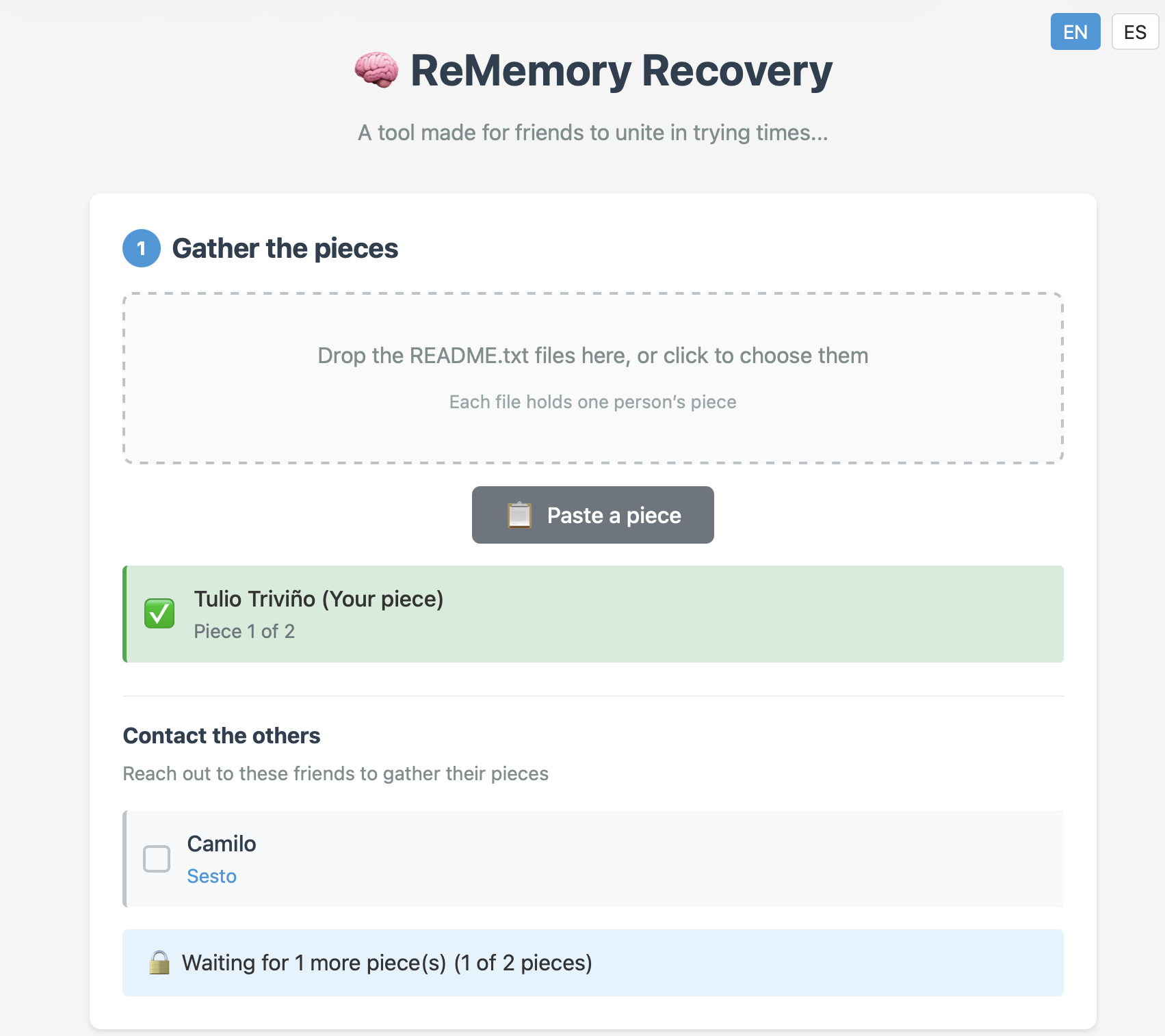
I combined shamir secret sharing (hashicorp vault's implementation) with age-encryption, and packaged it using WASM for a neat in-browser offline UX.
The idea is that if something happens to me, my friends and family would help me get back access to the data that matters most to me. 5 out of 7 friends need to agree for the vault to unlock.
Try out the demo in the website, it runs entirely in your browser!
Comments (233) 69 threads
Show all comments
Showing thread 8 of 69
I would be in an impaired state, and cannot function in way that would be conducive to either work or pleasure in terms of computer use.
That is to say, the entire reason why I have password security at all is to keep out people who do not know the password. If someone does not know the password, they should not be able to access the system. That obviously and clearly applies to myself as much as any other person. "If you do not know it, then you do not need it."
The important thing is to ensuring your computer is not a single point of failure. Instead of losing a password, you could have theft, flood, fire, etc. Or for online accounts, you are one vendor move away from losing things. None of these should be precious and impossible to replace. I've been on the other side of this, and I think the better flow is to terminate or transfer accounts, and wipe and recycle personal devices.
A better use of your time is to set up a disaster-recovery plan you can write down and share with people you trust. Distribute copies of important data to make a resilient archive. This could include confidential records, but shouldn't really need to include authentication "secrets".
Don't expect others to "impersonate" you. Delegate them proper access via technical and/or legal methods, as appropriate. Get some basic legal advice and put your affairs in order. Write down instructions for your wishes and the "treasure map" to help your survivors or caregivers figure out how to use the properly delegated authority.