Lurker News
Due to bike-induced concussions, I've been worried for a while about losing my memory and not being able to log back in.

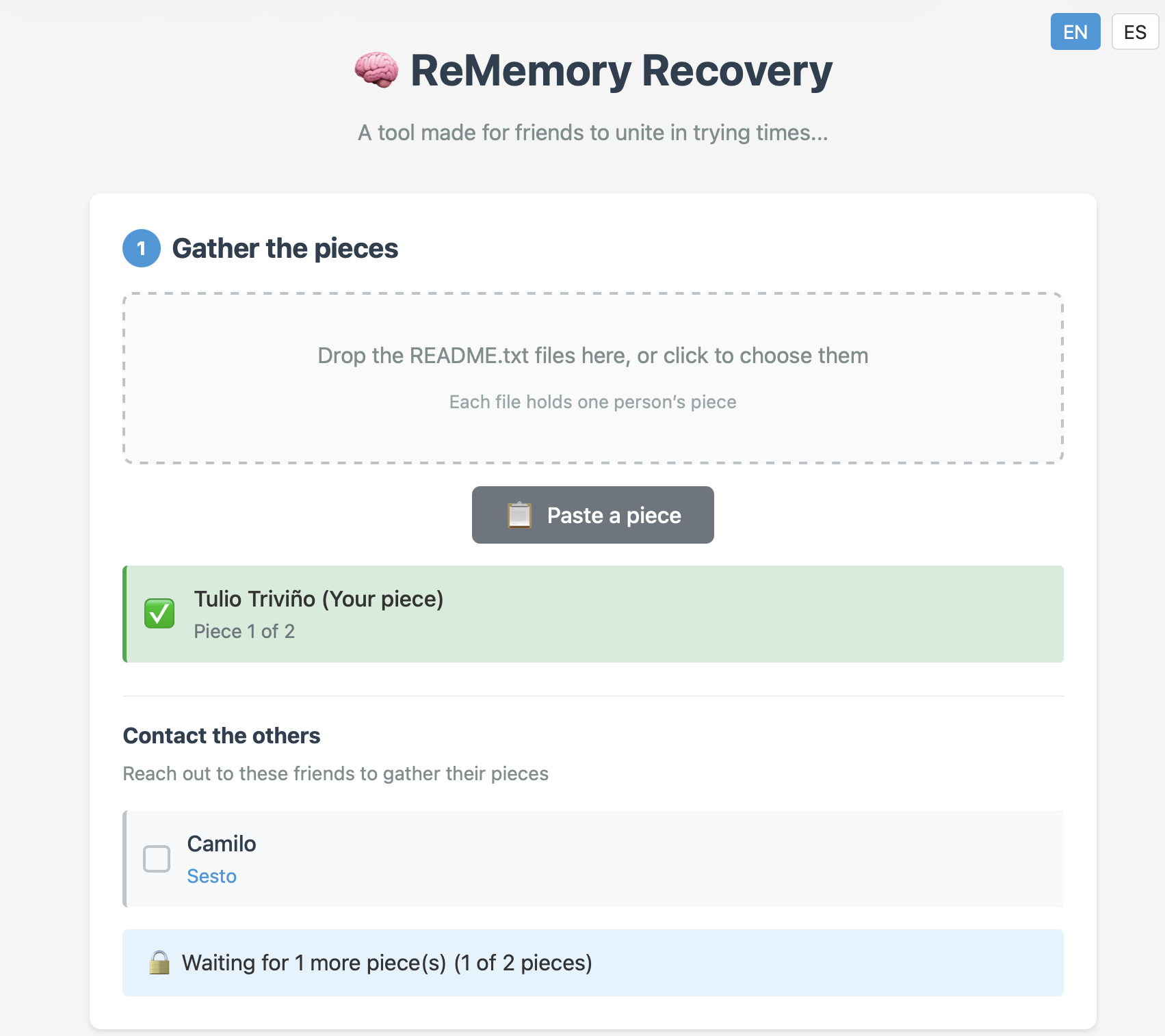
I combined shamir secret sharing (hashicorp vault's implementation) with age-encryption, and packaged it using WASM for a neat in-browser offline UX.
The idea is that if something happens to me, my friends and family would help me get back access to the data that matters most to me. 5 out of 7 friends need to agree for the vault to unlock.
Try out the demo in the website, it runs entirely in your browser!
Comments (233) 69 threads

Show all comments

Showing thread 12 of 69

KevinChasse1 reply#
Interesting approach. I like that this is explicit about human recovery rather than pretending crypto alone solves catastrophe. That said, this design and fully stateless systems like mine (deterministic derivation, no escrow) are solving opposite failure modes. Shamir-based social recovery assumes: trusted third parties remain reachable, they are willing and able to cooperate, and that recovery is an exceptional event. Stateless systems assume the inverse: no one can be relied on, recovery is impossible by design, and the primary threat is silent compromise rather than lockout. Neither is “better” universally; they’re value judgments. What I appreciate here is that the tradeoffs are made explicit instead of buried behind UX. One open question I’d be curious about: how you reason about coercion risk over time (friends change, incentives change), and whether you see this as something users should periodically re-shard as relationships evolve.
eljojo#
thanks for your thorough review and congrats on your launch! for my personal use case, I'm not worried about coercion, but many have highlighted it as a real risk. my answer to that is to do what you suggest: update my contact list yearly, send new ZIP files with bundles, and ask them to delete the previous ones.