Ah the timeless joy of falling through the floor geometry.
Seriously though - it's breathtaking. The first guy who figures out the bridge between splats and dynamism - animation, editing, responsiveness - is going to be one of the immortals of 3d design.
There are many ways to represent 3D data, but animations really only work properly with polygon meshes (e.g. triangle surface meshes or volumetric tetrahedral meshes).
But the mesh is itself an abstraction, you just need to build that bridge.
We've been leaning away from pure polygons for decades, anyway. Vertex skinning, SDFs, volumetrics, simulation, and a lot more. The meshes in a From Software game are for exmple hilariously simple, most of the animation is force simulation to make the famous "frizzles" that they like.
If you can sample points inside a volume, in theory you could do that with splat geometry. If someone figures out a way to pass in animation time to a sampler, sample along geometry/wireframe or something else, and keep it from overly twinkling it might change everything. I’m hand waving all the complexity into “if done one figures out”, of course. I just don’t see why this method can’t evolve in the way diffusion models have evolved (knowing very little of the geberative mechanics of splats).
It’s easy but a bit data intensive. Take two 3D splat images at different times, optimize them, then interpolate from the first to the second. Repeat at intervals. Now you have a video. A full moving subject is about 500Mbps, although it depends a lot on the quality of the source images that you make the 3D splats from and how detailed the output image is. Search for “4D gaussian splats” to find references.
That's just animation like an animated GIF: a series of static frames. What's more interesting is animation in the sense of deformation, as in skeletal/skinned meshes. These deformations require minimal data and can be generated dynamically.
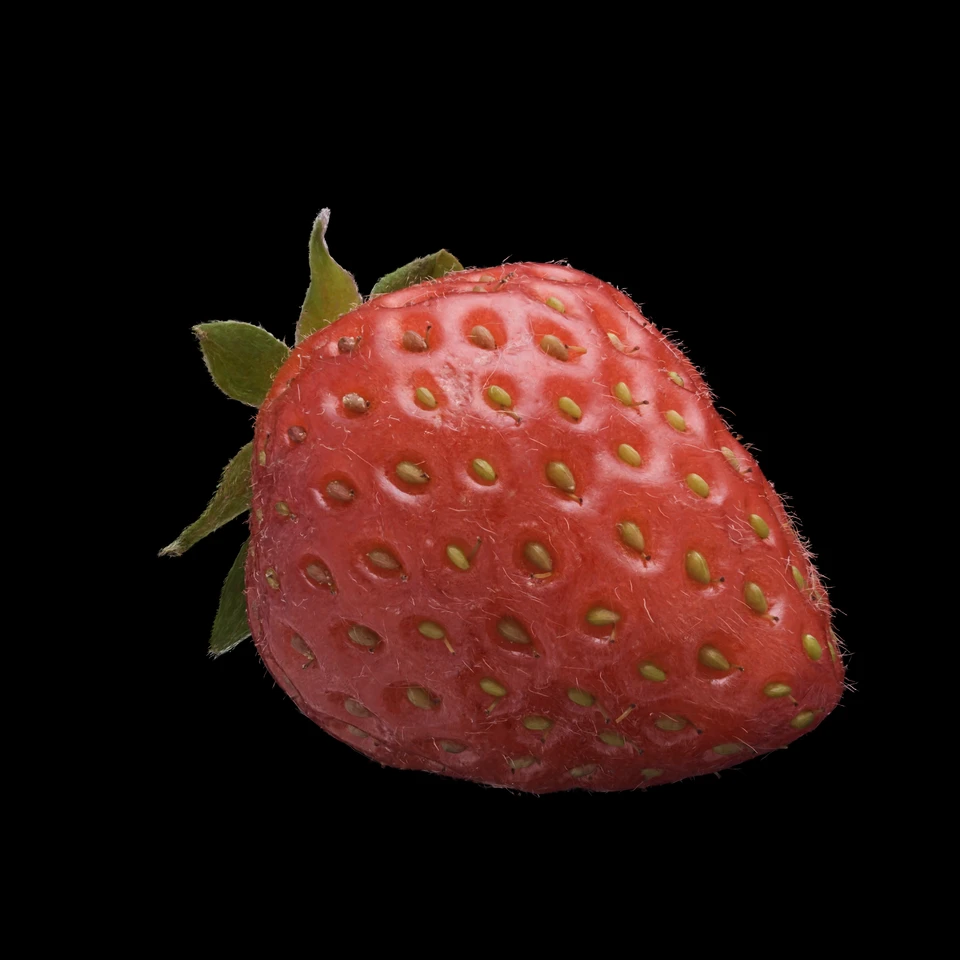
If you don't mind a basic but tangential question... I understand that splats like these are essentially a separate domain from traditional polygonal 3D scenes in a tool like Blender, but is it currently possible to use splats like the strawberry as elements in a Blender scene if they don't animate or interact any more than the camera / lights moving and being occluded by foreground objects?
Remembering how we used to cheat by projecting hi-res texture maps onto simple geometry to save modeling background objects with the trade-off of constraints on size, viewing angle, shadows, etc. With the relative ease of capturing these splats at high-fidelity, can they be used in a scene as projection-map-like 'fakes' except with far fewer constraints?
That one has a strange rendering error for me, the trees and horizon are in front of the mill building and the exterior isn't properly rendered unless you are in orbit mode. But my mind was a little blown when i discovered that I could walk up the stairs. It needs shift to run!
The scene desperately needs some clipping on the boundaries. If you use an app like Scaniverse, you can add a bounding box to cull far away points which are often poorly reconstructed. If you have a newer iPhone with a LIDAR scanner, highly recommended. You can make dolls-house renderings of your house or garden which is surprisingly useful for planning and measuring walls/features.
Comments (200) 61 threads
Show all comments
Showing thread 2 of 61
That is indeed a very cool scene being about to wander around and still have decent resolution
Seriously though - it's breathtaking.
The first guy who figures out the bridge between splats and dynamism - animation, editing, responsiveness - is going to be one of the immortals of 3d design.
We've been leaning away from pure polygons for decades, anyway. Vertex skinning, SDFs, volumetrics, simulation, and a lot more.
The meshes in a From Software game are for exmple hilariously simple, most of the animation is force simulation to make the famous "frizzles" that they like.
Continue this thread — 2 replies
If you can sample points inside a volume, in theory you could do that with splat geometry. If someone figures out a way to pass in animation time to a sampler, sample along geometry/wireframe or something else, and keep it from overly twinkling it might change everything.
I’m hand waving all the complexity into “if done one figures out”, of course.
I just don’t see why this method can’t evolve in the way diffusion models have evolved (knowing very little of the geberative mechanics of splats).
Continue this thread — 2 replies
Continue this thread — 1 reply
Remembering how we used to cheat by projecting hi-res texture maps onto simple geometry to save modeling background objects with the trade-off of constraints on size, viewing angle, shadows, etc. With the relative ease of capturing these splats at high-fidelity, can they be used in a scene as projection-map-like 'fakes' except with far fewer constraints?
Continue this thread — 1 reply
The scene desperately needs some clipping on the boundaries. If you use an app like Scaniverse, you can add a bounding box to cull far away points which are often poorly reconstructed.
If you have a newer iPhone with a LIDAR scanner, highly recommended. You can make dolls-house renderings of your house or garden which is surprisingly useful for planning and measuring walls/features.