Lurker News
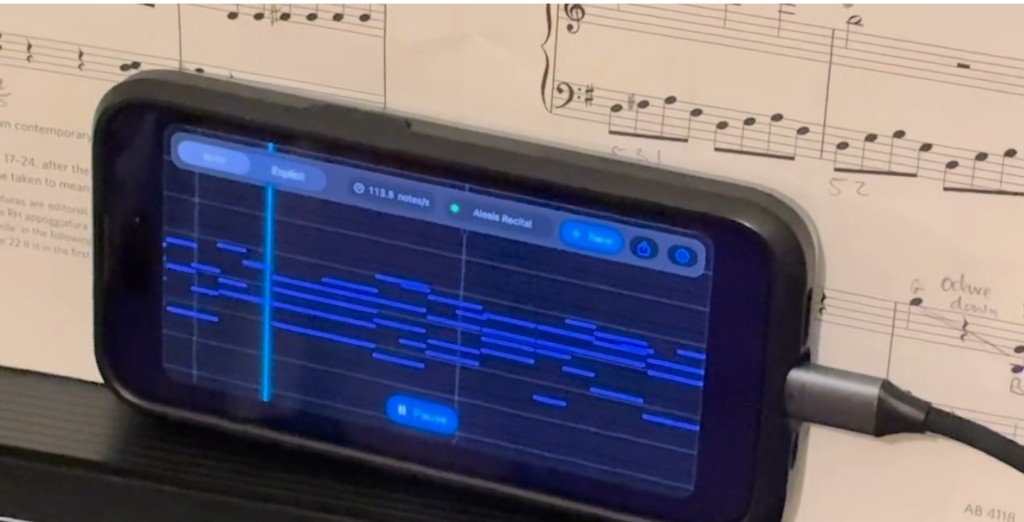
I trained a 125M-parameter transformer to autocomplete piano performances in real time (~108 notes/sec on an iPhone 15).

The idea is basically GitHub Copilot or Tabnine, except instead of prompting it with code, you prompt it by playing a few notes on a MIDI piano. The model then continues what you played, entirely on-device.
The app is free if anyone wants to try it. Happy to answer questions about the model, training, Core ML, or the many things that didn't work.
Comments (117) 65 threads

Show all comments

Showing thread 9 of 65

heikkilevanto5 replies#
I would love something like that, except that I play the melody, and it produces proper 3-4 part accompaniment, preferably in good baroque style. Extra bonus if it could also write it into a file in a format suitable for music editing programs.
morkalork#
That's a fun idea. You could start playing the piano and it kicks in with a base and drums for a jazz band.
vunderba#
An early attempt at this was Microsoft Songsmith [1] all the way back in 2009, which would take a melody (usually recorded by mic) and try to scaffold an accompaniment around it though obviously not realtime in any sense of the word.

The closest we've had to realtime orchestration around a melody in the "real world" is probably arranger keyboards though your left hand is still responsible for the chord progression itself.
[1] - https://en.wikipedia.org/wiki/Microsoft_Research_Songsmith

Naitik88#
This feels like a natural next step. Starting with a simple melody and having the system fill in the rest while still following your playing style could make it much more useful for experimentation than generating a complete piece from scratch.
altmanaltman#
That is an incredibly hard challenge though. Creating the whole backing track (in any meaningful way other than just basic chords) from just melody will require an amazingly high number of highly subjective choices and random gen will not lead to good outcomes since our ears like intentional and artistical creativity in general.
zapperdulchen#
Did you ever try Ludwig? It was rule-based by the Fritz chess engine maker. To my understanding Ludwig was grounded in traditional harmony, counterpoint, voice-leading, and orchestration principles taught in formal music education. It never took off so they eventually stopped it.

Some details: https://shop.chessbase.com/en/products/ludwig_3_engl
You can still download it for free: https://www.heise.de/download/product/ludwig-58854 (Heise is a renowned German publisher, nothing shady)
I am still waiting for something like this based on generaitive AI.