Show HN: I trained a 125M model to autocomplete piano on-device (opens in a new tab)simedw.com
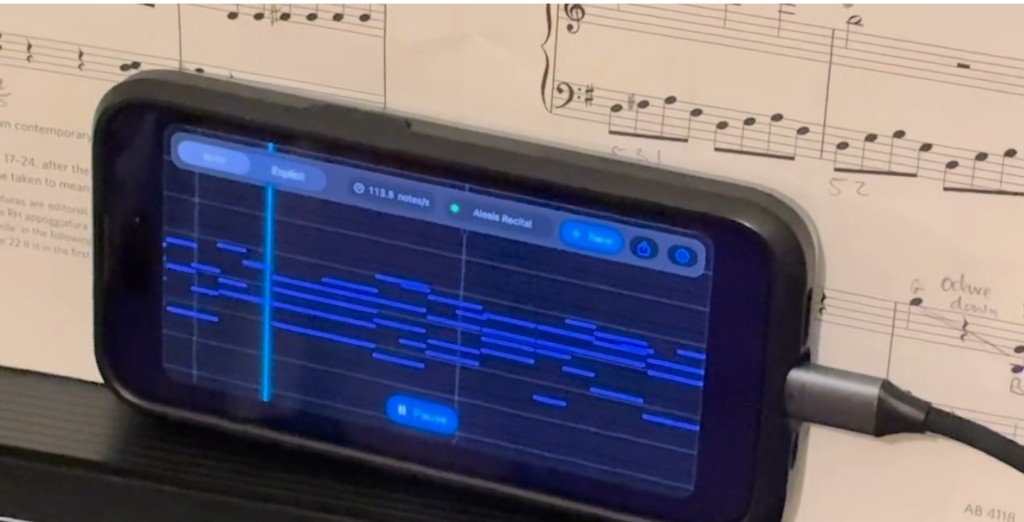
598 pointsI trained a 125M-parameter transformer to autocomplete piano performances in real time (~108 notes/sec on an iPhone 15).
The idea is basically GitHub Copilot or Tabnine, except instead of prompting it with code, you prompt it by playing a few notes on a MIDI piano. The model then continues what you played, entirely on-device.
The app is free if anyone wants to try it. Happy to answer questions about the model, training, Core ML, or the many things that didn't work.
Comments (117) 65 threads
Show all comments
Showing thread 11 of 65
Does anybody know of a project that has produced more convincing results?
While LLMs (and ANNs in general) are definitely great for musical analysis (though still limited), I think they're likely overkill for the generation part, plus they tend to suffer from "creative collapse" as they prefer averages rather than exploration (which can be good or bad depending on what you want).